日本語文型辞典
Meaning
Connects verbs describing the actions before and after it to express two actions proceeding simultaneously. In this case, the later action is the main one, while the earlier action describes an accompanying action, such as the manner in which the main action is performed. For example, in ①, “studying or working” is the main action, performed while also “listening to music.” The following sentence describes getting on a train and reading a book as simultaneous actions, and cannot be interpreted as meaning that someone read a book on the train.
The subject is the same in both parts, and it often expresses intentional actions by a person, but as in ⑤–⑥, the subject may also be something capable of moving or changing through its own force, such as an airplane or a natural phenomenon.
Attached to a noun or the continuative form of a verb, this expresses a state or manner that continues unchanged. For example, 「生まれながら」「昔ながら」 mean “just as it has been since that time,” and are close in meaning to 「生まれつき」「昔のまま」. 「涙ながらに」 means “in a state of shedding tears,” and can also be rephrased as 「涙を流して」. These are relatively fixed expressions, and the preceding words are limited to particular ones such as those in the examples.
Attached to nouns, i-adjectives, na-adjectives, the continuative form of verbs, adverbs (excluding 「…と/に」 when present), and the like, this expresses concession, similar in meaning to 「…のに」 or 「…けれども/が」. It is sometimes used in the form 「ながらも」 with 「も」. The 「ながらに」 in ③ is somewhat old-fashioned and is not normally used in spoken language. In this concessive use, the predicate before 「ながら」 is often stative. By contrast, the simultaneous-action use in 1 is limited to verbs describing actions in both parts.
⇾とはいいながら
How to use it
R-ながら【simultaneous actions】
…ながら【manner】
Nながら
R-ながら
…ながら(も/に)【concession】
N/Na ながら
A-いながら
R-ながら
…とはいいながら
In context 24 examples
音楽を聴きながら、勉強や仕事をする人のことを「ながら族」という。
People who study or work while listening to music are called “nagaramoku-zoku.”
その辺でお茶でも飲みながら話しましょう。
Let’s talk over some tea around there.
母は鼻歌を歌いながら夕飯の用意をしている。
My mother is preparing dinner while humming.
よそ見をしながら運転するのは危険です。
It is dangerous to drive while looking away.
飛行機は黒煙をあげながら真っ逆さまに墜落していった。
The plane plummeted straight down, trailing black smoke.
液体はぶくぶくとガスを発生させながら発酵を続けている。
The liquid continues to ferment, bubbling and releasing gas.
(誤) 電車に乗りながら本を読んだ。
(Incorrect) I read a book while getting on the train.
(正) 電車に乗って本を読んだ。
(Correct) I got on the train and read a book.
(誤) 私は本を読みながら、彼はウイスキーを飲んだ。
(Incorrect) I was reading a book while he drank whisky.
いつもながら、見事なお手並みですね。
As usual, your work is magnificent.
この清酒メーカーは、昔ながらの製法で日本酒をつくっている。
This sake brewer makes Japanese sake using traditional methods.
被害者は、涙ながらに事件の状況を語った。
The victim described what happened, in tears.
生まれながらのすぐれた才能に恵まれている。
She is blessed with outstanding talent from birth.
この子は、生まれながらにして優れた音楽的感性を備えている。
This child has had an excellent musical sensibility from birth.
このバイクは小型ながら馬力がある。
This motorcycle is small, yet powerful.
敵ながら、あっぱれな態度であった。
Even though he was the enemy, he showed an admirable attitude.
子供ながらに、なかなかしっかりとした挨拶であった。
Though only a child, it was quite a solid greeting.
残念ながら、結婚式には出席できません。
Unfortunately, I can’t attend the wedding.
狭いながらもようやく自分の持ち家を手に入れることができた。
Although it’s small, I’ve finally managed to get a home of my own.
何もかも知っていながら教えてくれない。
Although he knows everything, he won’t tell me.
すぐ近くまで行きながら、結局実家には寄らずに帰って来た。
Even though I went right near there, I ended up coming home without stopping by my parents’ house.
学生の身分でありながら、高級車で通学している。
Although he is a student, he commutes to school in a luxury car.
細々ながらも商売を続けている。
Although business is modest, I continue to run it.
ゆっくりながらも作業は少しずつ進んでいる。
Though slowly, the work is progressing little by little.
Read the original source text
Meaning
前後の動作を表す動詞をつないで、同時並行的に進行する二つの動作を表す。この場合、後の動作が主な動作で、前の動作はその動作を行う際の様子などを描写する副次的な動作を表す。①の例で言えば、「勉強や仕事をする」のが主な動作で、それを「音楽を聞く」動作を伴いながら行うということである。次の文は電車に乗り込む動作と本を読む動作が同時に行われたことになり、電車の中で本を読んだという意味には解釈できない。
前後とも主語は同一で、人の意志的な行為を表す場合が多いが、⑤⑥のように、飛行機や自然現象のように、自分の力で動いたり変化できるものの場合もある。
名詞や、動詞の連用形に付いて、そのまま変化しないで続く状態・様子を表す。例えば、「生まれながら」「昔ながら」は、「その時からずっとそのまま」という意味で「生まれつき」「昔のまま」に近い意味である。また「涙ながらに」は、「涙を流している状態で」という意味で、「涙を流して」とも言いかえることができる。比較的固定化が進んだ表現で、前にくる言葉は上の例のような特定のものに限られている。
名詞、イ形容詞、ナ形容詞、動詞の連用形、副詞(「…と/に」などを伴う場合はそれを除いた部分)などに付いて、「…のに」あるいは「…けれども/が」と類義の逆接の意味を表す。「も」を伴い「ながらも」の形で使われることもある。③の「ながらに」は、やや古めかしい言い方で、話しことばでは、通常用いられない。この逆接の用法では「ながら」の前にくる述語は状態性の場合が多い。これに対して、1の並行的動作の用法は前後とも動作を表す動詞に限られる。
⇾とはいいながら
How to use it
R-ながら【同時】
…ながら【様態】
Nながら
R-ながら
…ながら(も/に)【逆接】
N/Na ながら
A-いながら
R-ながら
…とはいいながら
IMABI
The Particle ながら I: Simultaneous Action
Read this IMABI lesson ↗Explanation
The Particle ながら I: Simultaneous Action
In this lesson, you will be introduced to the particle nagara ながら. This particle is a conjunctive particle that is typically used to mean “while” in the sense of doing two things at the same time or in the same time span. Because using it will require conjugation, we’ll look at that first before delving into how it’s used.
Ichidan Verbs 見る +ながら = 見ながらMiru + nagara = Minagara
Godan Verbs 飲む + ながら = 飲みながらNomu + nagara = Nominagara
Suru する + ながら = しながらSuru + nagara = shinagara
Kuru 来る + ながら = きながらKuru + nagara = kinagara
As you can see, using nagara ながら from the point of conjugation is no different than using –masu ます.
Simultaneous Action
The primary use of nagara ながら is to show simultaneous action or in the same time span. The clauses of the sentence you make must have the same subject, and the main verb of the sentence is found in the latter clause.
1. テレビを見みながらご飯はんを食たべる。
Terebi wo minagara gohan wo taberu.
To eat one’s meal while watching TV.
2. ご飯はんを食たべながらテレビを見みる。
Gohan wo tabenagara terebi wo miru.
To watch TV while eating one’s meal.
As you can see, nagara ながら stands for the “while” in these two sentences. The primary action is also clearly different. This is an incredibly important point because it is not always the case that switching the verb that has nagara ながら results in a sensible statement.
3a. 泣なきながら玉たまねぎを切きっていました。○
Nakinagara tamanegi wo kitte imashita.
I was cutting up onions with tears streaming down.
3b. 玉たまねぎを切きりながら泣ないていました。??
Tamanegi wo kirinagara naite imashita.
I was crying as I was cutting up onions.
You are cutting onions while crying because the onions are undoubtedly making you cry. In Japanese, this is expressed with 3a. Let’s say, for some odd reason, your other half decided to break up with you over Facebook right before you began to prepare yourself a meal containing onion. Way before you cut into the first onion, you’re already shedding a large volume of tears. In this situation, 3b. would make sense. Although the English could still imply cause-and-effect between “crying” and “cutting onions,” the onions are not the cause of crying in 3b as is the case in 3a.
4. 辞書じしょで知しらない単語たんごを調しらべながら、フランス語ごの本ほんを読よみたいと思おもいます。○
Jisho wo shiranai tango wo shirabenagara, Furansugo no hon wo yomitai to omoimasu.
I want to read a French book while looking up words I don’t know with a dictionary.
フランス語ごの本ほんを読よみながら辞書じしょで知しらない単語たんごを調しらべたいと思おもいます。??
Furansugo no hon wo yominagara jisho de shiranai tango wo shirabetai to omoimasu.
I want to look up words I don’t know about as I’m reading a French book.
You’ve just received a French novel for the first time. Excited, you also realize that a dictionary will be your best friend to look up words you don’t know in said book. Because reading the book is the primary action, the first sentence is what makes sense. Now, say you are randomly looking up words you don’t happen to know irrespective of the French book you’re reading. Maybe you decide to look up Spanish words randomly instead. In such an odd situation, the latter may make sense, but you’d best explain yourself.
More Examples
5. 天津てんしんで働はたらきながら中国語ちゅうごくごを学まなんでいます。
Tenshin de hatarakinagara chūgokugo wo manande imasu.
I’m studying Chinese while working in Tianjin.
6. 歩あるきながら読書どくしょをするのはとても危険きけんです。
Arukinagara dokusho wo suru no wa totemo kiken desu.
Reading a book while walking is very dangerous.
7. コーヒーを飲のみながら、ゆっくりと会話かいわしましょう。
Kōhii wo nominagara, yukkuri to kaiwa shimashō.
Let’s converse slowly while we drink coffee.
8. 車くるまを運転うんてんしながら電話でんわをしてはいけません。
Kuruma wo unten shinagara, denwa wo shite wa ikemasen.
You mustn’t talk on the phone while driving a car.
9. 先生せんせいの話はなしを聞ききながら、ノートにメモを取とります。
Sensei no hanashi wo kikinagara, nōto ni memo wo torimasu.
I take notes in my notebook while listening to my teacher.
10. ご飯食はんたべながら話はなさないで、行儀ぎょうぎが悪わるいのよ! (Feminine)
Gohan tabenagara hanasaide, gyōgi ga warui no yo!
Don’t talk while eating your food; what bad manners!
11. 電話でんわで話はなしながらタバコを吸すうのはマナー違反いはんだと思おもいませんか。
Denwa de hanashinagara tabako wo sū no wa manā ihan da to omoimasen ka?
Don’t you think smoking while talking on the phone is a breach of etiquette?
12. 宿題しゅくだいしながらピザを食くってて気きづいたらなくなっていた。
Shukudai shinagara piza wo kuttete kizuitara nakunatte ita.
I was eating pizza while doing my homework, but once I noticed it was gone.
13. 晴はれた日ひに好すきな音楽おんがくを聴ききながらドライブ(を)するのって至福しふくのひと時ときだと思おもいません?
Hareta hi ni suki na ongaku wo kikinagara doraibu (wo) suru no tte shifuku no hitotoki da to omoimasen ka?
Don’t you think driving while listening to your favorite music on a clear day is a blissful moment?
14. 私わたしは新聞しんぶんを読よみながら、バスを待まっていました。
Watashi wa shimbun wo yominagara, basu wo matte imashita.
I was waiting for the bus while reading the newspaper.
15. 町まちの銀行ぎんこうで働はたらきながら、気象予報士きしょうよほうしの勉強べんきょうをしています。
Machi no ginkō de hatarakinagara, kishō yohōshi no benkyō wo shite imasu.
I’m studying to be a weather forecaster while working at the town bank.
16. ともかく、人ひとは悩なやみながら生いきるしかないんですか。
Tomokaku, hito wa nayaminagara ikiru shika nai n desu ka?
Anyhow, do people have no choice but to live in worry?
17. 聴衆ちょうしゅうの人ひとたちも笑顔えがおを見みせながら熱心ねっしんに聞きいていた。
Chōshū no hitotachi mo egao wo misenagara nesshin ni kiite ita.
The people in the audience were also listening with enthusiasm while showing smiles in their faces.
18. 部活ぶかつもやりながら、塾じゅくに通かよっていました。
Bukatsu mo yarinagara, juku ni kayotte imashita.
I was attended cram school while also doing club activities.
19. 大学だいがくに通かよいながら、月つきに60ろくじゅう万円まんえんくらい稼かせいでいました。
Daigaku ni kayoinagara, tsuki ni rokujūman’en kurai kaseide imashita.
I was earning about 600,000 yen a month while attending college.
20. 洗濯せんたくが終おわるのを待まちながら、明日あすの準備じゅんびをしています。
Sentaku ga owaru no wo machinagara, ashita no jumbi wo shite imasu.
I’m doing preparations for tomorrow while waiting for the wash to finish.
21. 乗客じょうきゃくの前まえでカップ麺めんを食たべながら運転うんてんする。
Jōkyaku no mae de kappumen wo tabenagara unten suru.
To drive while eating cup noodles in front of passengers.
22. 料理りょうりしながら、同時どうじに片付かたづけも出来できるんですよ。
Ryōri shinagara, dōji ni katazuke mo dekiru n desu yo.
It’s possible to clean up simultaneously while cooking, you know.
23. 私わたしは毎日まいにち、図書館としょかんで色々いろいろな資料しりょうを調しらべながら、漢字かんじや文法ぶんぽうなど勉強べんきょうしています。
Watashi wa mainichi, toshokan de iroiro na shiryō wo shirabenagara, kanji ya bumpō nado benkyō shite imasu.
I’m studying Kanji and grammar in the library every day while examining various materials.
24. 電話でんわをかけながらや、LINEなどのテキストメッセージを打うちながら注文ちゅうもんをすることは店員てんいんさんに対たいして、あまりにも失礼しつれいな行為こういなんですよ。
Denwa wo kakenagara ya, Rain nado no tekisuto messēji wo uchinagara chūmon wo suru koto wa ten’intachi ni tai shite, amari ni mo shitsurei na kōi na n desu yo.
Ordering while being on the phone or typing text messages on LINE and such is beyond rude behavior toward employees.
Grammar Note: As this sentence demonstrates, nagara ながら can interestingly accept certain particles like ya や at times. This shows that it is somewhat noun-like. In this example, there is a need to refer to more than one ancillary verb phrase that is done with the same verb, and rather than repeating the same thing twice with slightly different context, just using nagara ya ながらや makes everything easier.
Instantaneous Verbs X
Using nagara ながら with verbs that describe instant occurrences is incorrect. Therefore, it cannot be used with verbs like shinu 死ぬ, tsuku つく, kieru 消える, etc. For verbs that take hardly any time at all to take place, if the main action takes more time than the secondary verb in the first clause with nagara ながら, then the usage is incorrect.
25. 座すわりながら話はなしませんか。X
Suwarinagara hanashimasen ka?
座すわって話はなしませんか。○
Suwatte hanashimasen ka?
How about we sit and talk?
Te て or Nagara ながら?
Sometimes, using nagara ながら may resemble using the particle te て since the verb that goes with nagara ながら is a secondary action. However, ancillary actions described with te て tend to be means by which to do something or condition by which things happen. This difference means that te て and nagara ながら can indeed coexist in the same sentence.
26. 車くるまでの通勤時つうきんじに必かならずテープを聞きいて英語えいごを勉強べんきょうしています。
Kuruma de no tsūkinji ni kanarazu tēpu wo kiite eigo wo benkyō shite imasu.
I’m studying English by always listening to tapes when I commute by car.
27. 車くるまで通勤つうきんしているときは必かならず英会話えいかいわのテープを聴ききながら運転うんてんします。
Kuruma de tsūkin shite iru toki wa kanarazu eikaiwa no tēpu wo kikinagara unten shite imasu.
I’m driving while always listening to English conversation times when commuting by car.
28. 文化ぶんかも、時代じだいの流ながれに合あわせて進化しんかしながら変かわっていかなければなりません。
Bunka mo, jidai no nagare ni awasete shinka shinagara kawatte ikanakereba narimasen.
Culture must also change as it evolves along with the trends of the times.
29. 犬いぬの散歩さんぽをしながら歩あるきタバコをする人ひとは迷惑めいわくだ。
Inu no sampo wo shinagara aruki-tabako wo suru hito wa meiwaku da.
People who smoke and walk while walking their dogs are bothers.
Grammar Note: Some nagara ながら expressions refer to two actions done in tandem so much so that they result in set phrases without nagara ながら. This explains aruki-tabako歩きタバコ. Other examples include aruki-sumaho 歩きスマホ (using one’s smart phone while walking), tabearuki 食べ歩き (eating while walking), etc.
Nagara-zoku ながら族
Nagara-zoku ながら族 is a set phrase that refers to people who do all sorts of things while they’re supposed to be focusing on work or the like. As is the case in this sentence, it can be used as a nice context to string several nagara ながら phrases together.
30. ながら族ぞくって、大勢おおぜいいるんじゃないですか。俺おれだって、携帯電話けいたいでんわを見みながら、テレビを見ながら、お酒さけを飲のみながら、お菓子かしを食たべながら、頭あたまを掻かきながら、パソコンでRedditの質問しつもんに回答かいとうしています。
Nagara-zoku tte, ōzei iru n ja nai desu ka? Ore datte, keitai denwa wo minagara, terebi wo minagara,osake wo nominagara, okashi wo tabenagara, atama wo kakinagara, pasokon de reditto no shitsumon ni kaitō shite imasu.
Aren’t there lots of people who do all sorts of stuff while they’re working? Like even me, I’m answering questions on Reddit on my computer while looking at my cellphone, while watching TV, while drinking liquor, while eating sweets, while scratching my head, etc.
In context 31 examples
テレビを見みながらご飯はんを食たべる。
Terebi wo minagara gohan wo taberu.
ご飯はんを食たべながらテレビを見みる。
Gohan wo tabenagara terebi wo miru.
泣なきながら玉たまねぎを切きっていました。○
Nakinagara tamanegi wo kitte imashita.
玉たまねぎを切きりながら泣ないていました。??
Tamanegi wo kirinagara naite imashita.
辞書じしょで知しらない単語たんごを調しらべながら、フランス語ごの本ほんを読よみたいと思おもいます。○
Jisho wo shiranai tango wo shirabenagara, Furansugo no hon wo yomitai to omoimasu.
天津てんしんで働はたらきながら中国語ちゅうごくごを学まなんでいます。
Tenshin de hatarakinagara chūgokugo wo manande imasu.
歩あるきながら読書どくしょをするのはとても危険きけんです。
Arukinagara dokusho wo suru no wa totemo kiken desu.
コーヒーを飲のみながら、ゆっくりと会話かいわしましょう。
Kōhii wo nominagara, yukkuri to kaiwa shimashō.
車くるまを運転うんてんしながら電話でんわをしてはいけません。
Kuruma wo unten shinagara, denwa wo shite wa ikemasen.
先生せんせいの話はなしを聞ききながら、ノートにメモを取とります。
Sensei no hanashi wo kikinagara, nōto ni memo wo torimasu.
ご飯食はんたべながら話はなさないで、行儀ぎょうぎが悪わるいのよ! (Feminine)
Gohan tabenagara hanasaide, gyōgi ga warui no yo!
電話でんわで話はなしながらタバコを吸すうのはマナー違反いはんだと思おもいませんか。
Denwa de hanashinagara tabako wo sū no wa manā ihan da to omoimasen ka?
宿題しゅくだいしながらピザを食くってて気きづいたらなくなっていた。
Shukudai shinagara piza wo kuttete kizuitara nakunatte ita.
晴はれた日ひに好すきな音楽おんがくを聴ききながらドライブ(を)するのって至福しふくのひと時ときだと思おもいません?
Hareta hi ni suki na ongaku wo kikinagara doraibu (wo) suru no tte shifuku no hitotoki da to omoimasen ka?
私わたしは新聞しんぶんを読よみながら、バスを待まっていました。
Watashi wa shimbun wo yominagara, basu wo matte imashita.
町まちの銀行ぎんこうで働はたらきながら、気象予報士きしょうよほうしの勉強べんきょうをしています。
Machi no ginkō de hatarakinagara, kishō yohōshi no benkyō wo shite imasu.
ともかく、人ひとは悩なやみながら生いきるしかないんですか。
Tomokaku, hito wa nayaminagara ikiru shika nai n desu ka?
聴衆ちょうしゅうの人ひとたちも笑顔えがおを見みせながら熱心ねっしんに聞きいていた。
Chōshū no hitotachi mo egao wo misenagara nesshin ni kiite ita.
部活ぶかつもやりながら、塾じゅくに通かよっていました。
Bukatsu mo yarinagara, juku ni kayotte imashita.
大学だいがくに通かよいながら、月つきに60ろくじゅう万円まんえんくらい稼かせいでいました。
Daigaku ni kayoinagara, tsuki ni rokujūman’en kurai kaseide imashita.
洗濯せんたくが終おわるのを待まちながら、明日あすの準備じゅんびをしています。
Sentaku ga owaru no wo machinagara, ashita no jumbi wo shite imasu.
乗客じょうきゃくの前まえでカップ麺めんを食たべながら運転うんてんする。
Jōkyaku no mae de kappumen wo tabenagara unten suru.
料理りょうりしながら、同時どうじに片付かたづけも出来できるんですよ。
Ryōri shinagara, dōji ni katazuke mo dekiru n desu yo.
私わたしは毎日まいにち、図書館としょかんで色々いろいろな資料しりょうを調しらべながら、漢字かんじや文法ぶんぽうなど勉強べんきょうしています。
Watashi wa mainichi, toshokan de iroiro na shiryō wo shirabenagara, kanji ya bumpō nado benkyō shite imasu.
電話でんわをかけながらや、LINEなどのテキストメッセージを打うちながら注文ちゅうもんをすることは店員てんいんさんに対たいして、あまりにも失礼しつれいな行為こういなんですよ。
Denwa wo kakenagara ya, Rain nado no tekisuto messēji wo uchinagara chūmon wo suru koto wa ten’intachi ni tai shite, amari ni mo shitsurei na kōi na n desu yo.
座すわりながら話はなしませんか。X
Suwarinagara hanashimasen ka?
車くるまでの通勤時つうきんじに必かならずテープを聞きいて英語えいごを勉強べんきょうしています。
Kuruma de no tsūkinji ni kanarazu tēpu wo kiite eigo wo benkyō shite imasu.
車くるまで通勤つうきんしているときは必かならず英会話えいかいわのテープを聴ききながら運転うんてんします。
Kuruma de tsūkin shite iru toki wa kanarazu eikaiwa no tēpu wo kikinagara unten shite imasu.
文化ぶんかも、時代じだいの流ながれに合あわせて進化しんかしながら変かわっていかなければなりません。
Bunka mo, jidai no nagare ni awasete shinka shinagara kawatte ikanakereba narimasen.
犬いぬの散歩さんぽをしながら歩あるきタバコをする人ひとは迷惑めいわくだ。
Inu no sampo wo shinagara aruki-tabako wo suru hito wa meiwaku da.
ながら族ぞくって、大勢おおぜいいるんじゃないですか。俺おれだって、携帯電話けいたいでんわを見みながら、テレビを見ながら、お酒さけを飲のみながら、お菓子かしを食たべながら、頭あたまを掻かきながら、パソコンでRedditの質問しつもんに回答かいとうしています。
Nagara-zoku tte, ōzei iru n ja nai desu ka? Ore datte, keitai denwa wo minagara, terebi wo minagara,osake wo nominagara, okashi wo tabenagara, atama wo kakinagara, pasokon de reditto no shitsumon ni kaitō shite imasu.
The Particle ながら II: ながら(も)& ながらに(して)
Read this IMABI lesson ↗Explanation
The Particle ながら II: ながら(も)& ながらに(して)
In this second installment concerning the particle ながら, we learn about its second most common usage: showing contradiction.
Contradiction
The particle ながら, when used to show contradiction, follows the same restraints on clauses as when it shows simultaneous action. This is because the contradiction involves the same subject and because the two parts of the contradiction still happen in the same time span.
Unlike its primary usage to show non-contradictory simultaneous action, this use of ながら can attach to pretty much anything. You can find it directly after nouns, adjectival nouns, adjectives, adverbs, and verbs.
Affirmative Negative
Nouns N (であり)+ ながら(も) Nではない + ながら(も)
Adjectival Nouns Adj. N(であり)+ながら(も) Adj. Nではない+ながら(も)
Adjectives Adj. +ながら(も) Drop /i/ + くない+ながら(も)
Adverbs Adv. + ながら(も)
Verbs Stem + ながら(も) V +ない → ず・ぬ + ながら(も)
The productivity of all these combinations will not be equal in the real world. ながら(も) is most frequently used with verbs, and for everything else it may be follow, creative license is required. Due to the fact that this pattern is more so employed in the written language, you will need to explore this grammar on a case-by-case basis. There are many set phrases that utilize this, some of which are very important. For instance, 残念だ means “to be unfortunate,” and when used with ながら as 残念ながら, it’s used to mean “unfortunately…”
The addition of the particle も in this expression is only used for emphatic purposes. As such , normally, ながら and ながらも are interchangeable.
1. 彼女かのじょはあんなにいろいろ苦労くろうしながらも、それを苦くにしていない。
Even though she’s going through that many troubles, she isn’t worrying about them.
2. 湯沢ゆざわさんは大企業だいきぎょうの社長しゃちょう(であり)ながら(も)、静しずかな落おち着ついた物腰ものごしが印象的いんしょうてきでした。
Though Mr. Yuzawa is the president of a large corporation, his quiet and calm demeanor is impressive.
3. 真由子まゆこは初心者しょしんしゃ(であり)ながら(も)、潜在せんざい能力のうりょくはかなりあると思おもいます。
Even though Mayuko is a beginner, I think that her skills are considerably good.
4. しかしながら、予算案よさんあんはまだ修正しゅうせいの余地よちがある。
Nevertheless, the budget still has plenty of room for improvement.
5. すでに一月いちがつを過すごしてしまったのですが、遅おそまきながら初詣はつもうでに出でかけました。
I’ve already let January pass, but I belatedly went out to my first shrine visit of the New Year.
6. 讃岐さぬきうどんとは言いいながらも、ほとんどは外国産がいこくさんの小麦こむぎで作つくられている。
Although we call it “Sanuki Udon,” most of it is made with foreign manufactured wheat.
7. 彼女かのじょはダイエットしていると言いいながら(も)ケーキばかり食たべている。
Although she says that she’s on a diet, all she eats is cake.
8. 恥はずかしながら、自己紹介じこしょうかいです。
As embarrassing as this is, this is my self-introduction.
Form Note: Note that with the adjective 恥ずかしい, the final /i/ is dropped.
9.{ 我われ・自分じぶん}ながら情なさけない。
This is deplorable even if I do say so myself.
10. ゾンビーは死しんでいながらも、生前せいぜんと同おなじ行動こうどうを繰くり返かえします。
Zombies, though dead, repeat the same actions as when they were alive.
11. ゆっくりながら(も)、完成かんせいに近ちかづいています。
Although slowly, I’m approaching completion.
12. 残念ざんねんながら、記録きろくは更新こうしんできませんでした。
Unfortunately, I was unable to break the record.
13. 憲太郎君けんたろうくんは失敗しっぱいするとわかりながら(も)、そのままやってしまう性格せいかくだ。
Kentaro has the kind of personality of doing something as is even if he understands that he’ll fail.
14. 神かみが赦ゆるさない罪つみだと知しっていながらも、故意こいに続つづけていく。
To continue purposely doing something whilst knowing it is a sin God does not condone.
15. 社員しゃいんが不正ふせいを知しりながら勧誘かんゆうしていたことがわかりました。
It has been discovered that company employees were soliciting whilst knowing of the illegality.
16. 狭せまいながらも、自分じぶんのアパートを手てに入いれることができました。
While small, I’ve obtained my own apartment.
17. 貧まずしいながらも、穏おだやかに暮くらすことができます。
Once can live calmly live whilst being poor.
18. 及およばずながら、一生懸命いっしょうけんめいやります。
I’ll do it to the best of my ability, as poor as that may be.
19. 完全かんぜんではないながらも、英語えいごの綴つづりと音おとにはある程度規則ていどきそくがあります。
Although not absolute, there are rules to some degree to the spelling and sounds of English.
もさることながら
もさることながら is a set phrase that follows nouns that states that the one quality is of course true, but a second quality is also just as so.
20. 中華料理ちゅうかりょうりは味あじもさることながら、健康けんこうにいいですよ。
It goes without saying that Chinese food is tasty, but it’s also good for you.
21. 富士山ふじさんは紅葉もみじもさることながら、冬景色ふゆげしきも綺麗きれいです。
The autumn leaves of Mt. Fuji go without saying, but its winter-scape is also pretty.
22. この車くるまは燃費ねんぴの良よさもさることながら、ネット上じょうでの評判ひょうばんも高たかかったです。
The gas mileage of this car goes without saying, but its internet review was high as well.
ながらに(して)
In the patterns ながらに(して)or ながら(の), the particle ながら may also mean “as” as in staying “as is” in a certain condition. Just as is the case with the past usage, instances of this meaning ought to be learned on a case-by-case basis.
23. すべての人ひとは生うまれながらに平等びょうどうである。
All men are born equal.
24. 田中たなかさんは家いえに居いながらにして、月つきに70ななじゅう万円まんえんくらいの収入しゅうにゅうを得えている。
Mr. Tanaka earns an income of approximately 700,000 yen a month whilst staying at home.
25. 村民そんみんは昔むかしながらの伝統でんとうを守まもり続つづけている。
The villages continue protecting traditions as they were long ago.
26. 彼かれは子供こどもながらにしっかりしている。
He’s quite level-headed despite being a kid.
27. 夏子なつこは、自分じぶんの目めの前まえで起おこった悲惨ひさんな出来事できごとを涙なみだながらに語かたりました。
Natsuko tearfully spoke of the tragic events that transpired in front of her eyes.
28. いつもながら、彼氏かれしの料理りょうりはとてもうまい。
My boyfriend’s cooking is very delicious as always.
29. この会社かいしゃは昔むかしながらの製法せいほうで豆腐とうふを作つくっている。
This company makes tofu with traditional methods.
30. 人間にんげんには、生うまれながらにして貧富ひんぷの差さがある。
Humans are born with a disparity of wealth.
In context 30 examples
彼女かのじょはあんなにいろいろ苦労くろうしながらも、それを苦くにしていない。
Even though she’s going through that many troubles, she isn’t worrying about them.
湯沢ゆざわさんは大企業だいきぎょうの社長しゃちょう(であり)ながら(も)、静しずかな落おち着ついた物腰ものごしが印象的いんしょうてきでした。
Though Mr. Yuzawa is the president of a large corporation, his quiet and calm demeanor is impressive.
真由子まゆこは初心者しょしんしゃ(であり)ながら(も)、潜在せんざい能力のうりょくはかなりあると思おもいます。
Even though Mayuko is a beginner, I think that her skills are considerably good.
しかしながら、予算案よさんあんはまだ修正しゅうせいの余地よちがある。
Nevertheless, the budget still has plenty of room for improvement.
すでに一月いちがつを過すごしてしまったのですが、遅おそまきながら初詣はつもうでに出でかけました。
I’ve already let January pass, but I belatedly went out to my first shrine visit of the New Year.
讃岐さぬきうどんとは言いいながらも、ほとんどは外国産がいこくさんの小麦こむぎで作つくられている。
Although we call it “Sanuki Udon,” most of it is made with foreign manufactured wheat.
彼女かのじょはダイエットしていると言いいながら(も)ケーキばかり食たべている。
Although she says that she’s on a diet, all she eats is cake.
恥はずかしながら、自己紹介じこしょうかいです。
As embarrassing as this is, this is my self-introduction.
{ 我われ・自分じぶん}ながら情なさけない。
This is deplorable even if I do say so myself.
ゾンビーは死しんでいながらも、生前せいぜんと同おなじ行動こうどうを繰くり返かえします。
Zombies, though dead, repeat the same actions as when they were alive.
ゆっくりながら(も)、完成かんせいに近ちかづいています。
Although slowly, I’m approaching completion.
残念ざんねんながら、記録きろくは更新こうしんできませんでした。
Unfortunately, I was unable to break the record.
憲太郎君けんたろうくんは失敗しっぱいするとわかりながら(も)、そのままやってしまう性格せいかくだ。
Kentaro has the kind of personality of doing something as is even if he understands that he’ll fail.
神かみが赦ゆるさない罪つみだと知しっていながらも、故意こいに続つづけていく。
To continue purposely doing something whilst knowing it is a sin God does not condone.
社員しゃいんが不正ふせいを知しりながら勧誘かんゆうしていたことがわかりました。
It has been discovered that company employees were soliciting whilst knowing of the illegality.
狭せまいながらも、自分じぶんのアパートを手てに入いれることができました。
While small, I’ve obtained my own apartment.
貧まずしいながらも、穏おだやかに暮くらすことができます。
Once can live calmly live whilst being poor.
及およばずながら、一生懸命いっしょうけんめいやります。
I’ll do it to the best of my ability, as poor as that may be.
完全かんぜんではないながらも、英語えいごの綴つづりと音おとにはある程度規則ていどきそくがあります。
Although not absolute, there are rules to some degree to the spelling and sounds of English.
中華料理ちゅうかりょうりは味あじもさることながら、健康けんこうにいいですよ。
It goes without saying that Chinese food is tasty, but it’s also good for you.
富士山ふじさんは紅葉もみじもさることながら、冬景色ふゆげしきも綺麗きれいです。
The autumn leaves of Mt. Fuji go without saying, but its winter-scape is also pretty.
この車くるまは燃費ねんぴの良よさもさることながら、ネット上じょうでの評判ひょうばんも高たかかったです。
The gas mileage of this car goes without saying, but its internet review was high as well.
すべての人ひとは生うまれながらに平等びょうどうである。
All men are born equal.
田中たなかさんは家いえに居いながらにして、月つきに70ななじゅう万円まんえんくらいの収入しゅうにゅうを得えている。
Mr. Tanaka earns an income of approximately 700,000 yen a month whilst staying at home.
村民そんみんは昔むかしながらの伝統でんとうを守まもり続つづけている。
The villages continue protecting traditions as they were long ago.
彼かれは子供こどもながらにしっかりしている。
He’s quite level-headed despite being a kid.
夏子なつこは、自分じぶんの目めの前まえで起おこった悲惨ひさんな出来事できごとを涙なみだながらに語かたりました。
Natsuko tearfully spoke of the tragic events that transpired in front of her eyes.
いつもながら、彼氏かれしの料理りょうりはとてもうまい。
My boyfriend’s cooking is very delicious as always.
この会社かいしゃは昔むかしながらの製法せいほうで豆腐とうふを作つくっている。
This company makes tofu with traditional methods.
人間にんげんには、生うまれながらにして貧富ひんぷの差さがある。
Humans are born with a disparity of wealth.
Simultaneous Action II: The Particle つつ (VS ながら)
Read this IMABI lesson ↗Explanation
Simultaneous Action II: The Particle つつ (VS ながら)
つつ is a somewhat old-fashioned particle that has less function in this generation, but it is still very important as it lives strong in literature. In this lesson, we will investigate how to use this particle correctly and know exactly when it is appropriate and how it differs with things interchangeable with it.
The Conjunctive Particle つつ
Like most conjunctive particles in Japanese, the particle つつ attaches to the 連用形 and is exclusive to verbs.
一段活用動詞 見る 見つつ
五段活用動詞 思う 思いつつ
サ変活用動詞 する しつつ
カ変活用動詞 来る 来つつ
When the particle つつ is used to express simultaneity, with the latter clause being either a positive or contrary statement, it is equivalent to the particle ながら. ながら shows simultaneous action too, but it’s still different. つつ cannot be attached to nominal phrases but ながら can be.
1. 夫を亡くしてから、母は細腕ほそうで{Xつつ・〇 ながら}、私たち5人の子供を育て上げた。
After losing her husband, my mother by herself raised us five kids.
Even in formal speech, ながら is the only choice in this situation. On the one hand, when the sentence is colloquial, つつ often becomes inappropriate.
2. 何だよ。静かだと思ったら、テレビを見{〇 ながら・X つつ}寝ちゃって。おい、風邪引くぞ。(男性語)
What is this? Just when I think it’s quiet, you’re falling asleep watching TV. Hey, you’ll catch a cold!
3. お茶でも飲みながら、お喋りしない? ちょっと愚痴ぐちを聞いてよ。 (ちょっと女性っぽい)
Can’t we talk a bit while having some tea? Just listen to what I have to complain about.
4. なぁ、ご飯食べながら、新聞読むのか。やめてくれねーか。不愉快ふゆかいだよ。(男性語)
Hey, you’re reading a newspaper while eating? Can’t you quit it? It’s just unpleasant.
Again, there are situations where the two are interchangeable. Differences will be elaborated on throughout this lesson. Of course, the most basic difference to remember is that つつ is indicative of the written language, and if it is used in the spoken language, it is rather formal and or old-fashioned.
5. 感謝し{つつ・ながら}、日々を送るがよい。
It is good to live each day by being grateful.
6. 二日酔いで痛む頭を押さえつつ、トイレに入った。 (書き言葉)
I went to the bathroom while holding my head with a hangover.
7. 起きようと思い{つつ・ながら}、恨うらみの籠こもった眼差しをあげた。
Thinking that I would get up, I gave a look in spite.
8. 嘘と知り{つつ・ながら}、まだ来ぬ人を、雨の中で待ち続けた。
Knowing that that was a lie, I continued to wait in the rain for the one that had not come.
9. いやだとは言い{つつ・ながら}(も)、満更まんざら嫌いでもないらしい。
Although saying it’s bad, [he] seems to not hate it altogether.
10. 真実と知り{つつながら}(も)・、まだ誤った情報を伝えるのが本当に抜け目のないことだ。
While knowing the truth and still telling mistaken information is a really shrewd thing.
11. 車窓の景色を眺め{つつ・ながら}、過ぎ去りし日々を思い返していた。
As I gazed out at the scenery from the car window, I was reliving days past.
Archaism Note: 過ぎ去りし = 過ぎ去った. 過ぎ去りし is the 連体形 of the Classical Japanese phrase 過ぎ去りき, which uses the auxiliary verb ~き used to show recollection. 過ぎ去りし happens to be used occasionally due to its rather nostalgic feel.
As you can see, there are situations with particles where there is a contradictory relationship in the clauses.
12. 大雨は勢いを増し{ながら・つつ}、堤を決壊させるまでには至っていなかった。
The rain continued to amass momentum, though it didn’t reach the point it would break the embankment.
13. テレビを壊し{〇 (てい)ながら・X つつ}(も)、謝りもせず黙りこくっている。
I stayed quiet without apologizing having destroyed the TV.
In the case that ながら and つつ show a resultative relation, they behave the same, but when showing a contradictory situation, they differ. In such case, つつ still shows an ongoing situation, but ながら shows the situation after completion/ending of said action A.
Particle Note: When the particle も is added after ながら and つつ, they only show contradictory conjunction, which aids you in interpreting ながら.
Phrasing Note: ~ていながら more clearly demonstrates contradictory conjunction. However, semantic properties of the verbs also help.
For instance, in the following sentences, because the verb has an internal boundary—there is an internal limit to its extent—it makes two contrasting clauses a contradictory conjunction when used with ながら. Even still, it would be even less ambiguous, again, if ~ていながら were used.
14. 彼は太(り・てい)ながら、健康なダイエットを続けている。
While he has gotten fat, he continues a healthy diet.
15. 体の動きを止めながら、心を先を急いでいた。
While I had stopped my body’s movement, my heart was hastening onward.
However, when there is no “internal limit” in the verb, ambiguity can arise.
16. 彼女は美味しそうに食べながら、吐き気がするほどまずいと思っていた。
She seemed to eat like it was delicious but thought that it was bad to the point of puking. [Both clauses at the same time]
While she ate it like it was delicious, she thought that it was bad to the point of puking. [Second clause is after the fact]
Usually, in these instances, the positive interpretation is more complicated. However, this could very well be intended. Regardless, if ながらも had been used, there would be no ambiguity issue.
つつ, with it being somewhat archaic, is not used in interrogative sentences or sentences that urge things to happen like ~ようとする. It’s also not used with things like ~ている.
17a. 出かけようとしながら 〇
17b. 出かけようとしつつ X
While I was trying to leave
Another thing to note is that つつ can be used in showing the course of a change that is almost instant like a takeoff but ながら can’t as it is generally used with time periods longer than that. Contrarily, ignoring the course of change, it can’t show the result of change.
18. 出発し{〇 つつ・X ながら}、電車はスピードを上げていった。
The train sped up as it departed.
19. 出発し{〇 ながら・X つつ}、電車はすぐまた停まってしまった。
While the train departed, it immediately stopped again.
つつある
つつある may either show that something is trying to materialize or a certain action/effect is continuing. Thus, it is usually interchangeable with ている. However, you must be careful with verbs such as なる where ている is used to show a resultant state. Thus, なりつつある ≠ なっている.
20. 耳が遠くなりつつある。
My hearing is going.
21. 古い伝統が消滅しつつあるというわけではないと思います。
I don’t think it’s to say that old traditions are disappearing.
22. 冬が近づきつつある。
Winter is drawing near.
23. 乱射事件は増えつつある。
Shooting incidents are on the rise.
24. 黒崎一護の霊圧は弱まりつつある。
Kurosaki Ichigo’s spiritual pressure is waning.
25. 太陽が今昇りつつある。
The sun is rising now.
26. その病気は蔓延しつつあるそうだ。
It’s said that the disease has been spreading.
27. 高まりつつある保護貿易主義を阻止する。
To turn back the rising tide of protectionism.
28. 動物集団は減少しつつある。
Animal populations are decreasing.
29. 地球が次第に暖かくなりつつあることは、温室効果の増大が原因ではない。そんな情報に操られすぎているので、真実であると思いかねる。
It is not that the Earth is gradually becoming warmer because of an increase in the greenhouse effect. As such information is too manipulated, it cannot be thought of as being the truth.
30. 大気が汚染されつつあるそうです。
I hear that the atmosphere is being polluted.
31. ウーロン茶の質は下がりつつあるそうです。
I hear that the quality of Oolong tea is going down.
In context 32 examples
夫を亡くしてから、母は細腕ほそうで{Xつつ・〇 ながら}、私たち5人の子供を育て上げた。
After losing her husband, my mother by herself raised us five kids.
何だよ。静かだと思ったら、テレビを見{〇 ながら・X つつ}寝ちゃって。おい、風邪引くぞ。(男性語)
What is this? Just when I think it’s quiet, you’re falling asleep watching TV. Hey, you’ll catch a cold!
お茶でも飲みながら、お喋りしない? ちょっと愚痴ぐちを聞いてよ。 (ちょっと女性っぽい)
Can’t we talk a bit while having some tea? Just listen to what I have to complain about.
なぁ、ご飯食べながら、新聞読むのか。やめてくれねーか。不愉快ふゆかいだよ。(男性語)
Hey, you’re reading a newspaper while eating? Can’t you quit it? It’s just unpleasant.
感謝し{つつ・ながら}、日々を送るがよい。
It is good to live each day by being grateful.
二日酔いで痛む頭を押さえつつ、トイレに入った。 (書き言葉)
I went to the bathroom while holding my head with a hangover.
起きようと思い{つつ・ながら}、恨うらみの籠こもった眼差しをあげた。
Thinking that I would get up, I gave a look in spite.
嘘と知り{つつ・ながら}、まだ来ぬ人を、雨の中で待ち続けた。
Knowing that that was a lie, I continued to wait in the rain for the one that had not come.
いやだとは言い{つつ・ながら}(も)、満更まんざら嫌いでもないらしい。
Although saying it’s bad, [he] seems to not hate it altogether.
真実と知り{つつながら}(も)・、まだ誤った情報を伝えるのが本当に抜け目のないことだ。
While knowing the truth and still telling mistaken information is a really shrewd thing.
車窓の景色を眺め{つつ・ながら}、過ぎ去りし日々を思い返していた。
As I gazed out at the scenery from the car window, I was reliving days past.
大雨は勢いを増し{ながら・つつ}、堤を決壊させるまでには至っていなかった。
The rain continued to amass momentum, though it didn’t reach the point it would break the embankment.
テレビを壊し{〇 (てい)ながら・X つつ}(も)、謝りもせず黙りこくっている。
I stayed quiet without apologizing having destroyed the TV.
彼は太(り・てい)ながら、健康なダイエットを続けている。
While he has gotten fat, he continues a healthy diet.
体の動きを止めながら、心を先を急いでいた。
While I had stopped my body’s movement, my heart was hastening onward.
彼女は美味しそうに食べながら、吐き気がするほどまずいと思っていた。
She seemed to eat like it was delicious but thought that it was bad to the point of puking. [Both clauses at the same time]
出かけようとしながら 〇
While I was trying to leave
出かけようとしつつ X
While I was trying to leave
出発し{〇 つつ・X ながら}、電車はスピードを上げていった。
The train sped up as it departed.
出発し{〇 ながら・X つつ}、電車はすぐまた停まってしまった。
While the train departed, it immediately stopped again.
耳が遠くなりつつある。
My hearing is going.
古い伝統が消滅しつつあるというわけではないと思います。
I don’t think it’s to say that old traditions are disappearing.
冬が近づきつつある。
Winter is drawing near.
乱射事件は増えつつある。
Shooting incidents are on the rise.
黒崎一護の霊圧は弱まりつつある。
Kurosaki Ichigo’s spiritual pressure is waning.
太陽が今昇りつつある。
The sun is rising now.
その病気は蔓延しつつあるそうだ。
It’s said that the disease has been spreading.
高まりつつある保護貿易主義を阻止する。
To turn back the rising tide of protectionism.
動物集団は減少しつつある。
Animal populations are decreasing.
地球が次第に暖かくなりつつあることは、温室効果の増大が原因ではない。そんな情報に操られすぎているので、真実であると思いかねる。
It is not that the Earth is gradually becoming warmer because of an increase in the greenhouse effect. As such information is too manipulated, it cannot be thought of as being the truth.
大気が汚染されつつあるそうです。
I hear that the atmosphere is being polluted.
ウーロン茶の質は下がりつつあるそうです。
I hear that the quality of Oolong tea is going down.
The Particles つつ & ながら
Read this IMABI lesson ↗Explanation
第027課: The Particles つつ & ながら
These particles even in antiquity were still almost the same. So, hopefully this will be one of the easiest lessons concerning Classical Japanese.
The Conjunctive Particle つつ
The conjunctive particle つつ follows the 連用形 of a verb to show repetitive or continuous action or simultaneous action. This latter usage is shared with ながら, which eventually replaces it altogether in the spoken language by the 室町時代. You may sometimes see it combined with the perfective ぬ (につつ). This is still used in some schools of poetry. Also be aware that this can be seen at the end of a sentence where an auxiliary like たり or り would be to give a big emotional pull. This is seen a lot in 和歌.
1. 春花能 宇都路布麻泥尓 相見祢婆 月日餘美都追 伊母麻都良牟曽 (原文)
春花のうつろふまでに相見ねば月日よみつつ妹待つらむぞ
Since we won’t meet till the spring flowers have scattered, my wife will wait as she counts the days.
From the 万葉集.
2. 於保吉宇美能 美奈曽己布可久 於毛比都〃 毛婢伎奈良之思 須我波良能佐刀 (原文)
大き海の水底深く思ひつつ裳引きならしし菅原の里
Oh Sugawara Village with the foot of the mountains drawn and flat, I adore as deep as the bottom of a great sea.
From the 万葉集.
3. 野山にまじりて竹を取りつつ、よろづの事に使ひけり。
Repeatedly entering the fields and hills and gathering bamboo, he used it for thousands of things.
From the 竹取物語.
4. 多都多夜麻 見都〃古要許之 佐久良波奈 知利加須疑奈牟 和我可敝流刀尓 (原文)
龍田山見つつ越え来し桜花散りか過ぎなむわが帰るとに
I wonder if the cherry blossoms I came to see as I cross Tatsuta Mountain will fall while I’m not home.
From the 万葉集.
5. 角障経 石村毛不過 泊瀬山 何時毛将超 夜者深去通都 (原文)
つのさはふ磐余いはれも過ぎず泊瀬山いつかも越えむ夜は更けにつつ
Still having not passed Iware, and though the night is already going to get late, I wonder when I’ll cross Hatsuse Mountain?
From the 万葉集.
Word Note: つのさはふ is an epithet word for 磐余.
The Conjunctive Particle ながら
The particle ながら comes from the combination of the ancient attribute marker な, which is still seen fossilized in some words such as 水底 from above, and から, which was once a noun as has been demonstrated from passages from the 万葉集.
Like つつ, it can be used to show simultaneous action, but in doing so it might also show a concessive connection. ながら can and does follow nominals often. In doing so, it shows that something is in the same state as it has been. The not-so-common meaning of “all” came about during the 平安時代.
Orthography Note: You can sometimes see this particle spelled as 乍(ら).
Examples
1. 波利夫久路 應婢都々氣奈我良 佐刀其等邇 天良佐比安流氣騰 比等毛登賀米授 (原文)
針袋帯び続けながら里ごとに照らさひ歩けど人もとがめず
Lowering a needle bag on the waist, I walked and showed off through each town, and no one could find fault.
From the 万葉集.
2. さざなみや滋賀の都は荒れにしを昔ながらの山桜かな。
The capital of Shiga has been ravaged, but the mountain cherry blossoms are blowing just as in the distant past!
From the 千載集.
3. 身はいやしながら、母なむ宮なりける。
Though his position was low, his mother was a princess.
From the 伊勢物語.
4. 膝元に置きつつ、食ひながら文をも読みけり。
Placing it at the foot of his knees, he ate while lecturing over the texts.
From the 徒然草.
5. 取りつきながら、いたう睡りて、落ちぬべき時に目を醒ます事、度々なり。
While clinging, he went into a deep sleep, and he frequently woke right as he was about to fall down.
From the 徒然草
In context 10 examples
春花能 宇都路布麻泥尓 相見祢婆 月日餘美都追 伊母麻都良牟曽 (原文)
春花能 宇都路布麻泥尓 相見祢婆 月日餘美都追 伊母麻都良牟 (Original text)
於保吉宇美能 美奈曽己布可久 於毛比都〃 毛婢伎奈良之思 須我波良能佐刀 (原文)
於保吉宇美能 美奈曽己布可久 於毛比都〃 毛婢伎奈良之思 須我波良能佐刀 (Original text)
野山にまじりて竹を取りつつ、よろづの事に使ひけり。
Repeatedly entering the fields and hills and gathering bamboo, he used it for thousands of things.
多都多夜麻 見都〃古要許之 佐久良波奈 知利加須疑奈牟 和我可敝流刀尓 (原文)
多都多夜麻 見都〃古要許之 佐久良波奈 知利加須疑奈牟 和我可敝流刀尓 (Original text)
角障経 石村毛不過 泊瀬山 何時毛将超 夜者深去通都 (原文)
角障経 石村毛不過 泊瀬山 何時毛将超 夜者深去通都 (Original text)
波利夫久路 應婢都々氣奈我良 佐刀其等邇 天良佐比安流氣騰 比等毛登賀米授 (原文)
波利夫久路 應婢都々氣奈我良 佐刀其等邇 天良佐比安流氣騰 比等毛登賀米授 (Original text)
さざなみや滋賀の都は荒れにしを昔ながらの山桜かな。
The capital of Shiga has been ravaged, but the mountain cherry blossoms are blowing just as in the distant past!
身はいやしながら、母なむ宮なりける。
Though his position was low, his mother was a princess.
膝元に置きつつ、食ひながら文をも読みけり。
Placing it at the foot of his knees, he ate while lecturing over the texts.
取りつきながら、いたう睡りて、落ちぬべき時に目を醒ます事、度々なり。
While clinging, he went into a deep sleep, and he frequently woke right as he was about to fall down.
Read the original source text
Explanation
第027課: The Particles つつ & ながら
These particles even in antiquity were still almost the same. So, hopefully this will be one of the easiest lessons concerning Classical Japanese.
The Conjunctive Particle つつ
The conjunctive particle つつ follows the 連用形 of a verb to show repetitive or continuous action or simultaneous action. This latter usage is shared with ながら, which eventually replaces it altogether in the spoken language by the 室町時代. You may sometimes see it combined with the perfective ぬ (につつ). This is still used in some schools of poetry. Also be aware that this can be seen at the end of a sentence where an auxiliary like たり or り would be to give a big emotional pull. This is seen a lot in 和歌.
1. 春花能 宇都路布麻泥尓 相見祢婆 月日餘美都追 伊母麻都良牟曽 (原文)
春花のうつろふまでに相見ねば月日よみつつ妹待つらむぞ
Since we won’t meet till the spring flowers have scattered, my wife will wait as she counts the days.
From the 万葉集.
2. 於保吉宇美能 美奈曽己布可久 於毛比都〃 毛婢伎奈良之思 須我波良能佐刀 (原文)
大き海の水底深く思ひつつ裳引きならしし菅原の里
Oh Sugawara Village with the foot of the mountains drawn and flat, I adore as deep as the bottom of a great sea.
From the 万葉集.
3. 野山にまじりて竹を取りつつ、よろづの事に使ひけり。
Repeatedly entering the fields and hills and gathering bamboo, he used it for thousands of things.
From the 竹取物語.
4. 多都多夜麻 見都〃古要許之 佐久良波奈 知利加須疑奈牟 和我可敝流刀尓 (原文)
龍田山見つつ越え来し桜花散りか過ぎなむわが帰るとに
I wonder if the cherry blossoms I came to see as I cross Tatsuta Mountain will fall while I’m not home.
From the 万葉集.
5. 角障経 石村毛不過 泊瀬山 何時毛将超 夜者深去通都 (原文)
つのさはふ磐余いはれも過ぎず泊瀬山いつかも越えむ夜は更けにつつ
Still having not passed Iware, and though the night is already going to get late, I wonder when I’ll cross Hatsuse Mountain?
From the 万葉集.
Word Note: つのさはふ is an epithet word for 磐余.
The Conjunctive Particle ながら
The particle ながら comes from the combination of the ancient attribute marker な, which is still seen fossilized in some words such as 水底 from above, and から, which was once a noun as has been demonstrated from passages from the 万葉集.
Like つつ, it can be used to show simultaneous action, but in doing so it might also show a concessive connection. ながら can and does follow nominals often. In doing so, it shows that something is in the same state as it has been. The not-so-common meaning of “all” came about during the 平安時代.
Orthography Note: You can sometimes see this particle spelled as 乍(ら).
Examples
1. 波利夫久路 應婢都々氣奈我良 佐刀其等邇 天良佐比安流氣騰 比等毛登賀米授 (原文)
針袋帯び続けながら里ごとに照らさひ歩けど人もとがめず
Lowering a needle bag on the waist, I walked and showed off through each town, and no one could find fault.
From the 万葉集.
2. さざなみや滋賀の都は荒れにしを昔ながらの山桜かな。
The capital of Shiga has been ravaged, but the mountain cherry blossoms are blowing just as in the distant past!
From the 千載集.
3. 身はいやしながら、母なむ宮なりける。
Though his position was low, his mother was a princess.
From the 伊勢物語.
4. 膝元に置きつつ、食ひながら文をも読みけり。
Placing it at the foot of his knees, he ate while lecturing over the texts.
From the 徒然草.
5. 取りつきながら、いたう睡りて、落ちぬべき時に目を醒ます事、度々なり。
While clinging, he went into a deep sleep, and he frequently woke right as he was about to fall down.
From the 徒然草
文法
Usage 1
Meaning
The same person does two things, A and B, at the same time.
How to use it
V-masu stem + ながら
As a general rule, instantaneous verbs cannot be used as V.
In context 15 examples
日本語の勉強をしながらテレビを見ます。
I watch TV while studying Japanese.
電話しながら車を運転してはいけません。
You must not drive while talking on the phone.
新聞を読みながら朝ごはんを食べます。
I eat breakfast while reading the newspaper.
テレビを見ながら朝ごはんを食べます。
I eat breakfast while watching TV.
歌いながら掃除します。
I clean while singing.
音楽を聞きながら散歩します。
I take a walk while listening to music.
ギターを弾きながら歌えますか。
Can you sing while playing the guitar?
携帯をしながらトイレをします。
I use my phone while going to the bathroom.
友達とお酒を飲みながら話します。
I talk with my friends while drinking alcohol.
ポップコーンを食べながら映画を見ます。
I watch a movie while eating popcorn.
本を見ながら料理します。
I cook while looking at a book.
話を聞きながらメモします。
I take notes while listening.
アルバイトをしながら大学で勉強しています。
I study at university while working part-time.
絵を見ながら質問を聞いてください。
Please listen to the questions while looking at the pictures.
ちょっとスタバでコーヒーでも飲みながら、話しませんか。
Would you like to chat over coffee or something at Starbucks?
Read the original source text
Meaning
同じ人が、AとBの2つのことを同時にする。
How to use it
Vマス + ながら
Vには原則、瞬間動詞が使えない。
Usage 2
Meaning
In the sentence pattern “AながらB,” B expresses the main action, while A provides additional information about how B is done.
For this reason, the following sentence sounds unnatural.
Subordinate: Excuse me, I have something rather important to discuss. Section Chief: Sure. But I'm scheduled to meet with a client now, so would it be all right if I walk while we talk? (Correct: Would it be all right if I talk while we walk?)
Also, as a general rule, instantaneous verbs cannot be used, so sentences like the following are also incorrect.
I went out with the TV on.
In context 2 examples
部下:すみません、ちょっと大事な話があるんですが。
課長:いいよ。でも、今からクライアントと打ち合わせ予定だから、話しながら歩いてもいいかな。(正:歩きながら話してもいいかな)
Subordinate: Excuse me, I have something rather important to discuss. Section Chief: Sure. But I'm scheduled to meet with a client now, so would it be all right if I walk while we talk? (Correct: Would it be all right if I talk while we walk?)
テレビをつけながら、出かけてしまった。
I went out with the TV on.
Read the original source text
Meaning
「AながらB」の文型では、Bが主な動作を表し、AはどのようにBをするのかを表す追加情報になります。
そのため、次の文は違和感のある文になってしまいます。
部下:すみません、ちょっと大事な話があるんですが。課長:いいよ。でも、今からクライアントと打ち合わせ予定だから、話しながら歩いてもいいかな。(正:歩きながら話してもいいかな)
また、原則、瞬間動詞が使えないので、次のような文も誤用となる。
テレビをつけながら、出かけてしまった。
Usage 3
Meaning
Although ~ / Even though ~
An expression used with 「ながら」 to say that the actual situation is …, contrary to what would naturally be expected from ~.
How to use it
Vます-stem + ながら
い-adjective + ながら
な-adjective + ながら
N + ながら
Notes
Sometimes 「も」 is added after 「ながら」 to say 「ながらも」, but the meaning is the same.
In context 11 examples
彼女はダイエットすると言っておきながら、今日もケーキを食べている。
Even though she said she was going on a diet, she’s eating cake again today.
12時会う約束しておきながら、田中さんは来なかった。
Even though we had arranged to meet at 12, Tanaka didn’t show up.
悪いことだと知っていながら、彼は平気で嘘をつく
Even though he knows it’s wrong, he lies without hesitation.
彼は洋楽が嫌いだと言っておきながら、海外アーティストのCDをたくさん持っている。
Even though he said he dislikes Western music, he owns a lot of CDs by overseas artists.
アルバイトの面接に行ったが、残念ながら不採用だった。
I went to a part-time job interview, but unfortunately, I wasn’t hired.
ミクちゃんは子供ながら、しっかりとしている。
Even though Miku is a child, she’s quite sensible.
彼は小柄ながら、すごい力があって誰よりも強い。
Although he’s small, he’s incredibly strong and stronger than anyone else.
残念ながら、今夜の飲み会には参加できそうにない。
Unfortunately, I don’t think I’ll be able to join the drinking party tonight.
彼は新入社員でありながら、態度が偉そうだ。
Even though he’s a new employee, he acts arrogant.
この地域の人々は貧しいながらも、幸せに暮しているそうです。
Although the people in this area are poor, I hear they live happily.
敵ながら見事な戦術だ。
Even though he’s the enemy, that’s an impressive tactic.
Read the original source text
Meaning
〜のに / 〜けれども
「〜ながら・・・」の「〜から当然予想されることとは違い、実際は・・・だ」と言いたい時に使う表現。
How to use it
Vます + ながら
イAい + ながら
ナA + ながら
N + ながら
Notes
「ながら」の後ろに「も」をつけて、「ながらも」と言う場合もあるが、意味は同じである。
Usage 4
Meaning
In the state of …; indicates that the state continues without changing.
How to use it
V (ます-form) ます + ながら
N + ながら
In context 4 examples
この醤油工場では、今でも昔ながらの製法で作っています。
This soy sauce factory still uses traditional methods even today.
彼女は当時の出来事を涙ながらに語った。
She spoke about the events of that time through her tears.
キムさんはいつもながら30分以上も遅刻して来た。
As usual, Kim showed up more than 30 minutes late.
彼は生まれながらにして芸術の才能があった。
He was born with artistic talent.
Read the original source text
Meaning
〜のままの状態でそのまま状態が変化せずに続く様子を表す。
How to use it
V(ます形)ます + ながら
N + ながら
日本語NET JLPT文法解説まとめ
Usage 1
Read this source entry ↗Meaning
The same person does two things, A and B, at the same time.
How to use it
V-masu stem + ながら
As a rule, V cannot be an instantaneous verb.
Explanation
To do two things simultaneously / to do B while doing A
In context 16 examples
日本語の勉強をしながらテレビを見ます。
I watch TV while studying Japanese.
電話しながら車を運転してはいけません。
You must not drive while talking on the phone.
新聞を読みながら朝ごはんを食べます。
I eat breakfast while reading the newspaper.
テレビを見ながら朝ごはんを食べます。
I eat breakfast while watching TV.
歌いながら掃除します。
I clean while singing.
音楽を聞きながら散歩します。
I take a walk while listening to music.
ギターを弾きながら歌えますか。
Can you sing while playing the guitar?
携帯をしながらトイレをします。
I use my phone while going to the bathroom.
友達とお酒を飲みながら話します。
I talk with my friends while drinking alcohol.
ポップコーンを食べながら映画を見ます。
I watch a movie while eating popcorn.
本を見ながら料理します。
I cook while looking at a book.
話を聞きながらメモします。
I take notes while listening.
アルバイトをしながら大学で勉強しています。
I study at university while working part-time.
絵を見ながら質問を聞いてください。
Please listen to the questions while looking at the pictures.
ちょっとスタバでコーヒーでも飲みながら、話しませんか。
Would you like to chat over coffee or something at Starbucks?
よそ見しながら、運転してはいけません。
You must not drive while looking away from the road.
Read the original source text
Meaning
同じ人が、AとBの2つのことを同時にする。
How to use it
Vマス + ながら
Vには原則、瞬間動詞が使えない。
Explanation
To do two things simultaneously / to do B while doing A
Usage 2
Read this source entry ↗Meaning
in the state of ...
Describes a state that continues unchanged.
How to use it
V (ます-form) ます + ながら
N + ながら
In context 4 examples
この醤油工場では、今でも昔ながらの製法で作っています。
This soy sauce factory still uses traditional methods even today.
彼女は当時の出来事を涙ながらに語った。
She spoke about the events of that time through her tears.
キムさんはいつもながら30分以上も遅刻して来た。
As usual, Kim showed up more than 30 minutes late.
彼は生まれながらにして芸術の才能があった。
He was born with artistic talent.
Read the original source text
Meaning
〜のままの状態で
そのまま状態が変化せずに続く様子を表す。
How to use it
V(ます形)ます + ながら
N + ながら
Usage 3
Read this source entry ↗Meaning
Although ~ / Even though ~
An expression used with 「ながら」 to say that the actual situation is …, contrary to what would naturally be expected from ~.
How to use it
Vます-stem + ながら
い-adjective + ながら
な-adjective + ながら
N + ながら
Explanation
even while / although
Sometimes 「も」 is added after 「ながら」 to make 「ながらも」, but the meaning is the same.
In context 11 examples
彼女はダイエットすると言っておきながら、今日もケーキを食べている。
Even though she said she was going on a diet, she’s eating cake again today.
12時会う約束しておきながら、田中さんは来なかった。
Even though we had arranged to meet at 12, Tanaka didn’t show up.
悪いことだと知っていながら、彼は平気で嘘をつく。
Even though he knows it’s wrong, he lies without a second thought.
彼は洋楽が嫌いだと言っておきながら、海外アーティストのCDをたくさん持っている。
Even though he said he dislikes Western music, he owns a lot of CDs by overseas artists.
アルバイトの面接に行ったが、残念ながら不採用だった。
I went to a part-time job interview, but unfortunately, I wasn’t hired.
ミクちゃんは子供ながら、しっかりとしている。
Even though Miku is a child, she’s quite sensible.
彼は小柄ながら、すごい力があって誰よりも強い。
Although he’s small, he’s incredibly strong and stronger than anyone else.
残念ながら、今夜の飲み会には参加できそうにない。
Unfortunately, I don’t think I’ll be able to join the drinking party tonight.
彼は新入社員でありながら、態度が偉そうだ。
Even though he’s a new employee, he acts arrogant.
この地域の人々は貧しいながらも、幸せに暮しているそうです。
Although the people in this area are poor, I hear they live happily.
敵ながら見事な戦術だ。
Even though he’s the enemy, that’s an impressive tactic.
Read the original source text
Meaning
〜のに / 〜けれども
「〜ながら・・・」の「〜から当然予想されることとは違い、実際は・・・だ」と言いたい時に使う表現。
How to use it
Vます + ながら
イAい + ながら
ナA + ながら
N + ながら
Explanation
even while / although
「ながら」の後ろに「も」をつけて、「ながらも」と言う場合もあるが、意味は同じである。
くらべてわかる日本語表現文型辞典
Meaning
Meaning 1: A and B are done at the same time. A indicates the state in which B is done.
Meaning 2: Both A and B are difficult and require effort, but they are done in parallel.
Meaning 3: B by using A as a method or means.
Meaning 4: A is a preface to B. The speaker acknowledges the negative state A and then says B.
Meaning 5: Although A, B. Even though ordinarily A should not result in B, it does.
Meaning 6: As a result, all of A is B.
How to use it
Explanation
【Contrast 1】
“AままB” (Meaning 3, p. 296)
“AままB” means doing B while in state A, with time passing from A to B. By contrast, A and B in “AながらB” happen simultaneously.
○彼は窓を開けたまま寝てしまった。 — He fell asleep with the window left open.
×彼は窓を開けながら寝てしまった。 — He fell asleep while opening the window.
“AつつB” (Meaning 1, p. 135)
【Contrast 2】
“AかたわらB” (Meaning 1, p. 57)
【Contrast 3】
“AてB”
“AながらB” means doing B by means of A. “AてB” means doing B in state A.
○パジャマを着て寝る。 — Sleep wearing pajamas.
×パジャマを着ながら寝る。 — Sleep while putting on pajamas.
Notes
【Note 1】
・B is primary and A is secondary. If this relationship is weak, A and B can be reversed.
・In idiomatic expressions, “居ながらにして” and “生きながらにして” mean B while in state A. “生まれながら” and “昔ながら” mean ever since A.
【Note 6】
・A is a noun expressing a number of three or greater.
In context 24 examples
彼はギターを弾きながら、歌を歌った。
He sang while playing the guitar.
携帯を使いながら運転するのは違反だ。
Driving while using a mobile phone is a violation.
毎日、国の家族のことを思い浮かべながら、勉学に励んでいる。
Every day, I devote myself to my studies while thinking of my family back home.
彼は震えながら、部屋に入ってきた。
He came into the room trembling.
彼は銀行に勤めながら、作家活動もしている。
He works at a bank while also pursuing a career as a writer.
あの人は昼間働きながら、夜学校に通っています。
That person works during the day while going to school at night.
あの人は会社の仕事をこなしながら、コツコツと自分の研究を進めた。
That person handled the work at the company while steadily advancing their own research.
働きながら子どもを育てるのは大変だ。
It’s hard to raise children while working.
彼はアルバイトをしながら、お金を貯めている。
He is saving money while working part-time.
辞書を引きながら、宿題をした。
I did my homework while looking things up in the dictionary.
日本人と話しながら、会話を学んだ。
I learned conversation by talking with Japanese people.
曲を聞きながら、楽譜に起こしていった。
I transcribed the music into sheet music while listening to it.
失礼ながら、お年はおいくつですか。
Pardon my asking, but how old are you?
では、恥ずかしながら、一曲歌わせていただきます。
Well then, though I’m embarrassed, I’ll sing a song.
勝手ながら、本日は休ませていただきます。
At my discretion, we will be closed today.
残念ながら、不合格でした。
Unfortunately, I did not pass.
あの人はこのことを知っていながら、私には何も教えてくれなかった。
Although that person knew about this, they didn’t tell me anything.
最近の携帯電話は小さいながらも、多機能化が進んでいる。
Although recent mobile phones are small, they are becoming increasingly multifunctional.
子どもながらに、なかなかよく考えている。
Even as a child, they think things through quite well.
彼は大胆ながら、細やかな神経も持ち合わせている。
He is bold, yet also has a delicate sensibility.
立派な息子が5人もいるが、5人が5人ながら家業を継がなかった。
He has five fine sons, but not one of the five took over the family business.
産まれた子猫は4匹ながら三毛猫だった。
All four kittens that were born were calicos.
完成した焼き物は、7客ながらいいできばえだった。
Although there were only seven pieces, the finished pottery was well made.
告発された3社ながら社長は全員退陣に追い込まれた。
All the presidents of the three companies that were accused were forced to resign.
Read the original source text
Meaning
意味1:AとBが同時に行われる。Bがどのような状態で行われるかをAで表す。
意味2:AもBも大変で努力を要することだが、その二つを並行して行う。
意味3:Aという方法・手段を使ってB。
意味4:AはBの前置き。話し手はマイナスの状態Aを認めてBを言う。
意味5:AだけれどもB。普通AであったらBにはならないはずなのにB。
意味6:Aは結果として全部がB。
How to use it
Explanation
【対比1】
「AままB」(意味3 P.296)
「AままB」はAの状態でBをするという意味で、AからBへの時間の流れがある。一方、「AながらB」のAとBは同時。
○彼は窓を開けたまま寝てしまった。
×彼は窓を開けながら寝てしまった。
「AつつB」(意味1 P.135)
【対比2】
「AかたわらB」(意味1 P.57)
【対比3】
「AてB」
「AながらB」はAの方法でB。「AてB」はAの状態でB。
○パジャマを着て寝る。
×パジャマを着ながら寝る。
Notes
【注意1】
・Bが主、Aが従。その関係が希薄な場合、AとBは入れ替え可能。
・慣用的な表現として、Aの状態でBという意味で「居ながらにして」「生きながらにして」などがある。また、Aのときからずっとという意味で、「生まれながら」「昔ながら」などがある。
【注意6】
・Aは3以上の数を表す名詞。
DoJG 日本語文法辞典(全集)
Usage 1
Meaning
Although; even though; nevertheless
How to use it
Vます | ながら | |
| 話しながら | While talking/talk while doing something |
| 食べながら | While eating/eat while doing something |
Explanation
ながら(も)A disjunctive conjunction used normally in written Japanese with the meaning of 'although'.
In context 14 examples
この部屋は狭いながら(も)居心地がよい。
Although his room is small, it is comfortable.
山口はそのことを知りながら(も)黙っていた。
Yamaguchi kept silent, although he knew about the matter.
あの人は若いながら(も)、なかなか有能だ。
He is young, but he is very capable.
教授のゼミは厳しいながら(も)学ぶところが多かった。
Although my professor's seminar was tough, I learned a lot from it.
ベッキーの日本語はたどたどしいながら(も)言おうとしていることは分かった。
Becky's Japanese is halting, but I was able to figure out what she had to say.
この辺は不便ながら(も)、車も少なく、空気が綺麗だ。
This area is inconvenient, but there is little traffic and the air is clean.
残念ながら、明日の音楽会には行けません。
To my regret, I cannot go to tomorrow's concert.
ひとみは子供ながら(も)、よく考えてものを言う。
Hitomi is just a child, but she says things very carefully (literally: after thinking hard).
この車は小型ながら(も)よく走る。
This car runs well, although it is such a small car.
日本語の単身赴任のサラリーマンは苦しみながら(も)、会社のために働いている。
Japanese white-collar workers who have to leave their families behind for work transfers work for the company even though their lives are hard.
ボブは日本にいながら(も)、洋食ばかり食べている。
Bob is in Japan, but he eats only Western-style food.
煙草は体に悪いと分かっていながら(も)、吸ってしまう。
Even though I know cigarettes are bad for my body, I end up smoking them.
弟は沢山本を買っていながら(も)、少しも読んでいない。
My younger brother has bought many books, but he has not read any of them.
彼は何度も日本へ行っていながら(も)、日本語が少しも話せない。
Although he has been to Japan many times he cannot speak Japanese at all.
Usage 2
Meaning
While; over; with
How to use it
Vます | ながら | |
| 話しながら | While talking/talk while doing something |
| 食べながら | While eating/eat while doing something |
Explanation
A conjunction which indicates that the action expressed by the preceding verb takes place concurrently or simultaneously with the action expressed in the main clause.
In context 5 examples
田口さんはいつも新聞を読みながら朝ご飯を食べる・食べます。
Mr. Taguchi always reads a newspaper while eating his breakfast.
歩きながら本を読むのは危ないですよ。
It is dangerous to read while walking.
私は寝ながら小説を読むのが好きだ。
I like to read novels in bed. / While in bed, I like to read novels.
ものを食べながら話してはいけません。
Don’t talk with food in your mouth. / You must not talk while eating things.
木村君は会社で働きながら学校に行っている。
Mr. Kimura works for a company while going to school.
絵でわかる日本語
Usage 1
Read this source entry ↗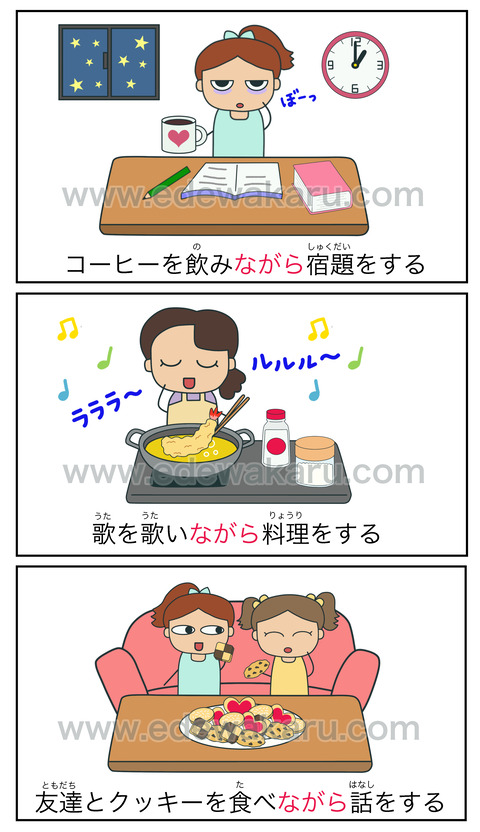
Meaning
Simultaneous actions
How to use it
Verb [ます-form] + ながら
Explanation
“AながらB” is a sentence pattern meaning “actions A and B are being performed at the same time.” There are two actions, “A” and “B,” in this pattern, but action “B” is the important one. Be careful, because mixing up “A” and “B” can make the meaning strange 😀
[Example]
Do homework while drinking coffee
【A】drink coffee
【B】do homework ← the important action
[For intermediate to advanced learners]
“〜ながら” has several meanings and is a little complicated 😨
① Simultaneous action (beginner level)
② Concession (intermediate level)
(Review: 〜ながら (concession))
③ Manner (advanced level)
(Review: 〜ながら (manner))
If you are taking N2 or above, be sure to learn to distinguish each meaning 😊
(Review: 〜ておく)
In context 5 examples
コーヒーを飲みながら宿題をする
→「コーヒーを飲む」と「宿題をする」という動作が同時に行われているDo homework while drinking coffee. →The actions “drink coffee” and “do homework” are being performed at the same time.
お母さんは歌を歌いながら料理をしている
→「歌を歌う」と「料理をする」という動作が同時に行われている(復習:〜ている(進行中))Mom is cooking while singing a song. →The actions “sing a song” and “cook” are being performed at the same time (Review: 〜ている (in progress)).
友達とクッキーを食べながら話をする
→「クッキーを食べる」と「話をする」という動作が同時に行われているTalk while eating cookies with a friend. →The actions “eat cookies” and “talk” are being performed at the same time.
電話をしながら運転をしちゃいけないよ
→「電話をする」と「運転をする」という動作が同時に行われている(復習:〜ちゃ・〜じゃ)You mustn’t drive while talking on the phone. →The actions “talk on the phone” and “drive” are being performed at the same time (Review: 〜ちゃ・〜じゃ).
一人暮らしをして以来、テレビを見ながらごはんを食べるようになった
→「テレビを見る」と「ごはんを食べる」という動作が同時に行われるようになった(復習:〜て以来)(復習:〜ようになる)Ever since I started living alone, I’ve gotten into the habit of eating while watching TV. →I started doing the actions “watch TV” and “eat” at the same time (Review: 〜て以来) (Review: 〜ようになる).
Read the original source text
Meaning
同時進行動作(どうじしんこうどうさ)
How to use it
動詞[ます形]+ながら
Explanation
「AながらB」は「AとBの動作が同時に行われている」という意味の文型です。この文型では「A」と「B」の2つの動作がありますが、
「B」の動作が重要な動作
です。「A」と「B」を間違えると、意味が変になる場合がありますので気をつけましょう😀
[例]
コーヒーを飲み
ながら
宿題をする
【A】コーヒーを飲む
【B】 宿題をする←重要な動作
【中級〜上級レベルの人へ】
「〜ながら」にはいくつかの意味があり、少し複雑です😨
①同時動作(初級レベル)
②逆接(中級レベル)
(復習:〜ながら(逆接))
③様態(上級レベル)
(復習:〜ながら(様態))
N2以上を受ける人は、1つ1つしっかりと区別をして覚えておきましょう😊
(復習:〜ておく)
Usage 2
Read this source entry ↗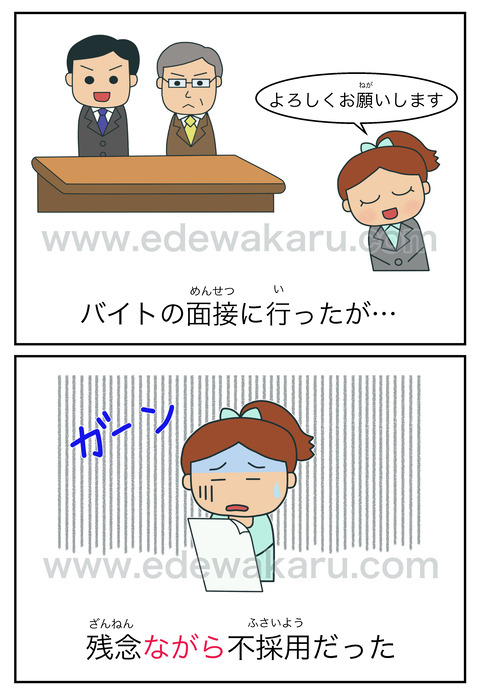
Meaning
Although...
How to use it
Verb [ます-form or ない-form] + ながら
Adjective or noun [dictionary form] + ながら
Explanation
The N2 pattern “〜ながら” expresses concession, as in “although 〜” or “but 〜.”
It needs to be distinguished from “〜ながら” for simultaneous actions, which is taught at N4. 😥 N4 “〜ながら” expresses simultaneous actions, so it always takes an action verb. Remember that when a stative verb (いる, ある, わかる, etc.), adjective, or noun comes before “〜ながら,” in most cases it has the concessive meaning. 😉 “〜ながらも,” with “も” added, is also used, but has the same meaning.
“残念ながら” is a commonly used expression, and generally does not take “も.”
[Distinguish these]
[Simultaneous actions] Read the newspaper while drinking coffee (読む = action verb)
[Concession] Unfortunately, I was not hired (残念 = adjective)
[Concession] Although I knew it was wrong, I lied (知っている = stative verb)
[Concession] Although she is a woman, she is strong (女 = noun)
[For those taking N1]
Besides simultaneous actions (N4) and concession (N2), “〜ながら” also means “while remaining in the same state” (N1). 😮 (Review: 〜ながら (manner/state)) All N1 uses of “〜ながら” are idiomatic expressions, so memorizing them should keep them from getting confused with concessive “〜ながら.” 😉 N1 “〜ながら” was posted on April 26, so check it out. 😀
In context 4 examples
バイトの面接に行ったが、残念ながら不採用だった
→バイトの面接に行ったが、残念だけれども不採用だったI went to a part-time job interview, but unfortunately I wasn’t hired. → I went to a part-time job interview, but although it was unfortunate, I wasn’t hired.
悪いと知っていながら、うそをついちゃった(復習:口語形〜ちゃう・〜じゃう)
→悪いと知っていたけれども、うそをついちゃったAlthough I knew it was wrong, I ended up lying. (Review: colloquial forms 〜ちゃう・〜じゃう) → Although I knew it was wrong, I ended up lying.
彼女は女ながら力が強い
→彼女は女だけれども力が強いAlthough she is a woman, she is strong. → Although she is a woman, she is strong.
子供ながらしっかりしている
→子供だけれどもしっかりしているAlthough she is a child, she is sensible. → Although she is a child, she is sensible.
Read the original source text
Meaning
〜けれども
How to use it
動詞[ます形][ない形]+ながら
形容詞・名詞[辞書形]+ながら
Explanation
N2の文型「〜ながら」は「〜けれども」「〜が」というように逆接を表す文型です。
N4で勉強した同時動作の「〜ながら」とは区別が必要です😥N4の「〜ながら」は同時動作を表しますから、必ず動作性の動詞がきます。「〜ながら」の前に状態動詞(いる・ある・わかるなど)や形容詞・名詞がくる場合はほとんどの場合この逆接の「〜ながら」の意味になると覚えておきましょう😉また
「〜ながらも」と「も」をつける場合もありますが、意味は同じです。
「残念ながら」はよく使われる表現で、「も」をつけないのが一般的です。
[区別しましょう]
【同時進行動作】新聞を
読みながら
コーヒーを飲む(読む→動作性の動詞)
【逆接】
残念ながら
不採用だった(残念→形容詞)
【逆接】悪いと
知っていながら、うそをついた(知っている→状態動詞)
【逆接】
女ながら
力が強い(女→名詞)
【N1を受ける人へ】
「〜ながら」は同時動作(N4)、逆接(N2)のほかに、
「〜ままの状態で」(N1)という意味があります
😮(復習:〜ながら(様態))N1の「〜ながら」は全て慣用表現ですので、暗記しておくと逆接の「〜ながら」と混乱することはないと思います😉N1の「〜ながら」は4月26日に載せましたのでチェックしておいてください😀
Usage 3
Read this source entry ↗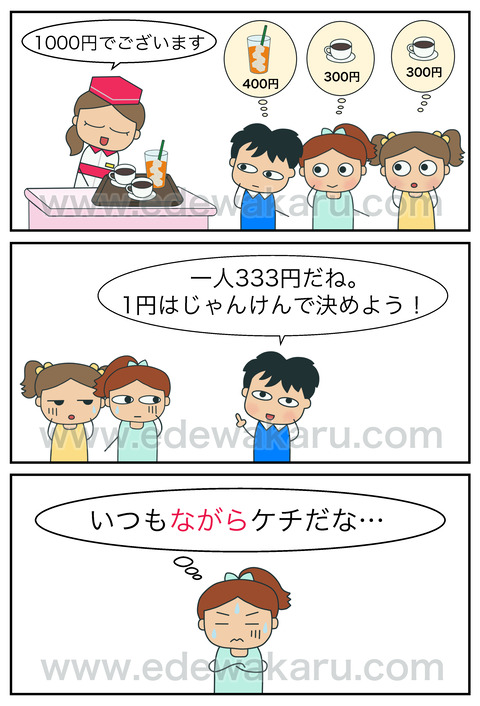
Meaning
in the state of still being 〜
How to use it
Verb [ます-form] + ながら
Noun [dictionary form] + ながら
Explanation
“〜ながら” means “in the state of still being 〜,” and is a grammar pattern expressing a state or condition that continues without changing 😊 This pattern is used only with certain fixed words, and all of them are set expressions, so it should be enough to memorize the following 😉
[Set expressions]
いつもながら
→as always; as usual
涙ながら
→with tears streaming; while crying
昔ながら
→unchanged from the old days
生きながら
→while still alive
生まれながら
→by nature; unchanged from birth
いながら
→without moving from one’s place
毎回ながら
→unchanged every time
ため息ながら
→while sighing
When a noun follows, the form is “〜ながらの + noun” 😊 N1 is difficult, but there are also patterns like this “〜ながら” that have no similar grammar patterns and can simply be memorized, so do your best to learn them 😌 There are several grammar patterns that include “〜ながら” that are not similar patterns, so make sure to distinguish them as you learn.
In context 1 examples
彼女は涙ながらに本当のことを話してくれた
→彼女は涙を流しながら本当のことを話してくれたShe told me the truth through her tears. →She told me the truth while shedding tears.
Read the original source text
Meaning
〜ままの状態で
How to use it
動詞[ます形]+ながら
名詞[辞書形]+ながら
Explanation
「〜ながら」は「〜ままの状態で」という意味で、そのまま変化しないで続く状態や様子を表す文型です
😊この文型は決まった単語にしか使われず、
すべてが慣用表現となります
ので以下のものを暗記しておくと問題ないと思います😉
[慣用表現]
いつもながら
→いつもと変わらず・いつも通り
涙ながら
→涙を流しながら・泣きながら
昔ながら
→昔から変わらない
生きながら
→生きたままの状態で
生まれながら
→生まれつき・生まれた時から変わらず
いながら
→その場を動かない状態で
毎回ながら
→毎回変わらず
ため息ながら
→ため息をつきながら
後ろに名詞がくる場合は「〜ながらの+名詞」という形になります
😊N1は難しいですが、この「〜ながら」のように類似文型がなく、暗記すればOKなものもありますのでがんばって覚えてしまいましょう😌類似文型ではありませんが「〜ながら」とつく文法はいくつかありますので区別して覚えておきましょう。
どんなときどう使う 日本語表現文型辞典
Usage 1
Meaning
as, with
How to use it
N + ながら
Explanation
ながら〈そのまま〉
~の状態のまま
1)「~ながら」の形で、「~の状態のまま」という意味を表す。慣用的な表現が多く意味はそれぞれ次のようになる。 ❶ 「涙ながらに」は「涙を流して」、 ❷ 「生まれながらに」は「生まれつき」、 ❸ 「昔ながらの」は「昔のままの」。
2) ❹ の「生まれながらにして」は「生まれながらに」と同じように使う。
1)Something is just as condition implies. The many idioms with this pattern include:涙ながらに (shed tears), 生まれながらに (born with or as), 昔ながらの (as in the past).
2)The 生まれながらにして in sentence ❹ also means "to be born with or as."
In context 4 examples
戦火を逃れてきた人々は涙ながらにそれぞれの恐ろしい体験を語った。
The people who had fled the war zone recounted their terrifying experiences one by one through their tears.
彼には生まれながらに備わっている品格があった。
He had an innate dignity.
10年ぶりに昔ながらの校舎や校庭を見て懐かしかった。
It was nostalgic to see the old school building and playground, unchanged from the past, for the first time in ten years.
モーツァルトは生まれながらにして音楽の天才であった。
Mozart was a musical genius from birth.
Read the original source text
Meaning
as, with
How to use it
N+ながら
Explanation
ながら〈そのまま〉
~の状態のまま
1)「~ながら」の形で、「~の状態のまま」という意味を表す。慣用的な表現が多く意味はそれぞれ次のようになる。 ❶ 「涙ながらに」は「涙を流して」、 ❷ 「生まれながらに」は「生まれつき」、 ❸ 「昔ながらの」は「昔のままの」。
2) ❹ の「生まれながらにして」は「生まれながらに」と同じように使う。
1)Something is just as condition implies. The many idioms with this pattern include:涙ながらに (shed tears), 生まれながらに (born with or as), 昔ながらの (as in the past).
2)The 生まれながらにして in sentence ❹ also means "to be born with or as."
Usage 2
Meaning
even while; although
How to use it
Vます/イAい/ナA・ナAであり/N・Nであり + ながら
Explanation
ながら〈逆接〉
~ているのに/~ですが
1)「~ながら、…」の形で、「~から予想されることとは違って、実際は…だ」と言いたいときに使う。「~」には状態性の動詞、「Vている」、形容詞や名詞などが来る。わずかだが ❻ のように副詞につく例もある。
2)「~」に動作動詞がある場合は「同時進行」の意味になる。
3)「勝手ながら・いやいやながら・陰ながら・及ばずながら」などの慣用表現をよく使う。
1)Describes result different from expected. Verbs of state, Vている, adjectives or nouns precede ながら. Rarely also used as adverb, as in sentence ❻ .
3)Often used in idioms such as 勝手ながら (I know this is probably an inconvenience, but), いやいやながら (grudgingly); 陰ながら (secretly, silently); and 及ばずながら (to the best of my poor ability).
2)When preceded by action verbs, means "simultaneous progression."
In context 6 examples
松下さんは本当のことを知りながら、知らないふりをしている。
Although Mr. Matsushita knows the truth, he pretends not to know.
お手紙をいただいていながら、お返事も差し上げずに失礼いたしました。
Although I received your letter, I was rude not to send a reply.
残念ながらわたしたちのチームは負けてしまった。
Unfortunately, our team lost.
一郎という子は、子どもながら将棋では大人も勝てないほど強い。
Although Ichiro is a child, he is so strong at shogi that even adults cannot beat him.
わたしたちは貧しいながら幸せに暮らしています。
Although we are poor, we live happily.
兄はこのごろゆっくりながら歩けるようになった。
My older brother has become able to walk, albeit slowly, these days.
Read the original source text
Meaning
even while; although
How to use it
Vます/イAい/ナA・ナAであり/N・Nであり+ながら
Explanation
ながら〈逆接〉
~ているのに/~ですが
1)「~ながら、…」の形で、「~から予想されることとは違って、実際は…だ」と言いたいときに使う。「~」には状態性の動詞、「Vている」、形容詞や名詞などが来る。わずかだが ❻ のように副詞につく例もある。
2)「~」に動作動詞がある場合は「同時進行」の意味になる。
3)「勝手ながら・いやいやながら・陰ながら・及ばずながら」などの慣用表現をよく使う。
1)Describes result different from expected. Verbs of state, Vている, adjectives or nouns precede ながら. Rarely also used as adverb, as in sentence ❻ .
3)Often used in idioms such as 勝手ながら (I know this is probably an inconvenience, but), いやいやながら (grudgingly); 陰ながら (secretly, silently); and 及ばずながら (to the best of my poor ability).
2)When preceded by action verbs, means "simultaneous progression."
Usage 3
Meaning
while
How to use it
Vます + ながら
Explanation
ながら〈同時進行〉
1)一人の人が二つの動作を同時に行うことを表す。 ❸ ❹ のように、長い時間のことにも使える。
2)「ながら」の後ろが主要な動作である。
◆ × 日本語の勉強をしながら、発音のテープを聞いた。
3)ふつう、「ながら」の前後は継続的な動作を表す動詞を使う。
◆ × すわりながら本を読んだ。→○すわって本を読んだ。
2)Main action follows ながら.
◆ × 日本語の勉強をしながら、発音のテープを聞いた。
3)Verbs of continuation precede and follow ながら.
◆ × すわりながら本を読んだ。→○すわって本を読んだ。
1)Describes one person doing two actions simultaneously. Can also be used for long periods of time, as in sentences ❸ and ❹ .
In context 5 examples
わたしはいつも料理の本を見ながら料理を作ります。
I always cook while looking at a cookbook.
毎晩父はビールを飲みながらテレビを見ます。
My father watches TV while drinking beer every night.
わたしはこれからも医者の仕事をしながら、この子を育てます。
I will continue raising this child while working as a doctor.
学生時代、わたしはアルバイトをしながら、日本語学校に通っていた。
When I was a student, I attended Japanese language school while working part-time.
発音のテープを聞きながら、日本語の勉強をした。
I studied Japanese while listening to pronunciation tapes.
Read the original source text
Meaning
while
How to use it
Vます+ながら
Explanation
ながら〈同時進行〉
1)一人の人が二つの動作を同時に行うことを表す。 ❸ ❹ のように、長い時間のことにも使える。
2)「ながら」の後ろが主要な動作である。
◆ × 日本語の勉強をしながら、発音のテープを聞いた。
3)ふつう、「ながら」の前後は継続的な動作を表す動詞を使う。
◆ × すわりながら本を読んだ。→○すわって本を読んだ。
2)Main action follows ながら.
◆ × 日本語の勉強をしながら、発音のテープを聞いた。
3)Verbs of continuation precede and follow ながら.
◆ × すわりながら本を読んだ。→○すわって本を読んだ。
1)Describes one person doing two actions simultaneously. Can also be used for long periods of time, as in sentences ❸ and ❹ .
毎日のんびり日本語教師
Usage 1
Read this source entry ↗How to use it
Verb in ます-form + ながら
Explanation
Expresses that one action is performed simultaneously with another.
Of the two actions, the latter is the main action.
Also,
Notes
The “ながら” series
In context 8 examples
歌いながら踊る。
Dance while singing.
寝ながらテレビを見る。(躺着看电视。)
Watch TV while lying down.
ここは夜景を見ながら飲めるレストランだ。
This is a restaurant where you can drink while looking at the night view.
こたつに入って温まりながらアイス食べたい。
I want to eat ice cream while warming up under the kotatsu.
泣きながら喜ぶ。
Rejoice while crying.
スマホを見ながら運転するのは法律で禁止されている。
Driving while looking at a smartphone is prohibited by law.
このゲーム、誰かに教えてもらいながらやらないと訳わからん。
I can’t make sense of this game unless someone teaches me while I play.
温泉つかりながら酒飲みたい。
I want to drink alcohol while soaking in a hot spring.
Read the original source text
How to use it
動ます形+ながら
Explanation
ある動作が他の動作を同時に行われていることを表します。
2つの動作のうち、後件が中心的な動作となります。
なお
Notes
「ながら」シリーズ
Usage 2
Read this source entry ↗How to use it
Verb ます-stem + ながら (も)
い-adjective dictionary form + ながら (も)
な-adjective stem + (であり) ながら (も)
Noun + (であり) ながら (も)
Adverb + とながら (も)
Adverb + にながら (も)
Explanation
This concessive grammar describes contradictory actions or qualities existing at the same time.
「しかしながら」 (“however”), 「残念ながら」 (“unfortunately”), 「嫌々ながら」 (“reluctantly”), and 「遅ればせながら/今更ながら」 (“belatedly”) are idiomatic expressions that use this pattern.
Notes
The “ながら” series
In context 9 examples
日帰りながら、仙台を満喫できた。
Although it was just a day trip, I was able to fully enjoy Sendai.
陰ながら応援してます。(暗中支持。)
I’m quietly cheering you on.
残念ながら、現実は残酷だ。
Unfortunately, reality is cruel.
疲れるは疲れるけど、しかしながら体を動かすのは本当に楽しい。
It is tiring, sure, but exercising is really fun.
あそこは小さいながらも結構良い動物園だと聞いてる。
I hear that place is quite a good zoo, even though it’s small.
眠いながらもかろうじて起きてます。
I’m sleepy, but I’m barely managing to stay awake.
この曲を昔聞いたとき、子供ながらに感動したのを覚えてます。
When I heard this song long ago, I remember being moved by it even as a child.
知っていながら犯す罪には、知らずに犯す罪よりも重い代償を支払わなければなりません。
For sins committed knowingly, one must pay a heavier price than for sins committed unknowingly.
小さな子供が危ないながらも一生懸命重いドアを開けようとしていた。
A small child was trying with all their might to open a heavy door, even though it was dangerous.
Read the original source text
How to use it
動ます形+ながら(も)
い形容詞辞書形+ながら(も)
な形容詞語幹+(であり)ながら(も)
名詞+(であり)ながら(も)
副詞+とながら(も)
副詞+にながら(も)
Explanation
相反する動作や性質が同時に存在することを述べる逆接の文法です。
「しかしながら(但是)」「残念ながら(很遗憾)」「嫌々ながら(尽管不情愿)」「遅ればせながら/今更ながら(虽为时已晚)」はこの文型を用いた慣用表現です。
Notes
「ながら」シリーズ
日本語文型辞典 英語版
Meaning
Links two verbs in a sentence and expresses that two actions are proceeding concurrently. In this usage, the second verb presents the main action of the sentence, and the first verb (in the nagara clause) presents a secondary action that depicts the circumstances in which the main action is carried out. For instance, in
(1)
, “studying or working” is the main action, and it is accompanied by the action of “listening to music.” In the same way, the incorrect ながら sentence below means that the action of getting on the train and the action of reading the book were carried out simultaneously. It cannot be interpreted to mean that the subject was reading a book on the train.
(×)電車に乗りながら本を読んだ。
I read a book while I was boarding the train.
(○)電車に乗って本を読んだ。
I got on the train and read a book.
Both of the verbs must have the same subject (see incorrect example below), and in most cases they refer to the intentional actions of a person. However, as illustrated in
(5)
and
(6)
, in some cases the subject may be an airplane, a natural phenomenon, or something else capable of moving or changing by virtue of its own power.
(×)私は本を読みながら、彼はウイスキーを飲んだ。
While I was reading a book, he drank whiskey.
When attached to a noun or the stem of some verbs, ながら expresses a state or situation that continues as it is without change. For instance, 生まれながら and 昔ながら mean “just as it is, ever since a certain time,” and these expressions are similar to 生まれつき (by nature) and 昔のまま (as it was before), respectively. 涙ながらに means “in a tearful state” and can be replaced by 涙を流して (weeping). Expressions that exemplify this usage are relatively fixed, and only a small number of words, including those in the examples above, can precede ながら.
When ながら is attached to a noun, an i- or na-adjective, a verb stem, or an adverb (without と or に, in the case of adverbs that usually take these particles), it expresses the meaning of contradiction or opposition, similar to ...のに or ...けれども/が. It can also be combined with the particle も and used in the form ながらも. ながらに, as in
(3)
, sounds old-fashioned and is not normally used in colloquial speech. In this so-called “adversative” usage, ながら is usually preceded by a stative predicate. On the other hand, in Usage 1, which presents “parallel/simultaneous” actions, ながら must be preceded and followed by action verbs.
How to use it
1. R-ながら〈simultaneity〉
2. ...ながら〈appearance, manner〉[Nながら][R-ながら]
3. ...ながら(も/に)〈adversative connective〉[N/Na ながら][A-いながら][R-ながら]
4. ...とはいいながら→
In context 21 examples
音楽を聴きながら勉強や仕事をする人のことを「ながら族」という。
People who listen to music while studying or working are called nagarazoku.
その辺でお茶でも飲みながら話しましょう。
Let’s talk somewhere over a cup of tea or something.
母は鼻歌を歌いながら夕飯の用意をしている。
My mother is humming a song while preparing dinner.
よそ見をしながら運転するのは危険です。
It’s dangerous to take your eyes off the road while driving.
飛行機は黒煙をあげながら真っ逆さまに墜落して行った。
The airplane was trailing thick black smoke as it went into a nosedive.
液体はぶくぶくとガスを発生させながら発酵を続けている。
The liquid is generating bubbles of gas as it continues to ferment.
いつもながら見事なお手並みですね。
Your work is marvelous, as always.
この清酒メーカーは、昔ながらの製法で日本酒をつくっている。
This refined sake maker uses the traditional method of manufacture.
被害者は涙ながらに事件の状況を語った。
In tears, the victim related the circumstances of the incident.
生まれながらのすぐれた才能に恵まれている。
She is gifted with a great natural talent.
この子は生まれながらにして優れた音楽的感性を備えている。
This child was born with exceptional musical sensibility.
このバイクは小型ながら馬力がある。
In spite of its small size, this motorbike has impressive horsepower.
敵ながらあっぱれな態度であった。
Although he was my foe, I must admit he behaved admirably.
子供ながらになかなかしっかりとした挨拶であった。
That was quite a good speech, for a child.
残念ながら、結婚式には出席できません。
Unfortunately, I will not be able to attend the wedding.
狭いながらもようやく自分の持ち家を手に入れることができた。
Cramped as it was, I was finally able to get my own home.
何もかも知っていながら教えてくれない。
Even though he knows everything, he won’t tell me.
すぐ近くまで行きながら、結局実家には寄らずに帰って来た。
I was in my parents’ neighborhood, but I ended up coming home without dropping by.
学生の身分でありながら、高級車で通学している。
Even though she’s a student, she travels to school in a luxury car.
細々ながらも商売を続けている。
We’re continuing to run our business, although we’re just scraping by.
ゆっくりながらも作業は少しずつ進んでいる。
Although it’s going very slowly, the work is progressing little by little.
AIUEO JLPT Grammar
Usage 1
Meaning
「ながら」is a conjunction used to indicate that two actions are performed simultaneously. It connects to the masu-form of a verb, and the action mentioned after “ながら” is often the main one.
How to use it
Verb ます-form + ながら
In context 5 examples
音楽を聴きながら勉強する。
I study while listening to music.
テレビを見ながらご飯を食べてはいけません。
You should not eat while watching TV.
プロジェクトの進捗を確認しながら、次のステップを決定します。
We will decide the next step while checking the progress of the project.
歩きながら話しましょうか?
Shall we talk while walking?
スマホを見ながら運転してはいけません。
You should not drive while looking at your smartphone.
Read the original source text
Meaning
「ながら」is a conjunction used to indicate that two actions are performed simultaneously. It connects to the masu-form of a verb, and the action mentioned after “ながら” is often the main one.
How to use it
動詞ます形+ながら
Explanation · 日本語
「ながら」は、同時に二つの動作を行うことを示す接続助詞で、動詞のます形に接続して使用されます。「ながら」の後に述べる動作が主に行われることが多いです。
Usage 2
Meaning
「〜ながらも」indicates that despite one situation or condition, a contrary result or situation occurs. It shows the contradiction or contrast between the first and second parts of the sentence.
How to use it
Verb masu-stem + ながら (+ も); adjective dictionary form + ながら (+ も); na-adjective + ながら (+ も); noun + ながら (+ も)
In context 5 examples
彼は若いながらも、非常にしっかりしている。
Although he is young, he is very reliable.
彼女は忙しいながら、毎日時間を割いて勉強している。
Although she is busy, she makes time to study every day.
彼女は疲れていながら、仕事を続けた。
Although she was tired, she continued working.
彼は失敗を恐れながらも、新しい挑戦に挑むことを決めた。
Although he fears failure, he decided to take on a new challenge.
彼は多忙ながらも、家族との時間を大切にしている。
Although he is very busy, he values time with his family.
Read the original source text
Meaning
「〜ながらも」indicates that despite one situation or condition, a contrary result or situation occurs. It shows the contradiction or contrast between the first and second parts of the sentence.
How to use it
動詞ます形+ながら (+も)形容詞辞書形+ながら (+も)形容動詞+ながら (+も)名詞+ながら (+も)
Explanation · 日本語
「〜ながらも」は、ある事柄や状況が存在しつつも、それに反する結果や状況が起きることを表す表現です。逆接のニュアンスを持ち、前件と後件の対比や矛盾を示します。
Bunpro Grammar Reference
Meaning
While ~ing, During, As
How to use it
Verb[stem]+ ながら
Nuance
A word used to show that (B) happens during (A), with (B) being more important.
Explanation
ながら is another conjunction particle in Japanese that has two primary different meanings. These meanings are as follows:
同時の動き - Two things that are existing/happening simultaneously.
確定の逆説 - Two things that are unexpectedly existing/happening simultaneously.
We will focus purely on the 同時の動き meaning in this grammar point. To use ながら, simply add it to the ます stem of verb (A), and then highlight verb (B) as part of the following clause. This may be translated simply as 'while' in English.
私は毎日、音楽を聴きながら走ります。
I run every day, while listening to music.
運転しながら携帯を使っていたら、前の車にぶつかった。
When I was using my phone while driving, I crashed into the car in front of me.
Grammatically, the (B) action is considered to be the 'important' action, while the (A) action expresses the timeline within which (B) takes place.
Caution
Due to the (B) action being considered the 'primary' action of something that (A) is related to, (A) and (B) must have the same subject.
高校の頃はサッカーの練習をしながら漢字の勉強もした。
When I was in high school, I studied kanji while also practicing soccer. (Natural Japanese, as the overall timeline of the sentence is 'while in high school')
漢字の勉強をしながらアニメを見る。
I watch anime while studying kanji. (Natural Japanese, as the speaker is doing both things at the same time)
大学に通いながら、トランプ氏がアメリカの大統領だった。
Trump was the president of America while I was going to university. (Unnatural Japanese. Although the events happen at the same time, they share no common subject/place)
Fun Fact
When used to express 確定の逆説, ながら will be followed by も. ながらも is a separate grammar point that we will learn more about later. In this construction, も is expressing surprise about the fact that (A) and (B) coexist.
あそこの病院は古いながらも中は綺麗だと聞いた。
I heard that that hospital looks nice inside, even though it is old.
In context 18 examples
- シャワーを浴びながらいいアイディアを思いついた。
While showering, I thought of a good idea.
- 私は毎日、音楽を聴きながら走ります。
I run every day, while listening to music.
- 運転しながら携帯を使っていたら、前の車にぶつかった。
When I was using my phone while driving, I crashed into the car in front of me.
- 赤ちゃんが寝ながら、おならをした。
The baby farted while sleeping.
- バスに乗りながら、スマホでゲームをしている。
I am playing games on my phone, while riding the bus.
- 友達を待ちながら、コーヒーを飲もう。
Let's get coffee while waiting for our friends.
- 運転しながら携帯を使ってはいけない。
You must not use a cellphone while driving.
- 犬と散歩をしながら、本を読んでいた。
While I was walking my dog, I was reading a book.
- 桜を見ながらパーティーをしようと思う。
I think that I will have a party while viewing cherry blossoms.
- あの人はスマートフォンを使いながら歩いていて、女の人とぶつかった。
That person was walking while using a smartphone and bumped into a woman.
- 森の中を歩きながら、鳥の鳴き声を聞いた。
While I was walking through the forest, I listened to the birds singing.
- シャドーイングとは日本語を聴きながら、繰り返すことだ。
Shadowing is repeating what you hear while listening to Japanese.
- 日本語の勉強をしながら、音楽を聞くのが好き。
I like to listen to music while doing my Japanese studies.
- 私は晩ご飯を食べながら、一番好きな番組を見る。
I watch my favorite TV show while eating dinner.
- 高校の頃はサッカーの練習をしながら漢字の勉強もした。
When I was in high school, I studied kanji while also practicing soccer. (Natural Japanese, as the overall timeline of the sentence is 'while in high school')
- 漢字の勉強をしながらアニメを見る。
I watch anime while studying kanji. (Natural Japanese, as the speaker is doing both things at the same time)
- 大学に通いながら、トランプ氏がアメリカの大統領だった。
Trump was the president of America while I was going to university. (Unnatural Japanese. Although the events happen at the same time, they share no common subject/place)
- あそこの病院は古いながらも中は綺麗だと聞いた。
I heard that that hospital looks nice inside, even though it is old.
Read the original source text
Meaning
While ~ing, During, As
How to use it
Verb[stem]+ ながら
Nuance
A word used to show that (B) happens during (A), with (B) being more important.
Explanation
ながら is another conjunction particle in Japanese that has two primary different meanings. These meanings are as follows:
同時の動き - Two things that are existing/happening simultaneously.
確定の逆説 - Two things that are unexpectedly existing/happening simultaneously.
We will focus purely on the 同時の動き meaning in this grammar point. To use ながら, simply add it to the ます stem of verb (A), and then highlight verb (B) as part of the following clause. This may be translated simply as 'while' in English.
私は毎日、音楽を聴きながら走ります。
I run every day, while listening to music.
運転しながら携帯を使っていたら、前の車にぶつかった。
When I was using my phone while driving, I crashed into the car in front of me.
Grammatically, the (B) action is considered to be the 'important' action, while the (A) action expresses the timeline within which (B) takes place.
Caution
Due to the (B) action being considered the 'primary' action of something that (A) is related to, (A) and (B) must have the same subject.
高校の頃はサッカーの練習をしながら漢字の勉強もした。
When I was in high school, I studied kanji while also practicing soccer. (Natural Japanese, as the overall timeline of the sentence is 'while in high school')
漢字の勉強をしながらアニメを見る。
I watch anime while studying kanji. (Natural Japanese, as the speaker is doing both things at the same time)
大学に通いながら、トランプ氏がアメリカの大統領だった。
Trump was the president of America while I was going to university. (Unnatural Japanese. Although the events happen at the same time, they share no common subject/place)
Fun Fact
When used to express 確定の逆説, ながら will be followed by も. ながらも is a separate grammar point that we will learn more about later. In this construction, も is expressing surprise about the fact that (A) and (B) coexist.
あそこの病院は古いながらも中は綺麗だと聞いた。
I heard that that hospital looks nice inside, even though it is old.
Nuance · 日本語
(A)が起こっている間に(B)も起こっているが、(B)の方が重要だということを表す言葉。
Yokubi — The Common Grammar Guide (https://yoku.bi)
Explanation
This lesson focuses on how to state that something happens while something else is going on.
ながら states that two actions are concurrently true as they happen at the same time. The subject of the two actions **must** be the same. Like "I watch TV while eating chips" is okay, but "I watch TV while my brother plays video games" is not. ながら attaches to the masu stem of the verb.
ながら is in the form of AながらB, where the action described by B is the "primary" action and the action described by A is a "secondary" action that is done at the same time. In English this nuance does not easily show up, so let's look at two examples instead:
In the first example, the main action is to study and that is what the speaker wants to do, while in the second example the speaker is focused on the action of waiting, and while doing so they study.
つつ is another auxiliary that can be used more or less the same as ながら, except it sounds more formal and is almost only relegated to literary sentences.
つつある is a special usage of つつ that implies an action is happening continuously, like a more formal ている.
However, unlike ている it cannot be used for verbs that describe states to mean "to be in a state of":
間/あいだ(に) and うちに are two other ways to state that something happens while something else is happening, however the usage is more general and they have a broader scope than ながら and つつ.
間/あいだ says that two events cover the same exact interval of time, **in its entirety**. This places constraints on what sorts of statements it accepts. 間 itself acts like a noun.
A間**に**B says that B starts and ends **within** the span of time when A takes place. Unlike the 間 version without に, it implies that the duration of B is shorter than the duration of A, as it needs to be completely contained within A's interval.
うちに says that an event happens while the statement before うちに remains true.
It often has a nuance that the event marked by うちに is limited in time and will eventually finish.
This is often used to give recommendations or suggestions like "before X happens, we should do Y".
In context 2 examples
画面を見ながら勉強しよう
Let's study while looking at the screen.
そこで勉強しながら、爺ちゃんの帰りを待つ
I waited for grandpa to come home while studying there
NINJAL 日本語文型データベース
Meaning
[1] Expresses that when a person or thing performs one action or movement, another action is performed at the same time.
It is also used in the form 「〜ながらのN」.
[2] Used when you want to say that the facts run counter to what one would predict or expect from “〜.” It is also used when you want to say that, although a certain situation certainly exists, there is also an aspect that is unrelated to it.
It is often used in the form 「〜ておきながら」. It expresses that the facts run counter to what one would expect from the action “〜,” and emphasizes the speaker’s sense of reproach.
「及ばずながら・陰ながら」 are idiomatic expressions.
[3] Used to indicate in advance how you feel about what you are going to say, or to provide it as a qualification.
「遅ればせながら」 is an idiomatic expression.
[4] Expresses that the state of “~” remains unchanged. Used when you want to say that something is done, or a situation arises, while the state remains unchanged.
It is also used in the form 「〜ながらのN」.
How to use it
Vます+ながら
Vます+ながら/Vないながら
i-Aいながら/i-A: remove い + くないながら (however, いい → よくないながら)
na-Aながら・na-Aでありながら/na-Aでないながら
Nながら・Nでありながら/Nでないながら
Other
na-Aながら
Nながら
Notes
[1] Usually, the sentence after 「~ながら」 expresses the main action. “~” is a sentence expressing an action that accompanies the main action.
“~” is usually a verb expressing an ongoing action, such as 「見る・歩く・働く」 (see, walk, work).
The actions can take place over various lengths of time; this can also be used for actions that proceed simultaneously over a long period.
The subject of the “~” sentence and the sentence after 「~ながら」 is the same.
[2] “~” often takes an expression of a state. However, in the case of 「~ておきながら」, “~” is usually a verb expressing an intentional action.
The subject of the “~” sentence and the sentence after 「~ながら」 is the same.
In context 44 examples
私はいつもレシピを見ながら料理を作ります。
I always cook while looking at a recipe.
久美は今日、泣きながら学校から帰ってきた。
Kumi came home from school today in tears.
山本さんは働きながら夜学に通ったそうだ。
I hear Yamamoto attended night school while working.
公園で子どもを遊ばせながら、親たちはおしゃべりを楽しんでいた。
While the children played in the park, their parents enjoyed chatting.
姉は子どもを育てながら司法試験の勉強をしている。
My older sister is studying for the bar exam while raising her child.
台風12号は依然として強い勢力を保ちながら、日本列島を北上している。
Typhoon No. 12 is moving north over the Japanese archipelago while maintaining its strength.
日本では、携帯電話で話しながらの自転車走行は禁止されている。
In Japan, riding a bicycle while talking on a cell phone is prohibited.
偽物と知りながらブランドの名のついた物を売った場合も、罪になる。
Selling goods bearing a brand name while knowing they are counterfeit is also a crime.
このレストランは都心の一等地にありながら、庶民的な雰囲気で値段も比較的リーズナブルだ。
Although this restaurant is in a prime downtown location, it has a down-to-earth atmosphere and relatively reasonable prices.
大野選手は、この試合で活躍を期待されていながら、いい結果を出すことができなかった。
Although Ohno was expected to do well in this match, he was unable to produce a good result.
あの人は、近いうちに必ず連絡すると言っておきながら、一向に連絡してこない。
That person said they would definitely get in touch soon, but they haven’t contacted me at all.
多くの社員が、口には出さないながら、社長のやり方に不満を持っている。
Many employees are dissatisfied with the president’s way of doing things, though they don’t say so aloud.
私の実家は、小さいながら会社を経営しています。
My family runs a small company.
2月に入り、量は少ないながら花粉の飛ぶところがありますので、花粉症の方は早めに対策してください。
It’s February, and in some places pollen is flying, though only in small amounts, so if you have hay fever, take precautions early.
このラーメン屋はオープンして間もないながらかなりの人気で、行列ができている。
This ramen shop has been open only a short time, but it’s already very popular, and there’s a line.
高尾山は大変人気のある観光地である。都心からそれほど遠くないながら手軽に山歩きが楽しめる。
Mount Takao is a very popular tourist destination. Although it isn’t very far from central Tokyo, you can easily enjoy hiking there.
会社の事業の縮小によって、不本意ながら退職しなければならなくなった。
Because the company downsized its business, I had to leave my job against my wishes.
この学生のレポートは荒削りながら、独自の視点から論じていて、なかなか面白い。
This student’s report is rough around the edges, but it argues from an original point of view and is quite interesting.
この辺りは自然が豊かでありながら都心へのアクセスもよく、住宅地として人気がある。
This area is rich in nature while also having good access to central Tokyo, making it popular as a residential area.
結婚式のスピーチを頼まれた。人前で話すのは得意でないながら、なんとか乗り切った。
I was asked to give a speech at a wedding. Although I’m not good at speaking in front of people, I somehow got through it.
あの子は絶対に他の子をいじめたりしない。子どもながら善悪の区別ができているのだと思う。
That child would never bully another child. I think that, even as a child, they can tell right from wrong.
転勤先でもご活躍なさいますよう、陰ながら応援しております。
I’m cheering you on from the sidelines and wishing you success at your new posting.
学生の身でありながら、突然の病に倒れた親の介護をしなければならなくなった。
Although still a student, I suddenly had to care for my parent, who had fallen ill.
この作家はまだ新人でありながら、その表現力が高く評価されている。
Although this author is still a newcomer, their expressive ability is highly regarded.
風邪をひいて2日間寝込んだ。今日はまだ本調子でないながら、少し回復してきたので、散歩に出かけることにした。
I caught a cold and was bedridden for two days. I’m still not back to full strength today, but I’ve recovered a little, so I decided to go for a walk.
この本を読んで、日本料理の奥深さにいまさらながら気付いた。
Reading this book made me realize, even at this late stage, just how profound Japanese cuisine is.
夕飯は外食にしようという母の提案に、私はいやいやながら従った。
I reluctantly went along with my mother’s suggestion that we eat out for dinner.
次回のプロジェクトは、及ばずながら私もお手伝いさせていただきます。
I’ll help with the next project as best I can.
残念ながら私は今度の同窓会には参加することができません。皆さんによろしくお伝えください。
Unfortunately, I won’t be able to attend the upcoming class reunion. Please give my regards to everyone.
誠に勝手ながら、8月11日〜15日は休業させていただきます。
We will be closed from August 11 to 15, at our discretion.
当然ながら、育った土地が違えば、作物の味は違ってきます。
As you would expect, crops taste different depending on where they were grown.
僭越ながら、乾杯の音頭をとらせていただきます。
If I may be so bold, I’d like to lead the toast.
私ごとながら、先日30歳の誕生日を迎えまして、今後ますます精進してまいりたいと思っております。
This is personal, but I recently celebrated my 30th birthday, and I intend to keep working even harder from now on.
「老婆心ながら忠告させてもらいますが、時間をきちんと守らないのは、社会人としてよくないですよ」
“I’m saying this out of concern, but as a member of society, it’s not good to fail to keep to the time.”
遅ればせながら、新年のご挨拶を申し上げます。
Please accept my belated New Year’s greetings.
恥ずかしながら、この年になるまで料理らしい料理をしたことがありませんでした。
I’m embarrassed to admit that I’d never made anything I could really call a proper meal until this age.
この本に出てくる荒木さんは、戦争中ジャングルに潜み、生きながら地獄の苦しみを味わったそうだ。
Araki, who appears in this book, reportedly hid in the jungle during the war and endured the torments of hell while still alive.
ネットショッピングは便利だ。家にいながら買い物ができる。
Online shopping is convenient. You can shop without leaving home.
オンライン授業なら病院にいながら学習することもできる。
With online classes, you can study while in the hospital.
両手に荷物を持っていながらの姿勢でも、足踏み体操はできます。
You can do stepping exercises even while holding bags in both hands.
今の家にこのまま住みながらのリフォーム工事が可能かどうか、リフォーム業者に聞いてみた。
I asked a remodeling contractor whether it was possible to renovate the house while continuing to live in it.
この豆腐屋は昔ながらの製法を守って豆腐を作っているそうだ。
Apparently, this tofu shop makes tofu using traditional methods.
この家は古民家ながらのたたずまいで、趣がある。
This house has the character of an old traditional home and a charming atmosphere.
いつもながらの簡単な朝食をさっさと済ませて、父は出勤していった。
After quickly finishing his usual simple breakfast, my father left for work.
Read the original source text
Meaning
[1] 人や物がある動作や動きを行うとき、同時に他の動作も行うことを表します。
「〜ながらのN」の形でも使います。
[2] 〜から予想されることや期待されることに、事実が反すると言いたいときに使います。また、確かに〜という状況はあるがそれに関係ない面が同時に存在すると言いたいときにも使います。
「〜ておきながら」の形でもよく使います。「〜」の行為から期待されることに事実が反すると言いたいときに使い、話し手の非難の感情を強調します。
「及ばずながら・陰ながら」は慣用的な言い方です。
[3] 後に述べることをどう感じているかを前もって示したり、注釈として示したりするときに使います。
「遅ればせながら」は慣用的な言い方です。
[4] 「~」の状態が変わらないでそのままであることを表します。状態が変わらないまま、あることをする・ある事態が生じると言いたいときに使います。
「〜ながらのN」の形でも使います。
How to use it
Notes
[1] ふつう「~ながら」の後に主要な動作を表す文がきます。「〜」には、主要な動作に付帯する動作を表す文がきます。
「~」には、ふつう「見る・歩く・働く」などの継続的な動作を表す動詞がきます。
また、動作の時間幅はいろいろで、長い期間の同時進行の動作にも使えます。
「〜」の文と「〜ながら」の後の文の主語は同じです。
[2] 「〜」には、状態を表す言葉がくることが多いです。ただし、「〜ておきながら」の場合は、「〜」はふつう意志的な行為を表す動詞です。
「〜」の文と「〜ながら」の後の文の主語は同じです。