くらべてわかる日本語表現文型辞典
Meaning
Meaning 1: A way of checking something with “~かなぁ” when one knew A but has forgotten it or is unsure.
Meaning 2: An expression used to reminisce about the past, thinking “That happened too, didn’t it?”
How to use it
Aっけ
Connection 1:
[Verb] +んだ+(った)+っけ
[Verb—た form] っけ
[i-adjective—い/くない] +んだ+(った)+っけ
[i-adjective—かった] +(んだ)+っけ
[na-adjective—だった/だ] っけ
[Noun—だ/だった] っけ
Connection 2:
[Verb—た form] っけ
Explanation
【Contrast 2】
“Aものだ” (Meaning 1, p. 308)
They can be substituted. “Aっけ” is more casual than “Aものだ.”
Notes
【Note 1】
・“だっけ” and “だったっけ” have the same meaning.
・When attached to a verb, whether that verb is in the る form or た form indicates whether the event is in the past or not.
【Note 2】
・In the form “た form + っけ,” it means “~たよねえ” (That happened, didn’t it?).
In context 8 examples
これ、君のだったっけ。
Was this yours?
テストはいつからだっけ。
When does the test start again?
あれ、これぼくが払うんだっけ。
Oh, was I supposed to pay for this?
毎月、携帯電話の請求書を見て、「こんなに使ったけ」と思う。
Every month, when I look at my mobile phone bill, I think, “Did I really use this much?”
小学生の頃、二人で手をつないで、この道を通ったっけ。
When we were in elementary school, the two of us used to walk down this road holding hands, didn’t we?
ここに大きな赤い屋根の家が建っていたっけ。
There used to be a house with a big red roof here, didn’t there?
学校をさぼってよくみんなで映画を見にいったっけ。
We often skipped school and went to see movies together, didn’t we?
あの日も今日のように雨が降っていたっけ。
It was raining on that day too, just like today, wasn’t it?
Read the original source text
Meaning
意味1:知ってはいたが、忘れてしまったり不確かなAを「~かなぁ」と確認する言い方。
意味2:そういうこともあったなぁと昔を懐かしんだり、過去を回想する表現。
How to use it
Aっけ
接続1:
[動詞]+んだ+(った)+っけ
[動詞-た形]っけ
[イ形-い/くない]+んだ+(った)+っけ
[イ形-かった]+(んだ)+っけ
[ナ形-だった/だ]っけ
[名詞-だ/だった]っけ
接続2:
[動詞-た形]っけ
Explanation
【対比2】
「Aものだ」(意味1 P.308)
置き換え可能。「Aものだ」より「Aっけ」のほうがくだけた表現。
Notes
【注意1】
・「だっけ」「だったっけ」は意味が同じ。
・動詞につく場合、その動詞が「ル形」か「タ形」かで、過去の出来事か否かを表す。
【注意2】
・「タ形っけ」の形で、「~たよねえ」の意味。
DoJG 日本語文法辞典(全集)
How to use it
(i) {V/Adjective い}informal nonpast | んだっけ | |
| {話す/美味しい}んだっけ | Does someone talk?/Is something delicious? |
(ii) {V/Adjective い}informal past | (んだ) っけ | |
| {話した/美味しかった}(んだ) っけ | Did someone talk?/Was something delicious? |
(iii) {Adjective なstem/Noun/Wh-word} | (なん)だっけ | |
| {元気/学生}(なん)だっけ | Is someone healthy/a student? |
| {なん/誰/どこ/いつ}(なん)だっけ | What/who/where/when is it? |
(iv) {Adjectiveなstem/Noun/Wh-word} | だった(んだ) っけ | |
| {元気/学生}だった(んだ) っけ | Was/is someone healthy/a student? |
| {なん/誰/どこ/いつ}だった(んだ) っけ | What/who/where/when was/is it? |
Explanation
A colloquial sentence final particle marking a question.
In context 9 examples
鈴木さんは英語が話せるんだっけ。
Can you speak English, Mr. Suzuki? / Can Mr. Suzuki speak English?
鈴木さんは英語が話せた(んだ)っけ。
Can you speak English, Mr. Suzuki? / Can Mr. Suzuki speak English?
今日は木曜日だ(った)っけ。
Is today Thursday?
ジェーンさんはピアノが弾けた(んだ)っけ。
Can you play the piano, Jane? / Can Jane play the piano?
パーティーは何時に始まるんだっけ。
When does the party start?
スミスさんはワシントン大学の学生だったっけ。
Are (Were) you a University of Washington student, Ms. Smith? / Is (Was) Ms. Smith a University of Washington student?
僕が子供の頃はこの辺は林だったっけ。
When I was a kid this area used to be a forest.
この映画、面白いんだっけ。
Is this movie interesting?
あの人って、正直なんだっけ。
Is he an honest person?
日本語文型辞典
Meaning
Basic information: N/Na だ(った)っけ A-かったっけ V-たっけ …んだ(った)っけ. Description: Used to confirm something one does not clearly remember. As in ⑥, it can also be used when talking to oneself as if checking one’s own memory. Casual speech. The polite forms are “N/Naでしたっけ,” “V-ましたっけ,” and “…んでしたっけ,” but there is no form “A-かったですっけ.” Conversational speech.
Examples: ① Was that person Suzuki? ② You didn’t like this, did you? ③ Was it cold last Sunday? ④ Did I already send the letter? ⑤ Is Tanaka coming tomorrow too? ⑥ Oh no! Wasn’t today the day we have to turn in our homework?
Read the original source text
Meaning
基本情報N/Na だ(った)っけA-かったっけV-たっけ…んだ(った)っけ説明はっきり記憶していないことを確認するのに使う。⑥のように自分に確認するような気分で独り言を言うときにも使う。くだけた話しことば。丁寧体は「N/Naでしたっけ」「V-ましたっけ」「…んでしたっけ」となるが、「A-かったですっけ」という形はない。話しことば。例文① あの人、鈴木さんだ(った)っけ?② 君、これ嫌いだ(った)っけ?③ この前の日曜日、寒かったっけ?④ もう手紙出したっけ?⑤ 明日田中さんも来るんだっけ?⑥ しまった!今日は宿題を提出する日じゃなかったっけ。
絵でわかる日本語
Usage 1
Read this source entry ↗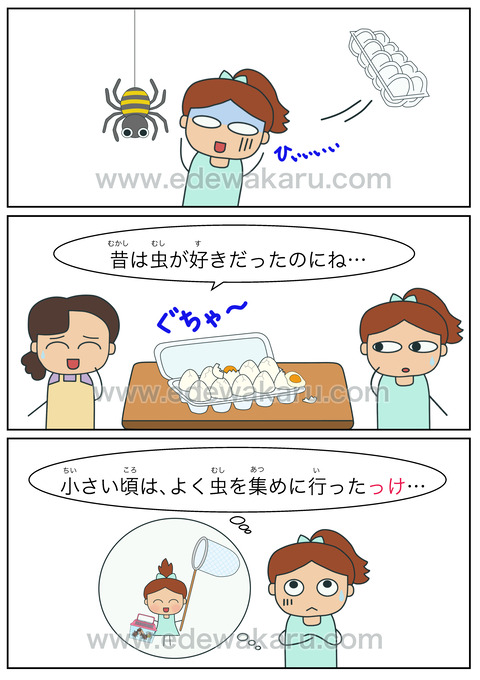
Meaning
I used to do ~ a lot
How to use it
Verb or い-adjective [た-form] + っけ
な-adjective or noun [minus ーだ] + っけ
な-adjective or noun [minus ーだった] + っけ
Explanation
“〜っけ” is a sentence pattern expressing [reminiscing about the past], and means “I used to do ~ a lot…” It is used when remembering something one often did in the past and thinking, “those were the days…” It has almost the same meaning as “〜たものだ,” which expresses [reminiscing about the past], so let’s learn them together 😉
[Example]
When I was in elementary school, I always used to fight with my little sister
たっけ…
= When I was in elementary school, I always used to fight with my little sister
たものだ
“〜っけ” also has a usage expressing [checking or asking], so let’s review that too 😊
In context 5 examples
小さい頃は、よく虫を集めに行ったっけ…
→小さい頃は、よく虫を集めに行ったな…When I was little, I used to go collect bugs a lot… →When I was little, I used to go collect bugs a lot…
小学生(しょうがくせい)の時は、いつも妹とケンカしていたっけ…
→小学生の時は、よく妹とケンカしたな…When I was in elementary school, I was always fighting with my little sister… →When I was in elementary school, I often fought with my little sister…
東京に住んでいた時は、よくディズニーランドに行ったっけ…
→東京に住んでいた時は、よくディズニーランどに行ったな…When I lived in Tokyo, I used to go to Disneyland a lot… →When I lived in Tokyo, I used to go to Disneyland a lot…
若い頃は、よくカラオケでオールしたっけ
→若い頃は、よくカラオケでオールしたな〜When I was young, I used to spend the whole night at karaoke a lot. →When I was young, I used to spend the whole night at karaoke a lot~
子供が生まれる前は、よく海外旅行(かいがいりょこう)をしたっけ
→子供が生まれる前は、よく海外旅行をしたな…Before my child was born, I used to travel abroad a lot. →Before my child was born, I used to travel abroad a lot…
Read the original source text
Meaning
よく〜したなぁ
How to use it
動詞・い形容詞[た形]+っけ
な形容詞・名詞[ーだ]+っけ
な形容詞・名詞[ーだった]+っけ
Explanation
「〜っけ」は【過去の回想】を表す文型で、「よく〜したな…」という意味で使われます。過去によくしたことを「なつかしいな…」と思い出している時に使います。【
過去の回想】を表す「〜たものだ」とほとんど同じ意味です
ので一緒に覚えておきましょう😉
[例]
小学生の時は、いつも妹とケンカしてい
たっけ
…
=小学生の時は、いつも妹をケンカしてい
たものだ
「〜っけ」には【確認・質問】を表す用法もありますので、復習をしておきましょう😊
Usage 2
Read this source entry ↗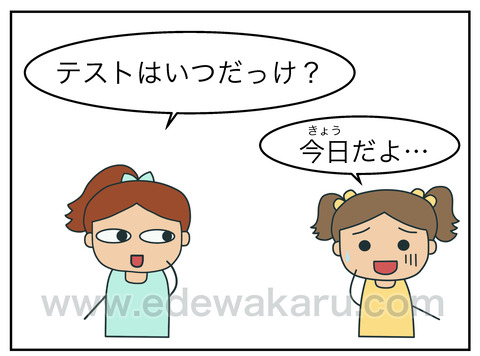
Meaning
1. Confirm or ask the other person
2. Ask oneself / speak to oneself
1. Confirm or ask the other person
How to use it
Verb or い-adjective [た-form] + っけ
な-adjective or noun [minus ーだ] + っけ
な-adjective or noun [minus ーだった] + っけ
Explanation
「〜っけ」is a sentence pattern used to confirm something one does not clearly remember. It can be used either to ask the other person, as in 1, or to check with oneself, as in 2 😊 When checking with oneself, one is talking to oneself 😉 When asking the other person, raising the pitch at the end sounds natural; when checking with oneself, lowering it sounds natural 😀
[Examples]
・When asking the other person
A: When was the test again? (っけ↑)
B: It’s today…
・When checking with oneself
When was the test again… (っけ↓)
【Supplementary explanation】
「〜っけ」also has polite forms, so it can also be used with a senior or teacher you are close to 😊
[Examples]
When do we take the test again? → When was it that we take the test again?
Was that person’s name Yamada? → Was that person’s name Yamada?
Did he take yesterday off work? → Did he take yesterday off work?
It’s enough to remember the polite forms as 「〜でしたっけ」「〜ましたっけ」「〜んでしたっけ」😉 「〜っけ」also has a use that expresses [recollection of the past], so review that too.
In context 3 examples
A:テストはいつだっけ?→テストはいつか覚えている?B:今日だよ…
A: When was the test again? → Do you remember when the test is? B: It’s today…
A:あの人の名前は山田さんだっけ?→あの人の名前は山田さん?B:そうだよ〜
A: Was that person’s name Yamada? → Was that person Yamada? B: That’s right~
夫:今日の昼は何を食べたっけ?→今日の昼は何を食べたか覚えている?妻:ラーメンよ2 自分の心に問いかける・独り言を言う
Husband: What did we eat for lunch today again? → Do you remember what we ate for lunch today? Wife: Ramen. 2. Ask oneself / speak to oneself
Read the original source text
Meaning
1 相手に確認・質問
2 自分の心に問いかける・独り言を言う
1 相手に確認・質問をする
How to use it
動詞・い形容詞[た形]+っけ
な形容詞・名詞[ーだ]+っけ
な形容詞・名詞[ーだった]+っけ
Explanation
「〜っけ」ははっきり覚えていないことを確認する場合に使われる文型です。1のように相手に確認する場合、2のように自分に確認する場合、どちらにも使用できます😊自分に確認する場合は独り言を言っている場合ですね😉相手に確認する場合は最後を上げて言い、自分に確認する場合は最後を下げて言うときれいに聞こえます😀
[例]
・相手に確認する場合
A:テストはいつ
だっけ?(
っけ↑)
B:今日だよ…
・自分に確認する場合
テストはいつ
だっけ
…(
っけ↓)
【補足説明】
「〜っけ」には丁寧形もあります
ので、仲がいい先輩や先生に使うことも可能です😊
[例]
テストはいつ受けるんだっけ? →テストはいつ受ける
んでしたっけ?
あの人の名前は山田さん
だっけ?→あの人の名前は山田さん
でしたっけ?
彼は昨日、会社を休ん
だっけ?→彼は昨日、会社を休み
ましたっけ?
丁寧形は「〜でしたっけ」「〜ましたっけ」「〜んでしたっけ」と覚えておけばOKです
😉「〜っけ」には【過去の回想】を表す用法もありますので、復習をしておきましょう。
どんなときどう使う 日本語表現文型辞典
Meaning
what was that?/was it…?
How to use it
〔Plain form〕 (there is also “~ましたっけ・~でしたっけ”) + っけS
Explanation
~?/~だった?
B:8番じゃない?
姉:キヘンに決まってるでしょ。
B:時間的に無理だというんで除かれたんだよ。
はっきりしないことに対する疑問の気持ちを持って相手に念を押したり、確かめたりする言い方。
Draws attention to or confirms speaker's uncertainty about some event when speaking to someone.
In context 3 examples
A:英語の試験は5番教室だっけ。
A: Was the English exam in Classroom 5?
弟:「ケン討する」の「ケン」は、キヘンだっけ、ニンベンだっけ。
Younger brother: In “ケン討する,” is the “ケン” written with the tree radical or the person radical?
A:今度の研修旅行には、工場見学も日程に入っていましたっけ。
A: Was a factory tour also included in the schedule for this training trip?
Read the original source text
Meaning
what was that?/was it…?
How to use it
〔普通形〕(「~ましたっけ・~でしたっけ」もある)+っけS
Explanation
~?/~だった?
B:8番じゃない?
姉:キヘンに決まってるでしょ。
B:時間的に無理だというんで除かれたんだよ。
はっきりしないことに対する疑問の気持ちを持って相手に念を押したり、確かめたりする言い方。
Draws attention to or confirms speaker's uncertainty about some event when speaking to someone.
日本語NET JLPT文法解説まとめ
Meaning
“Was it?”
An expression used to ask someone about something the speaker cannot remember. It is sometimes also used when talking to oneself.
How to use it
V (plain form) + っけ
イA (plain form) + っけ
ナA (plain form) + っけ
N (plain form) + っけ
There are also expressions such as “〜ましたっけ” and “〜でしたっけ.”
Explanation
Used to confirm something the speaker can't remember. This is also used when the speaker talks to themselves.
「Nだっけ」と「Nだったっけ」は同じ意味。
Examples:
・今日って水曜日だっけ?
・今日って水曜日だったけ?
In context 10 examples
田中って今日のパーティー参加するっけ?
Is Tanaka coming to today’s party?
明日って、レポートの提出日だっけ?
Is tomorrow the report submission deadline?
この問題の答えって、これであってたっけ?
Was this the right answer to this question?
今日って宿題あったっけ?
Did we have homework today?
トムさんってチョコレート嫌いだったっけ?
Did Tom dislike chocolate?
毎年、11月ってこんなに寒かったっけ?
Was November always this cold every year?
あの人って、マイケルさんだっけ?
Was that person Michael?
次のテストっていつだっけ?
When is the next test?
久しぶりですね。最後に会ったのはいつでしたっけ?
It’s been a while. When was it that we last met?
あの人・・・どこかで前に会ったっけ?
That person… Had I met them somewhere before?
Read the original source text
Meaning
でしたか?
話し手が思い出せないことを相手に、聞く表現。独り言でも使うことがある。
How to use it
V(普通形) + っけ
イA(普通形) + っけ
ナA(普通形) + っけ
N(普通形) + っけ
「〜ましたっけ」や「〜でしたっけ」という言い方もある。
Explanation
Used to confirm something the speaker can't remember. This is also used when the speaker talk to oneself.
「Nだっけ」と「Nだったっけ」は同じ意味。
例文・今日って水曜日だっけ?
・今日って水曜日だったけ?
毎日のんびり日本語教師
How to use it
Verb, dictionary form + っけ/んだっけ/んだったっけ
Verb, ta-form + っけ/んだっけ
i-adjective stem + かったっけ
na-adjective stem + だっけ/だったっけ/なんだっけ
Noun + だっけ/だったっけ/なんだっけ
Explanation
Used to check with someone about something you yourself don’t clearly remember, or to review your own memory.
When checking with yourself, it becomes a thought spoken aloud.
「~っけ」 is used between people who are relatively close, but this is not necessarily the case when polite forms such as 「~ましたっけ」「~ですっけ」「~でしたっけ」 are used.
Notes
Nothing in particular.
In context 8 examples
駅前集合何時だっけ?
What time are we meeting in front of the station again?
あの人の名前何だっけ。
What was that person’s name again?
何を買いに来たんだっけ?
What did I come here to buy again?
あれ、私のスマホどこ置いたっけ?
Oh, where did I put my phone?
この機械どうやって使うんだったっけ。
How was I supposed to use this machine again?
君、誰だっけ?
Who were you again?
私たち以前どこかで会った事ありませんでしたっけ?
Haven’t we met somewhere before?
そんな約束しましたっけ?
Did we make that kind of promise?
Read the original source text
How to use it
動辞形+っけ/んだっけ/んだったっけ
動た形+っけ/んだっけ
い形容詞語幹+かったっけ
な形容詞語幹+だっけ/だったっけ/なんだっけ
名詞+だっけ/だったっけ/なんだっけ
Explanation
自分自身がはっきり覚えていないことを相手に確認したり、自分の記憶を振り返ったりするときに用います。
自分に確認を取る場合は、独り言になります。
「~っけ」は比較的親しい間柄で用いられますが、「~ましたっけ」「~ですっけ」「~でしたっけ」などの丁寧形を用いればその限りではありません。
Notes
特になし
日本語文型辞典 英語版
Meaning
【っけ】[N/Na だ(った)っけ][A-かったっけ][V-たっけ][...んだ(った)っけ]
Used to confirm something the speaker cannot remember clearly. Also used when talking to oneself as if to confirm something, as in
(6)
. Informal spoken language. Polite forms are N/Naでしたっけ, V-ましたっけ, and ...んでしたっけ, but A-かったですっけ is not used. Spoken language.
In context 6 examples
あの人、鈴木さんだ(った)っけ?
That was Suzuki-san, right?
君、これ嫌いだ(った)っけ?
You didn’t like this, right?
この前の日曜日、寒かったっけ?
Was this last Sunday cold?
もう手紙出したっけ?
Have we posted the letter already?
明日田中さんも来るんだっけ?
Tanaka-san is coming tomorrow, too?
しまった!今日は宿題を提出する日じゃなかったっけ。
Oh, no! Wasn’t today the day to submit homework?
AIUEO JLPT Grammar
Meaning
「〜っけ」is a casual expression used to recall past events or verify information. It is used when the speaker is unsure of their memory or wants to confirm something with the listener.
How to use it
Verb た-form + っけ; adjective た-form + っけ; な-adjective だった + っけ; noun だった + っけ
In context 5 examples
昨日、彼に何を話したっけ?
What did I say to him yesterday?
あの店、何時に閉まるんだっけ?
What time does that store close again?
この料理、辛かったっけ?
Was this dish spicy?
彼女の誕生日は今日だったっけ?
Was her birthday today?
あれは、彼の家だったっけ?
Was that his house?
Read the original source text
Meaning
「〜っけ」is a casual expression used to recall past events or verify information. It is used when the speaker is unsure of their memory or wants to confirm something with the listener.
How to use it
動詞た形+っけ形容詞た形+っけ形容動詞だった+っけ名詞だった+っけ
Explanation · 日本語
「〜っけ」は、過去の出来事や情報を再確認したり、記憶をたどったりするときに使われるカジュアルな表現です。話し手が自分の記憶に自信がないときや、相手に確認したいときに使われます。
文法
Meaning
An expression used to ask someone about something the speaker can't remember, as in “Was it ~?” It is also sometimes used when talking to oneself.
How to use it
V (plain form) + っけ
い-adjective (plain form) + っけ
な-adjective (plain form) + っけ
N (plain form) + っけ
Forms such as 「〜ましたっけ」 and 「〜でしたっけ」 are also used.
Notes
「Nだっけ」 and 「Nだったっけ」 have the same meaning.
・Was today Wednesday?
・Was today Wednesday?
In context 10 examples
田中って今日のパーティー参加するっけ?
Is Tanaka coming to today’s party?
明日って、レポートの提出日だっけ?
Is tomorrow the report submission deadline?
この問題の答えって、これであってたっけ?
Was this the right answer to this question?
今日って宿題あったっけ?
Did we have homework today?
トムさんってチョコレート嫌いだったっけ?
Did Tom dislike chocolate?
毎年、11月ってこんなに寒かったっけ?
Was November always this cold every year?
あの人って、マイケルさんだっけ?
Was that person Michael?
次のテストっていつだっけ?
When is the next test?
久しぶりですね。最後に会ったのはいつでしたっけ?
It’s been a while. When was it that we last met?
あの人・・・どこかで前に会ったっけ?
That person… Had I met them somewhere before?
Read the original source text
Meaning
でしたか?話し手が思い出せないことを相手に、聞く表現。独り言でも使うことがある。
How to use it
V(普通形) + っけ
イA(普通形) + っけ
ナA(普通形) + っけ
N(普通形) + っけ
「〜ましたっけ」や「〜でしたっけ」という言い方もある。
Notes
「Nだっけ」と「Nだったっけ」は同じ意味。
・今日って水曜日だっけ?
・今日って水曜日だったけ?
Bunpro Grammar Reference
Meaning
What is…again?, Was it... that... ?, Did you say...?
How to use it
Verb[た]+ っけ
Verb[る]+ ん(1)だ + っけ
[い]Adjective[た]+ っけ
[な]Adjective + だった(2) + っけ
Noun + だった(2) + っけ
(1) の
(2) だ
Nuance
A short sound often used to indicate something the speaker should know, but has been forgotten.
Explanation
け is a sentence ending particle in Japanese that is used to convey when the speaker is trying to either remember, or confirm information that they have forgotten. In this way, it is very similar to the 'again' in 'what is (A) again?'
け may only be used after the past form of the auxiliary verbs だ or た. This means that け (should) only be seen as だっけ or たっけ.
今日の朝は朝ご飯を食べたっけ。
Did I eat breakfast this morning?
あれ、テイラーの車って青かったっけ。
Um, Taylor, was your car blue, again?
土曜日って暇だっけ。
Was I free on Saturday, again?
あの人誰だっけ。やばい、思い出せない。
Who was that again? Shoot, I can't remember.
It is also common to see のだ and んだ utilized to make verb tenses a possibility.
クミコって納豆食べれるんだっけ。
Kumiko, were you able to eat natto again?
レポートの修正は君がやってるんだっけ。
You are the one editing the paper, right?
Caution
Despite the grammar rules related to っけ, the younger generation quite often uses it without the addition of んだ (especially with verbs).
トムって日本語話せるっけ。
Tom, were you able to speak Japanese again?
この道って通れるっけ。
Were we able to take this road again?
While it is important to understand that this is still っけ, it is not a grammatically correct form that may be used in writing (or formal speaking).
Fun Fact
け will sound equally natural when asking a rhetorical question to yourself, or when directly asking another person about something that you have forgotten.
あれ、カギ掛けたっけ。
Umm, did I lock the door? (Asking oneself)
あそこのレストランって犬を連れていけるっけ。
Do you remember if we could take our dogs to that restaurant over there? (Asking another)
In context 22 examples
- そんなもの家にあったっけ?
Was it that you had something like that at home?
- レポートの修正は君がやってるんだっけ。
You are the one editing the paper, right?
- あの人誰だっけ。やばい、思い出せない。
Who was that again? Shoot, I can't remember.
- クミコって納豆食べれるんだっけ。
Kumiko, were you able to eat natto again?
- 今日の朝は朝ご飯を食べたっけ。
Did I eat breakfast this morning?
- あれ、テイラーの車って青かったっけ。
Um, Taylor, was your car blue, again?
- 土曜日って暇だっけ。
Was I free on Saturday, again?
- 明日って晴れるんだっけ?
Was it that it will be sunny tomorrow?
- もうすぐ梅雨も終わりだっけ?
Was it that the rainy season will be over soon?
- この資料渡したっけ?
Did I pass you this document? (was it that...?)
- 一昨日もラーメン食べたっけ?
Did we have ramen the day before yesterday too? (was it that...?)
- 納豆を食べられないんだっけ?
Was it that you can't eat natto?
- まだ雪を見たことないんだっけ?
Did you say that you had never seen snow before?
- トムの友達って、会ったことあったっけ?
Did you say that you had met Tom's friend?
- 沖縄には行ったことないんだっけ?
Did you say that you had never been to Okinawa?
- この学校に入るのがずっと夢だったんだっけ?
Did you say that you had been wanting to get in this school?
- 日本語の勉強はいつから始めたんだっけ?
When did you say that you started studying Japanese?
- 日本の文化について発表をしたのは誰だったっけ?
Who was it that gave the talk about Japanese culture?
- トムって日本語話せるっけ。
Tom, were you able to speak Japanese again?
- この道って通れるっけ。
Were we able to take this road again?
- あそこのレストランって犬を連れていけるっけ。
Do you remember if we could take our dogs to that restaurant over there? (Asking another)
- あれ、カギ掛けたっけ。
Umm, did I lock the door? (Asking oneself)
Yokubi — The Common Grammar Guide (https://yoku.bi)
Explanation
っけ is used when the speaker has forgotten something or is trying to recall something they once knew. It is usually, although not exclusively, used as a question directed to oneself.
っけ is almost never used with non-nouns except in the past tense. When it is, other stuff (like explanatory んだ) is usually put in between.
Similar to っけ, there is also かな. It is usually pronounced with a rising intonation as a question, but just like っけ it is a self-directed one. It simply means the speaker is wondering or unsure or hesitant about something, similar to "I wonder" in English. Needless to say it comes from the union of the question particle か and the sentence ending particle な.
It often comes after the volitional form of a verb to indicate that the speaker is about to decide to do something.
かい is a "friendly" question marker, especially for masculine speakers. Outside of familiar conversation, it can come across as rude/too direct. It's not as common in real life as it is in media. In standard usage, it can only be used to ask yes/no questions.
Parallel to かい, there is also だい. The vibes are pretty much the same, but unlike かい, だい is used to ask questions that expect an actual answer.
じゃない can also be used to ask confirmation questions. Yes, when attached to nouns, it's identical to normal "is not". No, there's no way around it. If you are lucky, there will be a question mark after it.
Note how adding a copula after verbs and い adjectives is technically incorrect but this type of じゃない lives on its own and can show up after them. It's not negating the predicate, it's just adding a negative question nuance ("isn't it?") and behaves like a sentence-ending particle.
じゃん is a casual contraction of じゃない.
In context 4 examples
なんだっけ?
What was it again?
どこに置いたっけ
Where'd I put it, again?
どこにあったっけ?
Where was it, again?
こういうの何て言うんだっけ。
What was this thing called, again?
NINJAL 日本語文型データベース
Meaning
[1] This is a way to check with someone about something they know but only vaguely remember. It expresses that the speaker is unsure. It is also used to check with oneself, even when no one else is actually present.
[2] This is used when recalling a past event or memory. It expresses nostalgia for that event.
How to use it
V plain form + っけ・V polite form + っけ
i-A plain form + っけ・i-A polite form + っけ
na-A plain form + っけ・na-A polite form + っけ
N plain form + っけ・N polite form + っけ
Vたっけ
i-Aかったっけ
na-Aだったっけ
Nだったっけ
Notes
[1] When talking about something already decided but not yet happened, “〜” can be either the dictionary form or the ta-form. When speaking to another person, use rising intonation.
In context 39 examples
「あれ? リビングのエアコン、消したっけ」「うん、消したよ」
“Huh? Did I turn off the air conditioner in the living room?” “Yeah, you did.”
妻「今日、残業だって言ってたっけ?」夫「うん、今日は残業になると思う」
Wife: “Did you say you’re working overtime today?” Husband: “Yeah, I think I’ll have to work overtime today.”
冷蔵庫に牛乳、まだあったっけ。買って帰ったほうがいいかな。
Was there still milk in the fridge? Maybe I should buy some on my way home.
あれ、保険証、持って来なかったっけ。
Huh, didn’t I bring my health insurance card?
「お久しぶりです」「……。あの、失礼ですが、どこかでお会いしたこと、ありましたっけ」
“Long time no see.” “……Um, excuse me, but have we met somewhere before?”
「明日、テストあったっけ?」「ううん、ないよ」
“Was there a test tomorrow?” “No, there isn’t.”
「あれ、目、悪いっけ?」「あ、はい。いつもはコンタクトレンズなんです」
“Oh, were your eyes bad?” “Oh, yes. I usually wear contact lenses.”
スイートチリソースって、辛いっけ。辛くないっけ。私、辛いの苦手なんだよね。
Is sweet chili sauce spicy? Or is it not spicy? I’m not good with spicy food.
「来月の忘年会、どのお店にします? 去年と同じお店にします?」「うーん、あの店、よかったですっけ。値段の割に料理が少なかったですし、料理がくるのも遅かったですし……。今年は違うところにしませんか?」
“Where should we go for the year-end party next month? Should we go to the same place as last year?” “Hmm, was that place any good? The portions were small for the price, and the food came slowly, too… How about somewhere different this year?”
「あれ、この俳優、髪長くなかったっけ」「ああ、役作りのためにバッサリ切ったってインタビューで言ってたよ」
“Hey, didn’t this actor used to have long hair?” “Oh, he said in an interview that he cut it all off for a role.”
「鈴木先生のレポートってメールで送ってもよかったっけ?」「うん、先生いいって言ってたよ」
“Was it okay to email Professor Suzuki’s report?” “Yeah, the professor said it was fine.”
「ここって何が有名だっけ」「パンケーキが人気なんだよ」
“What is this place famous for again?” “Pancakes are popular here.”
上司「太田さん、英語得意だっけ? 海外支社から視察のとき、通訳頼めるかな」太田「留学はしていましたけど、ビジネスレベルの英語は自信がないんです」
Boss: “Ota, are you good at English? Could I ask you to interpret when the overseas branch visits?” Ota: “I did study abroad, but I’m not confident in my business-level English.”
「高校生って髪型こんなに自由でしたっけ。私の頃はもっと厳しかったと思うんですけれど」
“Were high school students allowed this much freedom with their hairstyles? I thought the rules were stricter when I was a student.”
「デザート、食べないんですか。甘いもの、苦手でしたっけ」「そうじゃないんですけど、最近ダイエットしているんです」
“Aren’t you having dessert? Were you not a fan of sweet things?” “That’s not it, but I’ve been on a diet lately.”
「えーと、平井さんが弾けるのってギターだっけ。ベースだっけ。今度聞かせてよ」
“Um, was it the guitar that Hirai can play? Or the bass? Play something for us sometime.”
「娘さん、もう高校生でしたっけ。大きくなりましたねえ」
“Your daughter was already in high school, wasn’t she? She’s grown so much.”
上司「次の出張は大阪だったっけ」部下「はい、火曜日に大阪出張です」
Boss: “Was the next business trip to Osaka?” Subordinate: “Yes, I’m going to Osaka on a business trip on Tuesday.”
「今月有休取るって言ってたのって、ダニエルさんだったっけ。ジョージさんだったっけ」「ダニエルさんです」
“Was it Daniel who said he was taking paid leave this month? Or was it George?” “It was Daniel.”
「早急」の読み方って「さっきゅう」だっけ。「そうきゅう」だっけ。どっちだっけ。
Is “早急” read “さっきゅう” or “そうきゅう”? Which was it again?
子どものころ、家の近所の川で友だちとよく遊んだっけ。懐かしいなぁ。
When I was a child, I used to play with my friends in the river near our house. Those were the days.
去年の夏は、家族みんなで花火を見に行ったっけ。
Last summer, we all went to see fireworks as a family.
就職したばかりのときは、よく先輩に怒られたっけ。そんな私が今は指導係かあ。
When I’d just started working, my seniors used to scold me a lot. And now I’m the one in charge of training people.
初めて彼女ができたときは、毎日電話したり、デートしたりしてたっけ。楽しかったなぁ。
When I got my first girlfriend, we used to call each other and go on dates every day. Those were fun times.
高校生のときは、親に反抗して困らせていたっけ。今となっては感謝していいるけど。
When I was in high school, I used to rebel against my parents and give them a hard time. Now, though, I’m grateful to them.
子どものころは雷がこわかったっけ。
When I was a child, I was afraid of thunder.
初めて日本で過ごした夏は、とても暑かったっけ。
The first summer I spent in Japan was so hot.
初めて給料をもらったときは、本当にうれしかったっけ。
When I got my first paycheck, I was truly happy.
去年の台風はすごかったっけ。電車が止まって家に帰れなかったことがあったなあ。
That typhoon last year was something else. There was a time when the trains stopped and I couldn’t get home.
一人暮らしを始めたばかりの頃は、給料が少なくて生活は苦しかったっけ。
When I’d just started living on my own, my salary was low and life was hard.
若い頃は毎日が幸せだったっけ。
When I was young, every day was happy.
1人目の子どもを妊娠していたときは、今思い返しても大変だったっけ。
When I was pregnant with my first child, it was hard, even when I look back on it now.
この部屋に引っ越した時、新築だったから本当にきれいだったっけ。
When I moved into this room, it was brand new, so it was really beautiful.
子どもの頃はゲームに夢中だったっけ。もう飽きてしまったけど。
When I was a child, I was crazy about video games. I’ve gotten tired of them now, though.
初めて行った海外はニューヨークだったっけ。もう20年前か。
The first place I went overseas was New York. That was twenty years ago already.
プロポーズされたのはクリスマスだったっけ。冬になると毎年あの日のことを思い出すなあ。
I was proposed to on Christmas. Every winter, I remember that day.
一人暮らしを始めたときは家賃3万円のアパートだったっけ。あれから20年。やっと自分の家が持てるようになったんだなあ。
When I started living on my own, I lived in an apartment with rent of 30,000 yen. Twenty years since then, and I’ve finally been able to get my own home.
「私の子どもの頃の夢は警察官になることでしたっけ。森さんは?」
“When I was a child, my dream was to become a police officer. What about you, Mori?”
初めて作った料理はカレーライスだったっけ。家族がおいしいって言ってくれてうれしかったな。
The first dish I made was curry rice. I was happy that my family said it was delicious.
Read the original source text
Meaning
[1] 知っているけれど、記憶が曖昧なことについて、相手に確認する言い方です。話し手が疑問の気持ちを持っていることを表します。確認する相手が実際にはいなくても、自分自身に確認するときにも使います。
[2] 過去の出来事や思い出を思い出すときに使います。その出来事を懐かしむ気持ちを表します。
How to use it
V普通形+っけ・V丁寧形+っけ
i-A普通形+っけ・i-A丁寧形+っけ
na-A普通形+っけ・na-A丁寧形+っけ
N普通形+っけ・N丁寧形+っけ
Vたっけ
i-Aかったっけ
na-Aだったっけ
Nだったっけ
Notes
[1] すでに決まっているが、まだ起こっていないことについて言う場合、「〜」は辞書形もタ形も使います。他の人に話しかけているときは、上昇イントネーションで話します。