どんなときどう使う 日本語表現文型辞典
Usage 1
Meaning
while
How to use it
Vます + つつW
Explanation
つつ〈同時進行〉
~ながら
1)一人の人が一つのことをしながら、同時にもう一つのことをするという意味の表現。「~つつ…する」では「~」の動作が副で「…」の動作が主である。
2)「ながら」と同じような使い方をするが、「ながら」より文語的な表現。
2)Usage is same as for ながら, but more literary.
1)Someone does two things at the same time. Second action listed is main action.
In context 5 examples
電車に揺られつつ、2時間ほどいい気持ちで眠った。
While being rocked by the train, I slept comfortably for about two hours.
夜、仕事を終えてウイスキーを味わいつつ、お気に入りの推理小説を読むひとときは最高である。
At night, after finishing work, the time I spend savoring whiskey while reading my favorite mystery novel is the best.
この問題については、会員の皆さんと話し合いつつよく考えてみましょう。
Let's think carefully about this issue while discussing it with all the members.
山に登りつつ、人は人生についてさまざまなことを考える。
While climbing a mountain, people think about various things in life.
最近わたしはCDで好きな音楽を聞きつつ、小説の構想を練る。
Recently, I listen to music I like on CD while working out ideas for a novel.
Read the original source text
Meaning
while
How to use it
Vます+つつW
Explanation
つつ〈同時進行〉
~ながら
1)一人の人が一つのことをしながら、同時にもう一つのことをするという意味の表現。「~つつ…する」では「~」の動作が副で「…」の動作が主である。
2)「ながら」と同じような使い方をするが、「ながら」より文語的な表現。
2)Usage is same as for ながら, but more literary.
1)Someone does two things at the same time. Second action listed is main action.
Usage 2
Meaning
even though
How to use it
Vます + つつW
Explanation
つつ〈逆接〉
~ているが
1)「Vつつ」の形で「Vしているが」という逆接の意味を表す。話者が後悔したり告白したりする場合に使われることが多い。
2)慣用表現が多い。例文の例のほかに「言いつつ・感じつつ」などがよく使われる。
3) ❹ の「Vつつも」も同じように使われる。
2)Often found in idioms, such as 言いつつ, 感じつつ.
3)Used the same way as Vつつも.
1)Something is done even though such is not expected. Often used when speaker regrets or confesses something.
In context 4 examples
悪いと知りつつ、友達の宿題の答えを書いてそのまま出してしまった。
Even though I knew it was wrong, I wrote down my friend's homework answers and handed them in as they were.
毎日お返事を書かなければと思いつつ、今日まで日がたってしまいました。
Even though I kept thinking I should write back every day, the days passed until today.
悪いと知りつつも、ごみを分別せずに捨ててしまう。
Even though I know it's wrong, I end up throwing away my garbage without sorting it.
佐藤さんの顔色の悪いことが気になりつつも、急いでいたので何も聞かずに帰ってきてしまった。
I was concerned that Mr. Sato looked pale, but I was in a hurry, so I went home without asking him anything.
Read the original source text
Meaning
even though
How to use it
Vます+つつW
Explanation
つつ〈逆接〉
~ているが
1)「Vつつ」の形で「Vしているが」という逆接の意味を表す。話者が後悔したり告白したりする場合に使われることが多い。
2)慣用表現が多い。例文の例のほかに「言いつつ・感じつつ」などがよく使われる。
3) ❹ の「Vつつも」も同じように使われる。
2)Often found in idioms, such as 言いつつ, 感じつつ.
3)Used the same way as Vつつも.
1)Something is done even though such is not expected. Often used when speaker regrets or confesses something.
IMABI
Simultaneous Action II: The Particle つつ (VS ながら)
Read this IMABI lesson ↗Explanation
Simultaneous Action II: The Particle つつ (VS ながら)
つつ is a somewhat old-fashioned particle that has less function in this generation, but it is still very important as it lives strong in literature. In this lesson, we will investigate how to use this particle correctly and know exactly when it is appropriate and how it differs with things interchangeable with it.
The Conjunctive Particle つつ
Like most conjunctive particles in Japanese, the particle つつ attaches to the 連用形 and is exclusive to verbs.
一段活用動詞 見る 見つつ
五段活用動詞 思う 思いつつ
サ変活用動詞 する しつつ
カ変活用動詞 来る 来つつ
When the particle つつ is used to express simultaneity, with the latter clause being either a positive or contrary statement, it is equivalent to the particle ながら. ながら shows simultaneous action too, but it’s still different. つつ cannot be attached to nominal phrases but ながら can be.
1. 夫を亡くしてから、母は細腕ほそうで{Xつつ・〇 ながら}、私たち5人の子供を育て上げた。
After losing her husband, my mother by herself raised us five kids.
Even in formal speech, ながら is the only choice in this situation. On the one hand, when the sentence is colloquial, つつ often becomes inappropriate.
2. 何だよ。静かだと思ったら、テレビを見{〇 ながら・X つつ}寝ちゃって。おい、風邪引くぞ。(男性語)
What is this? Just when I think it’s quiet, you’re falling asleep watching TV. Hey, you’ll catch a cold!
3. お茶でも飲みながら、お喋りしない? ちょっと愚痴ぐちを聞いてよ。 (ちょっと女性っぽい)
Can’t we talk a bit while having some tea? Just listen to what I have to complain about.
4. なぁ、ご飯食べながら、新聞読むのか。やめてくれねーか。不愉快ふゆかいだよ。(男性語)
Hey, you’re reading a newspaper while eating? Can’t you quit it? It’s just unpleasant.
Again, there are situations where the two are interchangeable. Differences will be elaborated on throughout this lesson. Of course, the most basic difference to remember is that つつ is indicative of the written language, and if it is used in the spoken language, it is rather formal and or old-fashioned.
5. 感謝し{つつ・ながら}、日々を送るがよい。
It is good to live each day by being grateful.
6. 二日酔いで痛む頭を押さえつつ、トイレに入った。 (書き言葉)
I went to the bathroom while holding my head with a hangover.
7. 起きようと思い{つつ・ながら}、恨うらみの籠こもった眼差しをあげた。
Thinking that I would get up, I gave a look in spite.
8. 嘘と知り{つつ・ながら}、まだ来ぬ人を、雨の中で待ち続けた。
Knowing that that was a lie, I continued to wait in the rain for the one that had not come.
9. いやだとは言い{つつ・ながら}(も)、満更まんざら嫌いでもないらしい。
Although saying it’s bad, [he] seems to not hate it altogether.
10. 真実と知り{つつながら}(も)・、まだ誤った情報を伝えるのが本当に抜け目のないことだ。
While knowing the truth and still telling mistaken information is a really shrewd thing.
11. 車窓の景色を眺め{つつ・ながら}、過ぎ去りし日々を思い返していた。
As I gazed out at the scenery from the car window, I was reliving days past.
Archaism Note: 過ぎ去りし = 過ぎ去った. 過ぎ去りし is the 連体形 of the Classical Japanese phrase 過ぎ去りき, which uses the auxiliary verb ~き used to show recollection. 過ぎ去りし happens to be used occasionally due to its rather nostalgic feel.
As you can see, there are situations with particles where there is a contradictory relationship in the clauses.
12. 大雨は勢いを増し{ながら・つつ}、堤を決壊させるまでには至っていなかった。
The rain continued to amass momentum, though it didn’t reach the point it would break the embankment.
13. テレビを壊し{〇 (てい)ながら・X つつ}(も)、謝りもせず黙りこくっている。
I stayed quiet without apologizing having destroyed the TV.
In the case that ながら and つつ show a resultative relation, they behave the same, but when showing a contradictory situation, they differ. In such case, つつ still shows an ongoing situation, but ながら shows the situation after completion/ending of said action A.
Particle Note: When the particle も is added after ながら and つつ, they only show contradictory conjunction, which aids you in interpreting ながら.
Phrasing Note: ~ていながら more clearly demonstrates contradictory conjunction. However, semantic properties of the verbs also help.
For instance, in the following sentences, because the verb has an internal boundary—there is an internal limit to its extent—it makes two contrasting clauses a contradictory conjunction when used with ながら. Even still, it would be even less ambiguous, again, if ~ていながら were used.
14. 彼は太(り・てい)ながら、健康なダイエットを続けている。
While he has gotten fat, he continues a healthy diet.
15. 体の動きを止めながら、心を先を急いでいた。
While I had stopped my body’s movement, my heart was hastening onward.
However, when there is no “internal limit” in the verb, ambiguity can arise.
16. 彼女は美味しそうに食べながら、吐き気がするほどまずいと思っていた。
She seemed to eat like it was delicious but thought that it was bad to the point of puking. [Both clauses at the same time]
While she ate it like it was delicious, she thought that it was bad to the point of puking. [Second clause is after the fact]
Usually, in these instances, the positive interpretation is more complicated. However, this could very well be intended. Regardless, if ながらも had been used, there would be no ambiguity issue.
つつ, with it being somewhat archaic, is not used in interrogative sentences or sentences that urge things to happen like ~ようとする. It’s also not used with things like ~ている.
17a. 出かけようとしながら 〇
17b. 出かけようとしつつ X
While I was trying to leave
Another thing to note is that つつ can be used in showing the course of a change that is almost instant like a takeoff but ながら can’t as it is generally used with time periods longer than that. Contrarily, ignoring the course of change, it can’t show the result of change.
18. 出発し{〇 つつ・X ながら}、電車はスピードを上げていった。
The train sped up as it departed.
19. 出発し{〇 ながら・X つつ}、電車はすぐまた停まってしまった。
While the train departed, it immediately stopped again.
つつある
つつある may either show that something is trying to materialize or a certain action/effect is continuing. Thus, it is usually interchangeable with ている. However, you must be careful with verbs such as なる where ている is used to show a resultant state. Thus, なりつつある ≠ なっている.
20. 耳が遠くなりつつある。
My hearing is going.
21. 古い伝統が消滅しつつあるというわけではないと思います。
I don’t think it’s to say that old traditions are disappearing.
22. 冬が近づきつつある。
Winter is drawing near.
23. 乱射事件は増えつつある。
Shooting incidents are on the rise.
24. 黒崎一護の霊圧は弱まりつつある。
Kurosaki Ichigo’s spiritual pressure is waning.
25. 太陽が今昇りつつある。
The sun is rising now.
26. その病気は蔓延しつつあるそうだ。
It’s said that the disease has been spreading.
27. 高まりつつある保護貿易主義を阻止する。
To turn back the rising tide of protectionism.
28. 動物集団は減少しつつある。
Animal populations are decreasing.
29. 地球が次第に暖かくなりつつあることは、温室効果の増大が原因ではない。そんな情報に操られすぎているので、真実であると思いかねる。
It is not that the Earth is gradually becoming warmer because of an increase in the greenhouse effect. As such information is too manipulated, it cannot be thought of as being the truth.
30. 大気が汚染されつつあるそうです。
I hear that the atmosphere is being polluted.
31. ウーロン茶の質は下がりつつあるそうです。
I hear that the quality of Oolong tea is going down.
In context 32 examples
夫を亡くしてから、母は細腕ほそうで{Xつつ・〇 ながら}、私たち5人の子供を育て上げた。
After losing her husband, my mother by herself raised us five kids.
何だよ。静かだと思ったら、テレビを見{〇 ながら・X つつ}寝ちゃって。おい、風邪引くぞ。(男性語)
What is this? Just when I think it’s quiet, you’re falling asleep watching TV. Hey, you’ll catch a cold!
お茶でも飲みながら、お喋りしない? ちょっと愚痴ぐちを聞いてよ。 (ちょっと女性っぽい)
Can’t we talk a bit while having some tea? Just listen to what I have to complain about.
なぁ、ご飯食べながら、新聞読むのか。やめてくれねーか。不愉快ふゆかいだよ。(男性語)
Hey, you’re reading a newspaper while eating? Can’t you quit it? It’s just unpleasant.
感謝し{つつ・ながら}、日々を送るがよい。
It is good to live each day by being grateful.
二日酔いで痛む頭を押さえつつ、トイレに入った。 (書き言葉)
I went to the bathroom while holding my head with a hangover.
起きようと思い{つつ・ながら}、恨うらみの籠こもった眼差しをあげた。
Thinking that I would get up, I gave a look in spite.
嘘と知り{つつ・ながら}、まだ来ぬ人を、雨の中で待ち続けた。
Knowing that that was a lie, I continued to wait in the rain for the one that had not come.
いやだとは言い{つつ・ながら}(も)、満更まんざら嫌いでもないらしい。
Although saying it’s bad, [he] seems to not hate it altogether.
真実と知り{つつながら}(も)・、まだ誤った情報を伝えるのが本当に抜け目のないことだ。
While knowing the truth and still telling mistaken information is a really shrewd thing.
車窓の景色を眺め{つつ・ながら}、過ぎ去りし日々を思い返していた。
As I gazed out at the scenery from the car window, I was reliving days past.
大雨は勢いを増し{ながら・つつ}、堤を決壊させるまでには至っていなかった。
The rain continued to amass momentum, though it didn’t reach the point it would break the embankment.
テレビを壊し{〇 (てい)ながら・X つつ}(も)、謝りもせず黙りこくっている。
I stayed quiet without apologizing having destroyed the TV.
彼は太(り・てい)ながら、健康なダイエットを続けている。
While he has gotten fat, he continues a healthy diet.
体の動きを止めながら、心を先を急いでいた。
While I had stopped my body’s movement, my heart was hastening onward.
彼女は美味しそうに食べながら、吐き気がするほどまずいと思っていた。
She seemed to eat like it was delicious but thought that it was bad to the point of puking. [Both clauses at the same time]
出かけようとしながら 〇
While I was trying to leave
出かけようとしつつ X
While I was trying to leave
出発し{〇 つつ・X ながら}、電車はスピードを上げていった。
The train sped up as it departed.
出発し{〇 ながら・X つつ}、電車はすぐまた停まってしまった。
While the train departed, it immediately stopped again.
耳が遠くなりつつある。
My hearing is going.
古い伝統が消滅しつつあるというわけではないと思います。
I don’t think it’s to say that old traditions are disappearing.
冬が近づきつつある。
Winter is drawing near.
乱射事件は増えつつある。
Shooting incidents are on the rise.
黒崎一護の霊圧は弱まりつつある。
Kurosaki Ichigo’s spiritual pressure is waning.
太陽が今昇りつつある。
The sun is rising now.
その病気は蔓延しつつあるそうだ。
It’s said that the disease has been spreading.
高まりつつある保護貿易主義を阻止する。
To turn back the rising tide of protectionism.
動物集団は減少しつつある。
Animal populations are decreasing.
地球が次第に暖かくなりつつあることは、温室効果の増大が原因ではない。そんな情報に操られすぎているので、真実であると思いかねる。
It is not that the Earth is gradually becoming warmer because of an increase in the greenhouse effect. As such information is too manipulated, it cannot be thought of as being the truth.
大気が汚染されつつあるそうです。
I hear that the atmosphere is being polluted.
ウーロン茶の質は下がりつつあるそうです。
I hear that the quality of Oolong tea is going down.
The Particles つつ & ながら
Read this IMABI lesson ↗Explanation
第027課: The Particles つつ & ながら
These particles even in antiquity were still almost the same. So, hopefully this will be one of the easiest lessons concerning Classical Japanese.
The Conjunctive Particle つつ
The conjunctive particle つつ follows the 連用形 of a verb to show repetitive or continuous action or simultaneous action. This latter usage is shared with ながら, which eventually replaces it altogether in the spoken language by the 室町時代. You may sometimes see it combined with the perfective ぬ (につつ). This is still used in some schools of poetry. Also be aware that this can be seen at the end of a sentence where an auxiliary like たり or り would be to give a big emotional pull. This is seen a lot in 和歌.
1. 春花能 宇都路布麻泥尓 相見祢婆 月日餘美都追 伊母麻都良牟曽 (原文)
春花のうつろふまでに相見ねば月日よみつつ妹待つらむぞ
Since we won’t meet till the spring flowers have scattered, my wife will wait as she counts the days.
From the 万葉集.
2. 於保吉宇美能 美奈曽己布可久 於毛比都〃 毛婢伎奈良之思 須我波良能佐刀 (原文)
大き海の水底深く思ひつつ裳引きならしし菅原の里
Oh Sugawara Village with the foot of the mountains drawn and flat, I adore as deep as the bottom of a great sea.
From the 万葉集.
3. 野山にまじりて竹を取りつつ、よろづの事に使ひけり。
Repeatedly entering the fields and hills and gathering bamboo, he used it for thousands of things.
From the 竹取物語.
4. 多都多夜麻 見都〃古要許之 佐久良波奈 知利加須疑奈牟 和我可敝流刀尓 (原文)
龍田山見つつ越え来し桜花散りか過ぎなむわが帰るとに
I wonder if the cherry blossoms I came to see as I cross Tatsuta Mountain will fall while I’m not home.
From the 万葉集.
5. 角障経 石村毛不過 泊瀬山 何時毛将超 夜者深去通都 (原文)
つのさはふ磐余いはれも過ぎず泊瀬山いつかも越えむ夜は更けにつつ
Still having not passed Iware, and though the night is already going to get late, I wonder when I’ll cross Hatsuse Mountain?
From the 万葉集.
Word Note: つのさはふ is an epithet word for 磐余.
The Conjunctive Particle ながら
The particle ながら comes from the combination of the ancient attribute marker な, which is still seen fossilized in some words such as 水底 from above, and から, which was once a noun as has been demonstrated from passages from the 万葉集.
Like つつ, it can be used to show simultaneous action, but in doing so it might also show a concessive connection. ながら can and does follow nominals often. In doing so, it shows that something is in the same state as it has been. The not-so-common meaning of “all” came about during the 平安時代.
Orthography Note: You can sometimes see this particle spelled as 乍(ら).
Examples
1. 波利夫久路 應婢都々氣奈我良 佐刀其等邇 天良佐比安流氣騰 比等毛登賀米授 (原文)
針袋帯び続けながら里ごとに照らさひ歩けど人もとがめず
Lowering a needle bag on the waist, I walked and showed off through each town, and no one could find fault.
From the 万葉集.
2. さざなみや滋賀の都は荒れにしを昔ながらの山桜かな。
The capital of Shiga has been ravaged, but the mountain cherry blossoms are blowing just as in the distant past!
From the 千載集.
3. 身はいやしながら、母なむ宮なりける。
Though his position was low, his mother was a princess.
From the 伊勢物語.
4. 膝元に置きつつ、食ひながら文をも読みけり。
Placing it at the foot of his knees, he ate while lecturing over the texts.
From the 徒然草.
5. 取りつきながら、いたう睡りて、落ちぬべき時に目を醒ます事、度々なり。
While clinging, he went into a deep sleep, and he frequently woke right as he was about to fall down.
From the 徒然草
In context 10 examples
春花能 宇都路布麻泥尓 相見祢婆 月日餘美都追 伊母麻都良牟曽 (原文)
春花能 宇都路布麻泥尓 相見祢婆 月日餘美都追 伊母麻都良牟 (Original text)
於保吉宇美能 美奈曽己布可久 於毛比都〃 毛婢伎奈良之思 須我波良能佐刀 (原文)
於保吉宇美能 美奈曽己布可久 於毛比都〃 毛婢伎奈良之思 須我波良能佐刀 (Original text)
野山にまじりて竹を取りつつ、よろづの事に使ひけり。
Repeatedly entering the fields and hills and gathering bamboo, he used it for thousands of things.
多都多夜麻 見都〃古要許之 佐久良波奈 知利加須疑奈牟 和我可敝流刀尓 (原文)
多都多夜麻 見都〃古要許之 佐久良波奈 知利加須疑奈牟 和我可敝流刀尓 (Original text)
角障経 石村毛不過 泊瀬山 何時毛将超 夜者深去通都 (原文)
角障経 石村毛不過 泊瀬山 何時毛将超 夜者深去通都 (Original text)
波利夫久路 應婢都々氣奈我良 佐刀其等邇 天良佐比安流氣騰 比等毛登賀米授 (原文)
波利夫久路 應婢都々氣奈我良 佐刀其等邇 天良佐比安流氣騰 比等毛登賀米授 (Original text)
さざなみや滋賀の都は荒れにしを昔ながらの山桜かな。
The capital of Shiga has been ravaged, but the mountain cherry blossoms are blowing just as in the distant past!
身はいやしながら、母なむ宮なりける。
Though his position was low, his mother was a princess.
膝元に置きつつ、食ひながら文をも読みけり。
Placing it at the foot of his knees, he ate while lecturing over the texts.
取りつきながら、いたう睡りて、落ちぬべき時に目を醒ます事、度々なり。
While clinging, he went into a deep sleep, and he frequently woke right as he was about to fall down.
Read the original source text
Explanation
第027課: The Particles つつ & ながら
These particles even in antiquity were still almost the same. So, hopefully this will be one of the easiest lessons concerning Classical Japanese.
The Conjunctive Particle つつ
The conjunctive particle つつ follows the 連用形 of a verb to show repetitive or continuous action or simultaneous action. This latter usage is shared with ながら, which eventually replaces it altogether in the spoken language by the 室町時代. You may sometimes see it combined with the perfective ぬ (につつ). This is still used in some schools of poetry. Also be aware that this can be seen at the end of a sentence where an auxiliary like たり or り would be to give a big emotional pull. This is seen a lot in 和歌.
1. 春花能 宇都路布麻泥尓 相見祢婆 月日餘美都追 伊母麻都良牟曽 (原文)
春花のうつろふまでに相見ねば月日よみつつ妹待つらむぞ
Since we won’t meet till the spring flowers have scattered, my wife will wait as she counts the days.
From the 万葉集.
2. 於保吉宇美能 美奈曽己布可久 於毛比都〃 毛婢伎奈良之思 須我波良能佐刀 (原文)
大き海の水底深く思ひつつ裳引きならしし菅原の里
Oh Sugawara Village with the foot of the mountains drawn and flat, I adore as deep as the bottom of a great sea.
From the 万葉集.
3. 野山にまじりて竹を取りつつ、よろづの事に使ひけり。
Repeatedly entering the fields and hills and gathering bamboo, he used it for thousands of things.
From the 竹取物語.
4. 多都多夜麻 見都〃古要許之 佐久良波奈 知利加須疑奈牟 和我可敝流刀尓 (原文)
龍田山見つつ越え来し桜花散りか過ぎなむわが帰るとに
I wonder if the cherry blossoms I came to see as I cross Tatsuta Mountain will fall while I’m not home.
From the 万葉集.
5. 角障経 石村毛不過 泊瀬山 何時毛将超 夜者深去通都 (原文)
つのさはふ磐余いはれも過ぎず泊瀬山いつかも越えむ夜は更けにつつ
Still having not passed Iware, and though the night is already going to get late, I wonder when I’ll cross Hatsuse Mountain?
From the 万葉集.
Word Note: つのさはふ is an epithet word for 磐余.
The Conjunctive Particle ながら
The particle ながら comes from the combination of the ancient attribute marker な, which is still seen fossilized in some words such as 水底 from above, and から, which was once a noun as has been demonstrated from passages from the 万葉集.
Like つつ, it can be used to show simultaneous action, but in doing so it might also show a concessive connection. ながら can and does follow nominals often. In doing so, it shows that something is in the same state as it has been. The not-so-common meaning of “all” came about during the 平安時代.
Orthography Note: You can sometimes see this particle spelled as 乍(ら).
Examples
1. 波利夫久路 應婢都々氣奈我良 佐刀其等邇 天良佐比安流氣騰 比等毛登賀米授 (原文)
針袋帯び続けながら里ごとに照らさひ歩けど人もとがめず
Lowering a needle bag on the waist, I walked and showed off through each town, and no one could find fault.
From the 万葉集.
2. さざなみや滋賀の都は荒れにしを昔ながらの山桜かな。
The capital of Shiga has been ravaged, but the mountain cherry blossoms are blowing just as in the distant past!
From the 千載集.
3. 身はいやしながら、母なむ宮なりける。
Though his position was low, his mother was a princess.
From the 伊勢物語.
4. 膝元に置きつつ、食ひながら文をも読みけり。
Placing it at the foot of his knees, he ate while lecturing over the texts.
From the 徒然草.
5. 取りつきながら、いたう睡りて、落ちぬべき時に目を醒ます事、度々なり。
While clinging, he went into a deep sleep, and he frequently woke right as he was about to fall down.
From the 徒然草
くらべてわかる日本語表現文型辞典
Meaning
Meaning 1: B occurs along with the state or action A.
Meaning 2: Although A is the case, one does B in a way that contradicts it.
How to use it
AつつB (AつつもB)
[Verb—ます-form] つつ
Explanation
[Contrast 1]
“AながらB” (Meaning 1, p. 195)
“AつつB” can be substituted for “AながらB.” “AつつB” is a slightly formal expression.
○音楽を聞きながら寝ました。 — I fell asleep while listening to music.
○音楽を聞きつつ、眠りに落ちた。 — Listening to music, I drifted off to sleep.
Also, A in “AながらB” tends to be an action, whereas A in “AつつB” is less action-like and carries a stronger nuance of doing B while in the state of A.
○歩きながらタバコを吸うのは危険です。 — It is dangerous to smoke while walking.
×歩きつつタバコを吸うのは危険です。 — It is dangerous to smoke while walking. [Using “歩きつつ”]
○皆様のご健康を祈りつつ、筆をおきます。 — With prayers for your good health, I will lay down my pen.
×皆様のご健康を祈りながら、筆をおきます。 — While praying for your good health, I will lay down my pen. [Using “祈りながら”]
Notes
[Note 2]
・“AつつもB” has a stronger concessive meaning.
In context 8 examples
家族の健康を祈りつつ、国を後にした。
Praying for my family’s health, I left the country.
人間は小さな失敗を重ねつつ、成長していくものだ。
People grow as they make one small mistake after another.
あの会社は従来の取り引きを継続しつつ、新規開拓を試みている。
That company is continuing its existing business dealings while trying to develop new ones.
オリンピックへの夢を抱きつつ、彼女は病と戦っている。
She is battling her illness while holding on to her dream of going to the Olympics.
彼は金を返さない人間だと知りつつ、また金を貸してしまった。
Even though I knew he was the kind of person who doesn’t pay back money, I ended up lending him money again.
彼女は道を間違えたと思いつつも、引き返せないでいた。
Even though she thought she had taken the wrong road, she couldn’t turn back.
口では任せておけと言いつつも、本当は自信がなかったんだ。
Although he said, “You can leave it to me,” he wasn’t really confident.
友人の言葉を信じつつも、疑いの気持ちも消えなかった。
Although I believed my friend’s words, my doubts did not go away either.
Read the original source text
Meaning
意味1:Aという状態・行為とともにB。
意味2:Aであるけれども、それに相反するBをする。
How to use it
AつつB(AつつもB)
[動詞-ます形]つつ
Explanation
【対比1】
「AながらB」(意味1 P.195)
「AつつB」と置き換え可能。「AつつB」は、少し硬い表現。
○音楽を聞きながら寝ました。
○音楽を聞きつつ、眠りに落ちた。
また、「AながらB」のAは動作性が強いが、「AつつB」のAは動作性が弱く、Aという状態でBというニュアンスが強い。
○歩きながらタバコを吸うのは危険です。
×歩きつつタバコを吸うのは危険です。
○皆様のご健康を祈りつつ、筆をおきます。
×皆様のご健康を祈りながら、筆をおきます。
Notes
【注意2】
・「AつつもB」は逆接の意味が強くなる。
DoJG 日本語文法辞典(全集)
Meaning
-ing; while; although
How to use it
Vます | つつ | |
| 思いつつ | While thinking |
Explanation
(1) an auxiliary which expresses an action in progress; (2) a conjunction which is used to present two concurrent actions.
In context 11 examples
台風が九州に接近しつつある。
A typhoon is approaching Kyushu.
彼女は夫の無罪を信じつつ息を引き取った。
She died believing that her husband was innocent.
煙草は体によくないと分かりつつなかなか辞められない。
Although I know that smoking is harmful to my health, I just cannot quit.
新しい本社ビルが完成しつつある。
The new headquarters building is drawing to completion.
オリンピックの施設が出来つつある。
The Olympic facilities are being completed.
この大学は現在キャンパスの移転を検討しつつある。
This university is considering moving its campus now.
甘い物を食べると太ると分かりつつ、つい手が出てします。
Although I know that eating sweets makes me gain more weight, I unintentionally reach out for them.
悪いことと知りつつ、友達に嘘をついてしまった。
Knowing that it was a bad thing, I told my friend a lie.
早く論文を書かなければいけないと思いつつ、今日もテレビを見てしまった。
Although I was thinking that I had to write the paper soon, I watched TV today, too.
私は父の無事を祈りつつ病院に急いだ。
I hurried to the hospital hoping that my father was all right.
彼は最後まで自分の学説が正しいことを主張しつつこの世を去った。
He died while insisting until the last moment that his theory was correct.
Read the original source text
Meaning
-ing; while; although
How to use it
Vます | つつ | |
| 思いつつ | While thinking |
Explanation
(1) an auxiliary which expresses an action in progress; (2) a conjunction which is used to present two concurrent actions.
日本語文型辞典
Usage 1
Meaning
Basic information: R-つ R-つ. Description: Pairs the continuative forms of verbs with opposite meanings, such as “行く-戻る,” or active and passive forms, such as “押す-押される,” to express two actions taking place alternately. It is used in set expressions such as “行きつ戻りつ” and “持ちつ持たれつ.”
Examples: ① Unable to decide whether to meet him, I paced back and forth in front of his house. ② Let’s help each other, each giving and taking in turn. ③ There was an enormous crowd at the shrine for the first shrine visit of the year; jostled back and forth, I finally managed to reach the grounds. ④ I drank sake back and forth with an old friend I hadn’t seen in a long time, and we talked for hours.
Read the original source text
Meaning
基本情報R-つR-つ説明「行く-戻る」のような反対の意味を持つ動詞や「押す一押される」のように能動と受動の形の連用形を並べて、両方の動作が交互に行われることを表す。「行きつ戻りつ」「持ちつ持たれつ」などのように定型化した言い方で使う。例文① 彼に会おうか会うまいかと悩んで、家の前を行きつ戻りつしていた。② お互い持ちつ持たれつで、助け合いましょう。③ 初詣の神社はものすごい人出で、押しつ押されつ、やっとのことで境内までたどり着いた。④ 久しぶりに友人とさしつさされつ酒を飲んで何時間もしゃべった。
Usage 2
Meaning
Basic information. Description: Usually used with the continuative form of a verb, in writing or formal conversation.
It expresses one person doing one action while simultaneously doing another. It is broadly synonymous with “…ながら,” but “…つつ” tends to be used more in writing.
a. R-つつ
Used to connect two contrasting matters. For example, ① means “思っていたけれど” (“I thought so, but…”). It is close to the concessive uses of “のに” and “ながら.” The phrase “うそと知りつつ” in ③ is a commonly used idiom.
b. R-つつも
Same as 【つつ】2a.
Describes an action or process continuing in a particular direction. It often corresponds to “ている,” but there are several differences. In examples ①–③, substituting “ている” would have roughly the same meaning, but with verbs expressing momentary changes, as in ④–⑦, the meaning differs from “ている.” When accompanied by a verb expressing a momentary change, “つつある” means that the change has occurred and is moving toward completion, whereas “ている” describes the state after the change has been completed. Therefore, changing “死につつある” in ⑥ to “死んでいる” would make the sentence strange.
Also, “つつある” is difficult to use with verbs that do not have a sense of completion, so one cannot say “彼女は泣きつつある.”
How to use it
R-つつ【simultaneous actions】
R-つつ【contrast】
R-つつある
In context 19 examples
かれは、「呑ももう終わりですね」と言いつつ、庭へ目をやった。
He glanced toward the garden as he said, “I guess that’s the end of drinking.”
静かな青い海を眺めつつ、良子は物思いにふけっていた。
Gazing out at the quiet blue sea, Yoshiko was lost in thought.
この会議では、個々の問題点を検討しつつ、今後の発展の方向を探っていきたいと思います。
At this meeting, I would like us to examine each individual issue while exploring the directions for future development.
その選手はけがした足をかばいつつ、最後まで完走した。
The athlete protected his injured leg and kept running until the end.
夏休みの間、勉強しなければいけないと思いつつ、毎日遊んで過ごしてしまった。
Though I thought I ought to study during summer vacation, I ended up spending every day playing.
早くたばこをやめなければいけないと思いつつ、いまだに禁煙に成功していない。
Though I knew I had to quit smoking soon, I still haven’t managed to give it up.
その言い訳はうそと知りつつ、わたしは彼にお金を貸した。
Knowing that excuse was a lie, I still lent him money.
青木さんは事業のパートナーを嫌いつつ、常に協力を惜しまなかった。
Although Aoki disliked his business partner, he never hesitated to cooperate.
彼は、歯痛に悩まされつつも、走り続けた。
Even while suffering from a toothache, he kept running.
「健康のために働き過ぎはよくないのよ」と言いつつも、彼女は決して休暇をとらないのだ。
“It’s not good for your health to work too much,” she says, yet she never takes a vacation.
医者に行かなければと思いつつも、忙しさに紛れて忘れてしまった。
Although I thought I should go to the doctor, I got caught up in being busy and forgot.
設備の再調査が必要だと知りつつも無視したことが、今回の大事故につながったと思われる。
It seems that ignoring the need to reinspect the equipment, even though they knew it was necessary, led to this major accident.
地球は温暖化しつつある。
The Earth is gradually warming.
この会社は現在成長しつつある。
This company is currently growing.
この海底では長大なトンネルを掘りつつある。
A long tunnel is currently being bored beneath this seabed.
手術以来、彼の体はJ頃詞に回復しつつある。
Since the operation, his body has been gradually recovering.
若い人が都会へ出て行くため、五百年の伝統のある祭りの火がいまや消えつつある。
As young people leave for the cities, the flame of a festival with a 500-year tradition is now dying out.
彼は今自分が死につつあることを意識していた。
He was aware that he was dying.
その時代は静かに終わりつつあった。
That era was quietly drawing to a close.
Read the original source text
Meaning
基本情報説明動詞の連用形と共に使う。書きことばやかたい会話で用いるのが普通。
同一の主体がひとつの行為を行いながら、同時にもうひとつの行為をすることを表す。「…ながら」とだいたい同義だが、「…つつ」の方は、書きことばとして用いる傾向が強い。
a. R-つつ
相反する二つのことがらを結びつけるのに用いる。たとえば、①は、「思っていたけれど」の意味。「のに」や「ながら」の逆接的用法に近い。③の「うそと知りつつ」は慣用的によく用いられる表現。
b. R-つつも
【つつ】2a と同じ。
動作や作用がある方向へ向かって続いている状態を表す。「ている」に対応する場合が多いが、異なる点がいくつかある。①から③までは、「ている」で言いかえてもだいたい同じ意味になるが、④から⑦までのように瞬間的変化を表す動詞とともに使ったときは「ている」と違う意味になる。瞬間的変化を表す動詞を伴った場合、「つつある」は変化が生じて、それが完成する方向に向かっているという意味であるが、「ている」は変化が完成した後の状態を表す。したがって⑥の「死につつある」を「死んでいる」に変えるとおかしな文になってしまう。
また、完成の意味を持たない動詞には、「つつある」は用いにくく、「彼女は泣きつつある」とは言えない。
How to use it
R-つつ【同時】
R-つつ【逆境】
R-つつある
絵でわかる日本語
Usage 1
Read this source entry ↗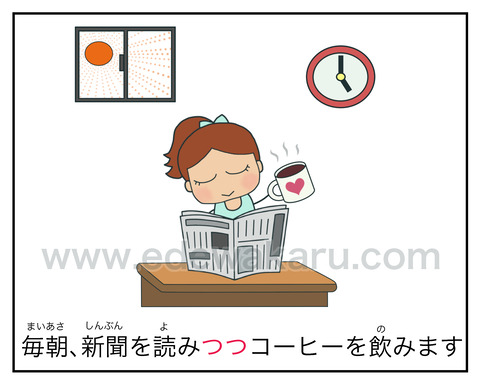
Meaning
(Simultaneous actions)
Do 〜 while doing ...
How to use it
Verb [ます-form] + つつ
Explanation
“〜つつ” is a sentence pattern with almost the same meaning as the “〜ながら” learned at N4. Like “〜ながら,” it expresses simultaneous actions, with the main action appearing afterward. 😊 “〜つつ” is characteristic of written language; in conversation, “〜ながら” is used more often. 😮
I’ll explain concessive “〜つつ” another time. 😀
In context 3 examples
毎朝、新聞を読みつつコーヒーを飲みます
→毎朝、新聞を読みながらコーヒーを飲みますEvery morning, I drink coffee while reading the newspaper. → Every morning, I drink coffee while reading the newspaper.
音楽を聴きつつ勉強をするのが好きです
→音楽を聴きながら勉強をするのが好きですI like studying while listening to music. → I like studying while listening to music.
電話しつつ運転するのは危険だ
→電話しながら運転するのは危険だDriving while talking on the phone is dangerous. → Driving while talking on the phone is dangerous.
Read the original source text
Meaning
(同時進行動作)
〜ながら…する
How to use it
動詞[ます形]+つつ
Explanation
「〜つつ」はN4で勉強した「〜ながら」とほとんど同じ意味を表す文型です。「〜ながら」のように同時進行動作を表しますが、主な動作は後ろにきます😊「〜つつ」は書き言葉的で、会話では「〜ながら」の方がよく使われます😮
逆接の「〜つつ」はまた次回説明します😀
Usage 2
Read this source entry ↗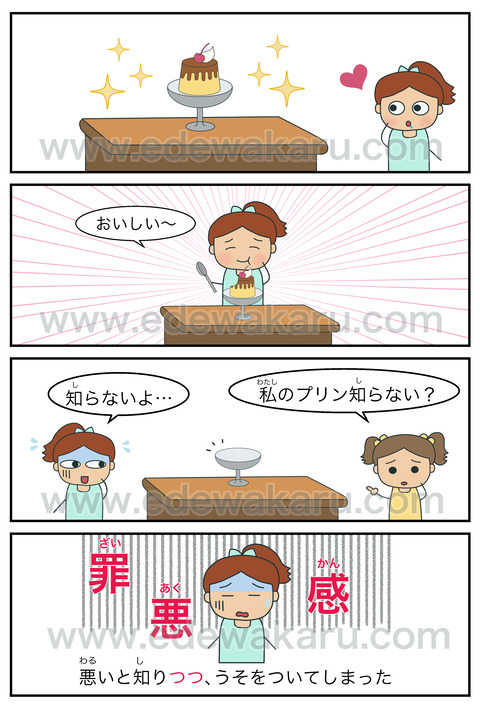
Meaning
Although...
How to use it
Verb [ます-form] + つつ
Explanation
“〜つつ” is a sentence pattern expressing concession, as in “although 〜” or “but 〜.” It has the same meaning as “〜ながら” (concession), which was covered previously. 😊 Remember the idiomatic expression “〜と知りつつ,” meaning “although I knew 〜.” 😉 In conversation, “〜ながら” is used in most cases. 😮 Also, “〜つつ” and “〜つつも” have the same meaning, so learn them together.
[Be careful]
“〜ながら” can be used with verbs, adjectives, and nouns, but remember that “〜つつ” only connects to verbs. 😀
[Verbs]
⭕️ Although I knew it was wrong, I ended up lying.
⭕️ Although I knew it was wrong, I ended up lying.
[Adjectives]
⭕️ Unfortunately, I was not hired.
❌ Unfortunately, but I was not hired.
[Nouns]
⭕️ Although she is a woman, she is strong.
❌ Although she is a woman, she is strong.
Of course 😅, those taking the Japanese Language Proficiency Test should learn to distinguish these carefully.
In context 3 examples
悪いと知りつつ、うそをついた
→悪いと知っていたけれども、うそをついたAlthough I knew it was wrong, I lied. → Although I knew it was wrong, I lied.
勉強しなきゃと思いつつ、遊んでしまった(復習:口語形〜なきゃ)
→勉強しなきゃと思っていたが、遊んでしまったAlthough I thought I should study, I ended up playing. (Review: colloquial form 〜なきゃ) → Although I thought I should study, I ended up playing.
お酒は体によくないと言いつつ、毎日飲んでいる
→お酒は体によくないと言っているけれども、毎日飲んでいるAlthough I say that drinking is bad for my health, I drink every day. → Although I say that drinking is bad for my health, I drink every day.
Read the original source text
Meaning
〜けれども
How to use it
動詞[ます形]+つつ
Explanation
「〜つつ」は「〜けれども」「〜が」というように逆接を表す文型です。前回載せた「〜ながら」(復習:〜ながら(逆接))と同じ意味です😊
「〜と知りつつ」は「〜と知っていたけれども」という意味の慣用表現ですので覚えておきましょう
😉会話ではほとんどの場合「〜ながら」が使われます😮また、
「〜つつ」と「〜つつも」は同じ意味
ですので一緒に覚えておきましょう。
【注意しましょう】
「〜ながら」は動詞・形容詞・名詞に使用することができますが、「〜つつ」は動詞接続しかないことをしっかりと覚えておきましょう😀
[動詞]
⭕️悪いと知り
ながら、うそをついてしまった
⭕️悪いと知り
つつ、うそをついてしまった
[形容詞]
⭕️残念
ながら、不採用だった
❌残念
つつ、不採用だった
[名詞]
⭕️女
ながら、力が強い
❌女
つつ、力が強い
当然のことですが
😅日本語能力試験を受ける人はしっかりと区別をして覚えておきましょう。
日本語NET JLPT文法解説まとめ
Usage 1
Read this source entry ↗Meaning
"do ~ and do ~"
An idiomatic expression akin to 「〜たり〜たり」, used in limited situations. It describes things happening in the same situation and time period, so the following is incorrect:
Incorrect example: Tomorrow, I plan to study and read a book.
How to use it
V(ます-form)+ つ、V(ます-form) + つ
Explanation
"and"
Used to describe alternating actions or states, often implying a repeated or fluctuating pattern. It’s a way to express that something is done or happens intermittently or alternately.
In context 4 examples
どうしても欲しいパソコンがあって、店の前を行きつ戻りつした。
There was a computer I really wanted, so I paced back and forth in front of the store.
昨日のマラソン大会は抜きつ抜かれつの大接戦で、とても面白かった。
Yesterday’s marathon was a fierce back-and-forth race, with runners overtaking one another, and it was very exciting.
ジェースムは車で、敵と追いつ追われつのカーチェイスを繰り広げた。
James engaged in a car chase, alternately catching up to and being chased by his enemy.
僕とタカシは持ちつ持たれつの関係で、子供のころからお互い助け合ってきました。
Takashi and I have always relied on each other, helping one another since we were children.
Read the original source text
Meaning
"〜たり〜たり"
「〜たり〜たり」の慣用的な表現で、使用場面は限られる。同一場面、同じ時間帯の中で起こっていることを表すので、次のようなのは使えない。
誤用例:明日は勉強しつ、本を読みつするつもりだ。
How to use it
V(ます形)+ つ、V(ます形) + つ
Explanation
"and"
Used to describe alternating actions or states, often implying a repeated or fluctuating pattern. It’s a way to express that something is done or happens intermittently or alternately.
Usage 2
Read this source entry ↗Meaning
However; even though
How to use it
V(ます-form)ます + つつ
Explanation
even though
There is also the expression 「〜つつも」.
In context 12 examples
健康に良くないとは知りつつ、タバコがやめられない。
Even though I know it's bad for my health, I can't quit smoking.
早く次の教案を作らなければと思いつつ、ドラマが面白くて作れない。
Even though I keep thinking I should hurry and make my next lesson plan, the drama is so interesting that I can't.
良くないこととは思いつつ、インターネットで見つけた文章をコピーしてレポートを提出してしまった。
Even though I knew it was wrong, I copied text I found on the internet and submitted it as my report.
ダイエットしようと思いつつ、甘いものを見るとつい食べてしまう。
Even though I intend to go on a diet, whenever I see sweets, I end up eating them.
半分あきらめつつも、当日ギリギリまで勉強した。
Although I'd half given up, I studied right up until the last minute on the day.
彼女に騙されてると知りつつも、またお金を貸してしまった。
Even though I know she's deceiving me, I lent her money again.
彼女との写真を眺めつつ、これまで二人で行った場所や過ごした時間を懐かしんだ。
While gazing at photos of her and me, I reminisced about the places we had been and the time we had spent together.
カレンダーを眺めつつ、次の旅行の計画を立てます。
While looking at the calendar, I'll make plans for my next trip.
京都にある「哲学の道」を歩きつつ、今後の人生について考えてみる。
While walking along the Philosopher's Path in Kyoto, I'll reflect on my life from here on.
私は大学に通いつつ、病気の母に代わり弟の面倒も見ている。
While attending university, I also look after my younger brother in place of my sick mother.
家族の無事を祈りつつ、国へ戻った。
I returned to my country while praying for my family's safety.
今後の方針について、部署のメンバーと話し合いつつ検討した。
We discussed and considered future policies with the department members.
Read the original source text
Meaning
けれども
How to use it
V(ます形)ます + つつ
Explanation
even though
「〜つつも」という言い方もある。
毎日のんびり日本語教師
Usage 1
Read this source entry ↗How to use it
Verb ます-form + つつ
Explanation
Expresses that one action is performed at the same time as another.
Note:
「【N5文法】~ながら」 also has the same meaning, but 「~つつ」 is somewhat more formal.
Notes
The 「つつ」 series
In context 8 examples
運転しつつ歌ってる。
I'm singing while driving.
相手のこと思いつつ、自分の気持ちを伝えるのは難しい。
It's difficult to express your own feelings while thinking about the other person.
占いの結果は良いことも悪いことも受け止めつつ、かといって信じることもなく、参考にする程度でいい。
You can take in both the good and bad results of a fortune-telling reading without believing it; it's enough to treat it as a reference.
お互い距離をとりつつ、相手の出方を伺っている。
We're keeping our distance from each other while watching to see what the other will do.
今は働きつつプログラミングを独学で勉強している。
I'm working while teaching myself programming.
洗濯機回しつつ、ご飯作る。
I'll make dinner while the washing machine is running.
得意なことを伸ばしつつ、苦手なことも克服していきたい。
I want to develop what I'm good at while also overcoming what I'm bad at.
昼は仕事しつつ、夜は毎日ジムに行ってたら1か月で3キロ痩せた。
I lost three kilograms in a month while working during the day and going to the gym every night.
Read the original source text
How to use it
動ます形+つつ
Explanation
ある動作が他の動作を同時に行われていることを表します。
なお
「【N5文法】~ながら」も同じ意味を表しますが、「~つつ」のほうがやや硬めな表現です。
Notes
「つつ」シリーズ
Usage 2
Read this source entry ↗How to use it
Verb ます-form + つつ(も)
Explanation
A concessive grammar pattern describing contradictory actions or qualities that exist at the same time.
Notes
The 「つつ」 series
In context 8 examples
姪は小さい頃の面影を残しつつも、大人っぽい面もある。
My niece still has traces of what she looked like as a little girl, yet she also has a mature side.
彼女に話しかけようと思いつつも、いつも話しかけられないでいる。
Even though I think about talking to her, I never manage to do it.
ずっと部屋掃除しなきゃいけないと思いつつ未だにできてない。
I've been thinking for ages that I need to clean my room, but I still haven't done it.
初めての舞台で緊張しつつも楽しめました。
Although I was nervous about my first stage performance, I enjoyed it.
接戦で四苦八苦しつつも辛勝した。
We struggled through a close match, but managed to win by a narrow margin.
怒られてるときは申し訳ないと思いつつも、怒っている姿を見ると笑ってしまう。
While I feel sorry when I'm being scolded, I can't help laughing when I see them angry.
嘘がバレているのかと動揺しつつも「いいえ」と答えた。
Though I was flustered, wondering whether my lie had been found out, I answered, “No.”
大丈夫と分かりつつも、子供のことはやっぱり心配になる。
Even though I know everything is all right, I still worry about my child.
Read the original source text
How to use it
動ます形+つつ(も)
Explanation
相反する動作や性質が同時に存在することを述べる逆接の文法です。
Notes
「つつ」シリーズ
日本語文型辞典 英語版
Usage 1
Meaning
【つ...つ】[R-つR-つ]
Expresses that two actions alternate, by repeating verbs with opposite meaning (e.g. 行く(go)- 戻る(return)) or active and passive verbs (e.g. 押す(push)- 押される(being pushed)). Used in set expressions, such as 行きつ戻りつ or 持ちつ持たれつ, as in
(1)
and
(3)
respectively.
In context 4 examples
彼に会おうか会うまいかと悩んで、家の前を行きつ戻りつしていた。
I kept walking to and fro in front of his house, worrying over whether or not I should meet him.
お互い持ちつ持たれつで、助け合いましょう。
Let’s make it a give-and-take as we help each other.
初詣の神社はものすごい人出で、押しつ押されつ、やっとのことで境内までたどり着いた。
The shrine for the first pilgrimage of the New Year was packed with people, and after pushing and being pushed, we finally made it into the inner grounds.
久しぶりに友人とさしつさされつ酒を飲んで何時間もしゃべった。
For the first time in quite a while, I talked with a friend for many hours while we filled each other’s cup with sake.
Usage 2
Meaning
【つつ】Used with a verb stem. Usually used in written language or formal conversation.
Expresses that the same subject does one action while also doing another. Has roughly the same meaning as ...ながら, but ...つつtends to be used in written language.
Used to link two contrary matters. For example,
(1)
means “although I thought.” Close to the adversative use of のに or ながら. “All the while knowing it was a lie” in
(3)
is an often-used idiomatic expression.
b. R-つつも
Same as
【つつ】(Usage 2 a).
Used to express that an action or effect is moving in a certain direction. Often corresponds to ている, but there are also a few differences. つつある in
(1)
-
(3)
can be replaced by ている without changing the meaning very much, but when it is used with verbs which express instantaneous change, as in
(4)
-
(7)
, replacing it will alter the meaning of the sentence. When used with verbs which express such change, using つつある gives the meaning that a change has taken place and is heading in the direction of completion.ている, on the other hand, expresses that the situation after the change has been completed. Therefore if 死につつある(dying) in
(6)
is replaced with 死んでいる(dead), the sentence would not make sense.
In addition, つつある cannot be used with verbs which have no meaning of completion, so 彼女は泣きつつある cannot be used.
How to use it
1. R-つつ〈simultaneity〉
2. R-つつ〈adversative connective〉a. R-つつ
3. R-つつある
In context 19 examples
彼は、「春ももう終わりですね」と言いつつ、庭へ目をやった。
Saying “Spring is over, isn’t it,” he cast his eyes to the garden.
静かな青い海を眺めつつ、良子は物思いにふけっていた。
Yoshiko was in deep thought while looking at the quiet blue sea.
この会議では、個々の問題点を検討しつつ、今後の発展の方向を探っていきたいと思います。
At this meeting, I hope that as we consider each problem point, we can explore ways to move forward for developing.
その選手はけがした足をかばいつつ、最後まで完走した。
Favoring his injured leg, the athlete ran the race to completion.
夏休みの間、勉強しなければいけないと思いつつ、毎日遊んで過ごしてしまった。
I knew I had to study during the summer vacation, but I spent it having fun every day.
早くたばこをやめなければいけないと思いつつ、いまだに禁煙に成功していない。
Even while thinking that I really ought to quit smoking right way, I still haven’t succeeded in giving it up.
その言い訳はうそと知りつつ、わたしは彼にお金を貸した。
I lent him money, all the while knowing that the pretext was a lie.
青木さんは事業のパートナーを嫌いつつ、常に協力を惜しまなかった。
Aoki-san, even while disliking his project partner, never held back from cooperating with him.
彼は、歯痛に悩まされつつも、走り続けた。
He continued running even while being bothered with a toothache.
「健康のために働き過ぎはよくないのよ」と言いつつも、彼女は決して休暇をとらないのだ。
She keeps saying “Overwork is not good for your health,” yet never takes a vacation herself.
医者に行かなければと思いつつも、忙しさに紛れて忘れてしまった。
All the while knowing I had to see a doctor, I was distracted by being busy and forgot all about it.
設備の再調査が必要だと知りつつも無視したことが、今回の大事故につながったと思われる。
It is believed that this calamity is linked to the fact that, although (the responsible parties) were well aware of the necessity for a follow-up evaluation of the facilities, they ignored it.
地球は温暖化しつつある。
The planet is on its way to becoming warmer.
この会社は現在成長しつつある。
The company is currently growing.
この海底では長大なトンネルを掘りつつある。
A long tunnel is presently being dug below this sea bottom.
手術以来、彼の体は順調に回復しつつある。
His health has been improving as hoped since the operation.
若い人が都会へ出て行くため、五百年の伝統のある祭りの火がいまや消えつつある。
Because young people are leaving for the city, the 500-year-old tradition of having a fire at the festival is about to die out.
彼は今自分が死につつあることを意識していた。
He was conscious of the fact that he was dying.
その時代は静かに終わりつつあった。
The era was quietly ending.
AIUEO JLPT Grammar
Usage 1
Meaning
「つつ」is a conjunction used to express two simultaneous actions or contradictory actions. In the form of「〜つつも」, it indicates that while one action is happening, there are contrary feelings or actions taking place. It is often used in written language.
How to use it
Verb masu-stem + つつ (+ も)
In context 5 examples
彼女は将来を考えつつ、現在の仕事に専念している。
She is focusing on her current job while thinking about her future.
健康に悪いと知りつつも、彼はタバコをやめられない。
Even though he knows it’s bad for his health, he can’t quit smoking.
危険だと知りつつ、彼はその山に登った。
Knowing it was dangerous, he climbed the mountain.
彼女は謝らなければと思いつつも、なかなか言い出せなかった。
Although she thought she should apologize, she couldn’t bring herself to say it.
彼はやるべきことを知りつつ、すぐに行動に移せない。
He knows what he needs to do, but he can't act right away.
Read the original source text
Meaning
「つつ」is a conjunction used to express two simultaneous actions or contradictory actions. In the form of「〜つつも」, it indicates that while one action is happening, there are contrary feelings or actions taking place. It is often used in written language.
How to use it
動詞ます形+つつ (+も)
Explanation · 日本語
「つつ」は、同時に進行する動作や対立する行動を表す接続助詞です。「〜つつも」の形では、ある行動をしながらも、それに反する心情や別の行動が存在することを示します。書き言葉としてよく使われます。
Usage 2
Meaning
This sentence pattern expresses the reciprocal nature of two opposing actions being repeated. It expresses a relationship where one action is met with the opposite action, such as “押しつ押されつ” or “行きつ戻りつ”.
How to use it
Verb (ます-form) + つ + Verb (ます-form) + つ
In context 5 examples
彼は部屋の中を行きつ戻りつ、考え込んでいた。
He was pacing back and forth in the room, deep in thought.
船は波に揺られ、浮きつ沈みつしていた。
The boat was rocking on the waves, rising and sinking.
彼らは押しつ押されつ、激しい争いを続けた。
They were pushing and being pushed, continuing their intense struggle.
私たちは持ちつ持たれつの関係です。
We have a mutually supportive relationship.
彼らは抜きつ抜かれつの激しいレースを繰り広げた。
They were chasing each other and the competition was very fierce.
Read the original source text
Meaning
This sentence pattern expresses the reciprocal nature of two opposing actions being repeated. It expresses a relationship where one action is met with the opposite action, such as “押しつ押されつ” or “行きつ戻りつ”.
How to use it
動詞ます形+つ+動詞ます形+つ
Explanation · 日本語
この文型は、二つの対立する動作が繰り返される様子を表す表現です。「押しつ押されつ」や「行きつ戻りつ」のように、一方の動作があれば、その反対の動作もある、という相互的な関係を表現します。
文法
Usage 1
Meaning
However; even though
How to use it
V (ます-form) ます + つつ
Notes
The form 「〜つつも」 is also used.
In context 6 examples
健康に良くないとは知りつつ、タバコがやめられない。
Even though I know it's bad for my health, I can't quit smoking.
早く次の教案を作らなければと思いつつ、ドラマが面白くて作れない。
Even though I keep thinking I should hurry and make my next lesson plan, the drama is so interesting that I can't.
良くないこととは思いつつ、インターネットで見つけた文章をコピーしてレポートを提出してしまった。
Even though I knew it was wrong, I copied text I found on the internet and submitted it as my report.
ダイエットしようと思いつつ、甘いものを見るとつい食べてしまう。
Even though I intend to go on a diet, whenever I see sweets, I end up eating them.
半分あきらめつつも、当日ギリギリまで勉強した。
Although I'd half given up, I studied right up until the last minute on the day.
彼女に騙されてると知りつつも、またお金を貸してしまった。
Even though I know she's deceiving me, I lent her money again.
Read the original source text
Meaning
けれども
How to use it
V(ます形)ます + つつ
Notes
「〜つつも」という言い方もある。
Usage 2
Meaning
While; as
How to use it
V (ます-form) ます + つつ
In context 6 examples
彼女との写真を眺めつつ、これまで二人で行った場所や過ごした時間を懐かしんだ。
While gazing at photos of her and me, I reminisced about the places we had been and the time we had spent together.
カレンダーを眺めつつ、次の旅行の計画を立てます。
While looking at the calendar, I'll make plans for my next trip.
京都にある「哲学の道」を歩きつつ、今後の人生について考えてみる。
While walking along the Philosopher's Path in Kyoto, I'll reflect on my life from here on.
私は大学に通いつつ、病気の母に代わり弟の面倒も見ている。
While attending university, I also look after my younger brother in place of my sick mother.
家族の無事を祈りつつ、国へ戻った。
I returned to my country while praying for my family's safety.
今後の方針について、部署のメンバーと話し合いつつ検討した。
We discussed and considered future policies with the department members.
Read the original source text
Meaning
〜ながら
How to use it
V(ます形)ます + つつ
Usage 3
Meaning
~たり~たり
An idiomatic expression of 「〜たり〜たり」, used only in limited situations. It describes things happening within the same situation and time period, so the following kind of sentence cannot be used.
Incorrect example: Tomorrow I plan to study and read books.
How to use it
V(ます-form)+ つ、V(ます-form) + つ
In context 4 examples
どうしても欲しいパソコンがあって、店の前を行きつ戻りつした。
There was a computer I really wanted, so I paced back and forth in front of the store.
昨日のマラソン大会は抜きつ抜かれつの大接戦で、とても面白かった。
Yesterday’s marathon was a fierce back-and-forth race, with runners overtaking one another, and it was very exciting.
ジェースムは車で、敵と追いつ追われつのカーチェイスを繰り広げた。
James engaged in a car chase, alternately catching up to and being chased by his enemy.
僕とタカシは持ちつ持たれつの関係で、子供のころからお互い助け合ってきました。
Takashi and I have always relied on each other, helping one another since we were children.
Read the original source text
Meaning
〜たり〜たり
「〜たり〜たり」の慣用的な表現で、使用場面は限られる。同一場面、同じ時間帯の中で起こっていることを表すので、次のようなのは使えない。
誤用例:明日は勉強しつ、本を読みつするつもりだ。
How to use it
V(ます形)+ つ、V(ます形) + つ
Bunpro Grammar Reference
Usage 1
Meaning
While, And
How to use it
Verb[stem]+ つつ
Nuance
A formal expression showing that (A) and (B) are being done at the same time, with both (A) and (B) being ongoing actions.
Explanation
つつ is a particle in Japanese that appears after the ます-stem form of verbs. When used, it indicates that (B) is an action that is happening at the same time as (A). This usually translates simply as 'while (A), (B)'.
つつ is a formal grammar structure and will appear in writing more than in speech.
環境に悪いと知りつつ、レジ袋を使い続けている。
While I know that it is bad for the environment, I continue to use plastic bags.
インターネットでレシピを見つつ、料理をしたので今日の晩御飯は美味しいはずです。
Dinner tonight should be delicious since I cooked while looking at a recipe on the internet.
Caution
Unlike ながら, つつ is used more often when the (A) action is an ongoing state, rather than an actual physical action that involves movement. ながら may be used for both physical motions and states.
走りながら携帯でゲームをしていたら、電柱にぶつかった。
I bumped into a telephone pole because I was gaming on my phone while I was walking. (Natural Japanese)
走りつつ携帯でゲームをしていたら、電柱にぶつかった。
I bumped into a telephone pole because I was gaming on my phone while I was walking. (Physical action, unnatural Japanese)
仕事に関係ないことを考えながら仕事をしていたら、大きなミスをしてしまった。
I made a big mistake at work because I was working while thinking about something unrelated to work. (Natural Japanese)
仕事に関係ないことを考えつつ仕事をしていたら、大きなミスをしてしまった。
I made a big mistake at work because I was working while thinking about something unrelated to work. (Non-physical, natural Japanese)
Despite this, the (B) action in つつ sentences may either be physical movements or ongoing states.
In context 18 examples
- ツバメは飛行しつつ、寝ることができる。
The swallow can sleep while flying.
- 環境に悪いと知りつつ、レジ袋を使い続けている。
While I know that it is bad for the environment, I continue to use plastic bags.
- インターネットでレシピを見つつ、料理をしたので今日の晩御飯は美味しいはずです。
Dinner tonight should be delicious since I cooked while looking at a recipe on the internet.
- 布団をしきつつテレビに見入ってしまった。
While laying out my futon, I got transfixed by the TV.
- 集金しつつ、空き家の調査もしています。
While working as a bill collector, I am also surveying empty houses.
- 育児をしつつ、フルタイムで働くのは大変なことです。
Working full time while raising children is really hard.
- 父の足跡をたどりつつ、自分の生き方を探している。
While following in my father's footsteps, I am searching for how to live my own life.
- 暖炉にあたりつつ、いつも編み物を編んでいる母が好き。
I am fond of my mother who is always knitting, while near the fireplace.
- 裁判ではあらそいつつ、私生活では結構仲良くしている。
We get along well in our private lives while fighting (each other) in court.
- 老人は沈む太陽の景色をみつつ、懐かしい青春を思い出した。
While watching the scenery of the setting sun, the elderly man recalled his nostalgic youth.
- 連載コラムを多数執筆しつつ、長編小説も書いてしまうんだからすごいね。
That's amazing that you are writing a number of serial columns for the newspaper while also writing a full-length novel.
- 将棋をしつつ、同時に囲碁もやる強者がいるらしい。
Apparently there is an exceptional person who plays Shogi while also playing Go (at the same time).
- アドバイスに感謝しつつ、次の創作にそれを活かす方向で考えています。
While being thankful for advice, I am thinking about how best to make use of it for the next project.
- 参加者は南極点遠征のために食料配給を準備しつつ、毎日のスケジュールを覚えたりする。
While preparing food rations for the south pole expedition, participants were memorizing things like the daily schedule.
- 走りながら携帯でゲームをしていたら、電柱にぶつかった。
I bumped into a telephone pole because I was gaming on my phone while I was walking. (Natural Japanese)
- 走りつつ携帯でゲームをしていたら、電柱にぶつかった。
I bumped into a telephone pole because I was gaming on my phone while I was walking. (Physical action, unnatural Japanese)
- 仕事に関係ないことを考えながら仕事をしていたら、大きなミスをしてしまった。
I made a big mistake at work because I was working while thinking about something unrelated to work. (Natural Japanese)
- 仕事に関係ないことを考えつつ仕事をしていたら、大きなミスをしてしまった。
I made a big mistake at work because I was working while thinking about something unrelated to work. (Non-physical, natural Japanese)
Read the original source text
Meaning
While, And
How to use it
Verb[stem]+ つつ
Nuance
A formal expression showing that (A) and (B) are being done at the same time, with both (A) and (B) being ongoing actions.
Explanation
つつ is a particle in Japanese that appears after the ます-stem form of verbs. When used, it indicates that (B) is an action that is happening at the same time as (A). This usually translates simply as 'while (A), (B)'.
つつ is a formal grammar structure and will appear in writing more than in speech.
環境に悪いと知りつつ、レジ袋を使い続けている。
While I know that it is bad for the environment, I continue to use plastic bags.
インターネットでレシピを見つつ、料理をしたので今日の晩御飯は美味しいはずです。
Dinner tonight should be delicious since I cooked while looking at a recipe on the internet.
Caution
Unlike ながら, つつ is used more often when the (A) action is an ongoing state, rather than an actual physical action that involves movement. ながら may be used for both physical motions and states.
走りながら携帯でゲームをしていたら、電柱にぶつかった。
I bumped into a telephone pole because I was gaming on my phone while I was walking. (Natural Japanese)
走りつつ携帯でゲームをしていたら、電柱にぶつかった。
I bumped into a telephone pole because I was gaming on my phone while I was walking. (Physical action, unnatural Japanese)
仕事に関係ないことを考えながら仕事をしていたら、大きなミスをしてしまった。
I made a big mistake at work because I was working while thinking about something unrelated to work. (Natural Japanese)
仕事に関係ないことを考えつつ仕事をしていたら、大きなミスをしてしまった。
I made a big mistake at work because I was working while thinking about something unrelated to work. (Non-physical, natural Japanese)
Despite this, the (B) action in つつ sentences may either be physical movements or ongoing states.
Nuance · 日本語
(A)と(B)は継続されている行動で、(A)と(B)は同時に行われているということを示す丁寧な表現。
Explanation · 日本語
「つつ」は動詞のマス形の語幹に付く助詞で、(A) と (B) が同時に行われることを示します。主に「(A) しながら (B) する」という意味で使われます。
「つつ」は硬い文型で、話し言葉よりも書き言葉としてよく使われます。
環境に悪いと知りつつ、レジ袋を使い続けている。
While I know that it is bad for the environment, I continue to use plastic bags.
インターネットでレシピを見つつ、料理をしたので今日の晩御飯は美味しいはずです。
Dinner tonight should be delicious since I cooked while looking at a recipe on the internet.
注意点
「つつ」は (A) の動詞が、実際に体を動かすような動作よりも、頭や心の中での動き、すなわち進行中の状態を表すときに使われることが多いです。一方、「ながら」は物理的な動作にも状態にも使うことができます。
走りながら携帯でゲームをしていたら、電柱にぶつかった。
I bumped into a telephone pole because I was gaming on my phone while I was walking. (Natural Japanese)
走りつつ携帯でゲームをしていたら、電柱にぶつかった。
I bumped into a telephone pole because I was gaming on my phone while I was walking. (Physical action, unnatural Japanese)
仕事に関係ないことを考えながら仕事をしていたら、大きなミスをしてしまった。
I made a big mistake at work because I was working while thinking about something unrelated to work. (Natural Japanese)
仕事に関係ないことを考えつつ仕事をしていたら、大きなミスをしてしまった。
I made a big mistake at work because I was working while thinking about something unrelated to work. (Non-physical, natural Japanese)
ただし、「つつ」の文における (B) の動詞は、物理的な動きを表す動詞でも、進行中の状態を表す動詞でも構いません。
Usage 2
Meaning
Even while ~ing, Even though ~ing, Despite ~ing, Although ~ing
How to use it
Verb[stem]+ つつ(も)
Nuance
A formal phrase expressing that even while (A), (B). Despite (A) being the underlying principle, (B) is contradictory.
Explanation
In addition to the base meaning of つつ 'while doing (A)' when used by itself, the addition of も simply adds the nuance of 'even'. This is often translated as 'even while doing (A), (B)', or 'although doing (A), (B)'. (B) will almost always be something that is somehow contradictory to (A).
Like つつ, つつも will appear after the ます-stem of a verb that is the original ongoing action.
一人で洞窟に入るのは危ないと知りつつも、入ってしまった。
Despite knowing that going in a cave alone is dangerous, I went in.
初めてのライブで緊張しつつもものすごく楽しめました。
Despite being very nervous at my first concert, I was able to enjoy it.
Caution
Like つつ, つつも will usually include a non-physical action in (A), such as reading, listening, looking, thinking, etc. (B) may be either physical or non-physical. Also, in the same way as つつ is similar to ながら, つつも is similar to ながらも.
彼は足を骨折していながらも、大会に出場しようとしたところ、監督に止められた。
Despite having a broken leg, he tried to enter the tournament, but was stopped by the coach. (Natural Japanese)
彼は足を骨折していつつも、大会に出場しようとしたところ、監督に止められた。
Even while having a broken leg, he tried to enter the tournament, but was stopped by the coach. (Physical action, unnatural Japanese)
なんかこの話は怪しいなと思いながらも、彼のことを信じてみた。
Despite thinking, 'this sounds fishy,' I believed him. (Natural Japanese)
なんかこの話は怪しいなと思いつつも、彼のことを信じてみた。
Even though I thought that the story was fishy, I believed him. (Non-physical, natural Japanese)
Despite the similarities, it will be important to remember that つつ only appears with verbs, while ながら can be used after almost any type of word.
In context 18 examples
- 斜めになりつつもなんとか持ちこたえたジェンガ。
Despite becoming slanted, the Jenga tower somehow held out.
- 一人で洞窟に入るのは危ないと知りつつも、入ってしまった。
Despite knowing that going in a cave alone is dangerous, I went in.
- 初めてのライブで緊張しつつもものすごく楽しめました。
Despite being very nervous at my first concert, I was able to enjoy it.
- 上を狙いつつも、まるで狙っていないかのような素振りをしています。
Despite aiming up, he is swinging like he isn't even aiming.
- 南極点遠征はよく備えつつも、失敗した。
Despite (everyone) preparing well, the south pole expedition failed.
- 車庫のシャッターを開けつつも、まだ行こうか行くまいか迷っていた。
Despite opening the garage door, I was still debating whether or not to go.
- 船は、沈みそうになりつつも、なんとか港まで帰って来た。
Even though the ship was on the verge of sinking, it somehow made it to the harbor.
- 主人公はこの地下牢に入るのは危ないと思いつつも、また入った。
Despite thinking that entering the dungeon was dangerous, the protagonist still went inside.
- 臭いが気になりつつも、汚れを放置したら大変なことになった。
Despite being bothered by the smell, I left the dirty thing as it was and it got worse.
- 弱点を知りつつほったらかしにしたからこんな悲惨なことになったんだ。
It became this sort of disaster because we/they neglected it despite knowing its weaknesses.
- 実力不足を実感しつつも、未だにプロを諦められません。
Despite feeling that I lack the ability, I will still not give up being a professional.
- 彼の言うことは怪しいと思いつつもとりあえず従うことにした。
Even while I think what he says is suspicious, for the time being I have decided to do as he says. (I am thinking)
- 現代人は朝ご飯を食べるのは重要だと知りつつも、そうしようとすることを拒否している。
Modern people, despite knowing that eating breakfast is important, refuse to do so.
- 危ないことだと知りつつも、科学者は知識のために、命を掛けつつ実験する場合もある。
Despite knowing that it is dangerous, there are cases when scientists, for the sake of knowledge, carry out experiments while putting their lives on the line.
- 彼は足を骨折していながらも、大会に出場しようとしたところ、監督に止められた。
Despite having a broken leg, he tried to enter the tournament, but was stopped by the coach. (Natural Japanese)
- 彼は足を骨折していつつも、大会に出場しようとしたところ、監督に止められた。
Even while having a broken leg, he tried to enter the tournament, but was stopped by the coach. (Physical action, unnatural Japanese)
- なんかこの話は怪しいなと思いながらも、彼のことを信じてみた。
Despite thinking, 'this sounds fishy,' I believed him. (Natural Japanese)
- なんかこの話は怪しいなと思いつつも、彼のことを信じてみた。
Even though I thought that the story was fishy, I believed him. (Non-physical, natural Japanese)
Read the original source text
Meaning
Even while ~ing, Even though ~ing, Despite ~ing, Although ~ing
How to use it
Verb[stem]+ つつ(も)
Nuance
A formal phrase expressing that even while (A), (B). Despite (A) being the underlying principle, (B) is contradictory.
Explanation
In addition to the base meaning of つつ 'while doing (A)' when used by itself, the addition of も simply adds the nuance of 'even'. This is often translated as 'even while doing (A), (B)', or 'although doing (A), (B)'. (B) will almost always be something that is somehow contradictory to (A).
Like つつ, つつも will appear after the ます-stem of a verb that is the original ongoing action.
一人で洞窟に入るのは危ないと知りつつも、入ってしまった。
Despite knowing that going in a cave alone is dangerous, I went in.
初めてのライブで緊張しつつもものすごく楽しめました。
Despite being very nervous at my first concert, I was able to enjoy it.
Caution
Like つつ, つつも will usually include a non-physical action in (A), such as reading, listening, looking, thinking, etc. (B) may be either physical or non-physical. Also, in the same way as つつ is similar to ながら, つつも is similar to ながらも.
彼は足を骨折していながらも、大会に出場しようとしたところ、監督に止められた。
Despite having a broken leg, he tried to enter the tournament, but was stopped by the coach. (Natural Japanese)
彼は足を骨折していつつも、大会に出場しようとしたところ、監督に止められた。
Even while having a broken leg, he tried to enter the tournament, but was stopped by the coach. (Physical action, unnatural Japanese)
なんかこの話は怪しいなと思いながらも、彼のことを信じてみた。
Despite thinking, 'this sounds fishy,' I believed him. (Natural Japanese)
なんかこの話は怪しいなと思いつつも、彼のことを信じてみた。
Even though I thought that the story was fishy, I believed him. (Non-physical, natural Japanese)
Despite the similarities, it will be important to remember that つつ only appears with verbs, while ながら can be used after almost any type of word.
Nuance · 日本語
(A)でありながら、(B)でもあるということを表す丁寧な表現。(A)が原則であるものの、(B)が矛盾している。
Explanation · 日本語
「つつ」の基本的な意味は「(A) しながら」ですが、これに「も」を付けると逆接のニュアンスが加わります。この文法は「(A) をしながらも (B)」や「(A) ではあるが (B)」のような意味で使われます。ほとんどの場合、(A) と (B) には矛盾するような内容が入ります。
「つつ」と同様に、「つつも」は継続的な動作を表す動詞のマス形の語幹の後に置かれます。
一人で洞窟に入るのは危ないと知りつつも、入ってしまった。
Despite knowing that going in a cave alone is dangerous, I went in.
初めてのライブで緊張しつつもものすごく楽しめました。
Despite being very nervous at my first concert, I was able to enjoy it.
注意点
「つつ」と同様に、「つつも」の (A) には、物理的な動作ではなく、「読む」「聞く」「見る」「考える」のような非物理的な動作が入ります。(B) は物理的な動作であることも、非物理的な動作であることもあります。また「つつ」と「ながら」が似た使われ方をするように、「つつも」と「ながらも」も類似の表現として使われます。
彼は足を骨折していながらも、大会に出場しようとしたところ、監督に止められた。
Despite having a broken leg, he tried to enter the tournament, but was stopped by the coach. (Natural Japanese)
彼は足を骨折していつつも、大会に出場しようとしたところ、監督に止められた。
Even while having a broken leg, he tried to enter the tournament, but was stopped by the coach. (Physical action, unnatural Japanese)
なんかこの話は怪しいなと思いながらも、彼のことを信じてみた。
Despite thinking, 'this sounds fishy,' I believed him. (Natural Japanese)
なんかこの話は怪しいなと思いつつも、彼のことを信じてみた。
Even though I thought that the story was fishy, I believed him. (Non-physical, natural Japanese)
ただし、「つつ」と「ながら」には違いもあります。「ながら」はほとんどの品詞に使うことができますが、「つつ」は動詞にしか使えないので、気をつけましょう。
Usage 3
Meaning
two contrasting actions
How to use it
Verb[stem]+ つ + (Antonym) Verb[stem]+ つ
Verb[stem]+ つ + (Antonym) Verb[stem]+ つ + の + Noun
Verb[stem]+ つ + Verb[られる]ーる + つ
Verb[stem]+ つ + Verb[られる]ーる + つ + の + Noun
行きつ戻りつ - going back and forth
浮きつ沈みつ - rising and falling (bobbing)
見えつ隠れつ - coming in and out of sight
とつおいつ (from 取りつ置きつ) - wavering between
矯めつ眇めつ - taking a good look
組んず解れつ - struggling with
抜きつ抜かれつ - neck-and-neck
持ちつ持たれつ - give-and-take
押しつ押されつ - pull and be pulled
追いつ追われつ - lead changing many times
差しつ差されつ - taking turns filling cups
Nuance
A conjunctive expression, showing that the contrasting actions of (A) and (B) are happening repeatedly, in no specific order.
Explanation
つ is a conjunction particle in Japanese that is used in constructions where it will appear twice, highlighting contrasting verbs. This つ~つ structure is often translated as 'to be doing (A) and (B) over and over', where the actions are happening repeatedly one after the other.
つ will connect to the conjunctive form of verbs, with (A) and (B) generally appearing in direct sequence.
新しく発売されたゲーム機を買おうか悩みながら、お店の前を行きつ戻りつした。
I walked back and forth in front of the store, wondering if I should buy the newly released game console.
川で脱げた靴が浮きつ沈みつ流れていった。
My shoe that came off in the river was bobbing up and down as it floated away.
Additionally, it is also quite common to see the same verb being repeated in both places. When this happens, the (A) verb will be in the standard form, while the (B) verb will be in the passive form. This just translates as 'to do (A) and to have (A) done to oneself'.
僕たちは持ちつ持たれつの関係で、保育園の頃から今に至るまでお互い助け合ってきた。
We have always been in a give and take relationship, helping each other from the time we were in nursery school until now.
コンサート会場には大勢の人が集まっていて、ゲートが開かれても押しつ押されつで全然会場に入れなかった。
There were so many people gathered at the concert venue that even when the gate was opened, I could not enter the venue at all because of the pushing and shoving.
Caution
This grammar pattern is only used with a limited set of words in modern Japanese. Here is a list of some standard combinations.
行きつ戻りつ - To go back and forth.
浮きつ沈みつ - To surface and submerge (to bob).
見えつ隠れつ - To go in and out of sight.
とつおいつ (from 取りつ置きつ) - To waver between.
矯めつ眇めつ - To take a good look.
組んず解れつ - To intertwine and release (to grapple).
抜きつ抜かれつ - To pull away and be pulled away from (to be neck and neck).
持ちつ持たれつ - To have and to be held (to give and take).
押しつ押されつ - To press and be pressed.
追いつ追われつ - To overtake and be overtaken.
差しつ差されつ - To pour and be poured (to take turns exchanging drinks).
In context 16 examples
- アリとアリマキは持ちつ持たれつの関係にある。
Ants and aphids have a give-and-take relationship.
- 新しく発売されたゲーム機を買おうか悩みながら、お店の前を行きつ戻りつした。
I walked back and forth in front of the store, wondering if I should buy the newly released game console.
- 川で脱げた靴が浮きつ沈みつ流れていった。
My shoe that came off in the river was bobbing up and down as it floated away.
- 僕たちは持ちつ持たれつの関係で、保育園の頃から今に至るまでお互い助け合ってきた。
We have always been in a give and take relationship, helping each other from the time we were in nursery school until now.
- コンサート会場には大勢の人が集まっていて、ゲートが開かれても押しつ押されつで全然会場に入れなかった。
There were so many people gathered at the concert venue that even when the gate was opened, I could not enter the venue at all because of the pushing and shoving.
- 押しつ押されつしてなんとかそこに着くことができた。
I managed to get there somehow by pushing and being pushed.
- 彼はドアの前をしばらく不安げに行きつ戻りつしていたすえに入ることにした。
After some time, he finally decided to go inside after nervously going back and forth in front of the door.
- 老人は小枝の浮きつ沈みつを眺めながら、海の匂いを楽しんだ。
The old man enjoyed the smell of the sea while watching the sinking and rising (bobbing) twig.
- 藤原拓海、須藤京一など、多くの有名なドライバーが抜きつ抜かれつのレースを繰り広げた。
Takumi Fujiwara, Kyoichi Sudo, and many other famous drivers put on a neck and neck race. (back and forth)
- 曇り空で風が強かったから月が雲に見えつ隠れつしていた。
It was a cloudy night with strong wind, so the moon was moving in and out of the clouds.
- 折角の満月なのに雲のせいで月が見えつ隠れつしていてガッカリだ。
Despite being a long-awaited full moon, I am disappointed because it is becoming visible and then hiding repeatedly due to the clouds.
- 父が憧れのプラモデルを買おうか悩みながら、その店の前を行きつ戻りつしています。
While being troubled about whether to buy the plastic model that my dad has been longing for, I keep pacing back and forth in front of that shop.
- 今まで常に持ちつ持たれつの関係だった親友が他界してしまい、僕は途方に暮れている。
With the unfortunate passing of my good friend, with whom I always had a give-and-take relationship, I am at a complete loss for what to do.
- 今日観戦した野球の試合は押しつ押されつの良い試合だったが、結局応援していたチームは負けてしまった。
The baseball match I was spectating today was a good mix of being on the offensive and then on the defensive, but in the end, the team that I was cheering for lost.
- 所詮は子供だと期待していなかったが、子供たちの抜きつ抜かれつの持久走大会は予想以上に迫力があった。
I wasn't really expecting much in the end because they are children, but the marathon event was neck and neck race, it was more intense than I had imagined.
- お鍋の中で浮きつ沈みつしている糸蒟蒻を眺めながら、今日あった出来事について思いを巡らせていました。
As I watched the ito-konyaku repeatedly float and then sink in the nabe, I pondered over the events of the day.
Yokubi — The Common Grammar Guide (https://yoku.bi)
Explanation
This lesson focuses on how to state that something happens while something else is going on.
ながら states that two actions are concurrently true as they happen at the same time. The subject of the two actions **must** be the same. Like "I watch TV while eating chips" is okay, but "I watch TV while my brother plays video games" is not. ながら attaches to the masu stem of the verb.
ながら is in the form of AながらB, where the action described by B is the "primary" action and the action described by A is a "secondary" action that is done at the same time. In English this nuance does not easily show up, so let's look at two examples instead:
In the first example, the main action is to study and that is what the speaker wants to do, while in the second example the speaker is focused on the action of waiting, and while doing so they study.
つつ is another auxiliary that can be used more or less the same as ながら, except it sounds more formal and is almost only relegated to literary sentences.
つつある is a special usage of つつ that implies an action is happening continuously, like a more formal ている.
However, unlike ている it cannot be used for verbs that describe states to mean "to be in a state of":
間/あいだ(に) and うちに are two other ways to state that something happens while something else is happening, however the usage is more general and they have a broader scope than ながら and つつ.
間/あいだ says that two events cover the same exact interval of time, **in its entirety**. This places constraints on what sorts of statements it accepts. 間 itself acts like a noun.
A間**に**B says that B starts and ends **within** the span of time when A takes place. Unlike the 間 version without に, it implies that the duration of B is shorter than the duration of A, as it needs to be completely contained within A's interval.
うちに says that an event happens while the statement before うちに remains true.
It often has a nuance that the event marked by うちに is limited in time and will eventually finish.
This is often used to give recommendations or suggestions like "before X happens, we should do Y".
In context 3 examples
彼女はそう言いつつ、苦笑いを浮かべる。
While she was saying that, she showed a bitter smile.
時代は変わりつつあります。
The ages are continuously changing.
男はもう死につつある。
The man was already dying.
NINJAL 日本語文型データベース
Usage 1
Meaning
This is used when you want to say that two actions are repeated over and over. Many expressions using it are idiomatic.
How to use it
VますつVますつ
Notes
The two “~” slots take verbs with opposing meanings, such as 「行く・戻る」 (go and return). They can also pair a verb with its passive form, such as 「押す・押される」 (push and be pushed).
It is often used in the form 「~つ~つする」. It can also be used in forms such as 「〜つ〜つだ・〜つ〜つのN」.
In context 5 examples
虫歯が痛いのに、歯医者に入るのがこわくて、行きつ戻りつしている。
Even though my tooth hurts, I’m afraid to go into the dentist’s office, so I keep going back and forth.
バーゲンはものすごい人込みで、押しつ押されつで前に進めない。
The bargain sale is packed with people, and we can’t move forward, being pushed and jostled.
私たちは、持ちつ持たれつの関係で助け合っている。
We help each other in a mutually supportive relationship.
マラソンの首位争いは熱戦で、選手たちは抜きつ抜かれつの攻防を繰り広げている。
The battle for the lead in the marathon is intense, and the runners are locked in a back-and-forth contest, overtaking and being overtaken.
久々に会った友人と、お酒をさしつさされつ、楽しく飲んだ。
I had a fun drinking session with a friend I hadn’t seen in ages, taking turns pouring sake for each other.
Read the original source text
Meaning
2つの動作を繰り返し何度もすると言いたいときに使います。慣用的な言い方が多いです。
How to use it
VますつVますつ
Notes
2つの「~」には 「行く・戻る」など、対立する意味の動詞がきます。 「押す・押される」など、動詞とその受身の形の組み合わせになることもあります。
「~つ~つする」の形で使うことが多いです。そのほか「〜つ〜つだ・〜つ〜つのN」などの形で使うこともあります。
Usage 2
Meaning
[1] This is used when you want to say that two actions are done at the same time.
[2] This is used when you want to say that, despite having the feeling that 〜, you don’t do what would match that feeling.
How to use it
Notes
[1] Usually, the sentence after 「~つつ」 expresses the main action. The “〜” clause describes an action that accompanies the main action.
Both the clause with 「〜つつ」 and the clause that follows it use verbs expressing ongoing actions or events.
The subject of the clause with 「〜つつ」 and the clause that follows it is the same.
[2] The subject of the “〜” clause and the clause after 「〜つつ」 is the same.
The “〜” slot takes a clause expressing an intention or thought. The clause after 「〜つつ」 describes an action that does not accord with that intention or thought. A clause expressing the speaker’s conjecture, hope, or intention, or one urging the listener to do something, cannot follow.
In context 9 examples
演奏会の演目は、いつも皆で意見を出し合いつつ決めています。
We always decide on the concert program together, exchanging our opinions as we go.
自然環境に配慮しつつ持続的に経済発展を目指していくことが、現代の大きな課題である。
One of the major challenges of our time is to pursue sustainable economic development while taking the natural environment into consideration.
台風は、東京に大雨を降らせつつ、太平洋へと移動していった。
The typhoon moved toward the Pacific Ocean while bringing heavy rain to Tokyo.
今回の二国間会議は有意義だった。今後、両国は今以上に文化的な交流も深めつつ、経済協力体制を築いていくことになるだろう。
This latest bilateral meeting was worthwhile. From now on, the two countries will likely build an economic cooperation framework while deepening cultural exchanges even more than they have so far.
昔のことを懐かしく思い出しつつ、写真の整理をしております。
I’m sorting through photographs while fondly remembering the past.
いつか不用品の整理をしようと思いつつ、なかなか手がつけられないでいる。
I keep thinking I’ll sort through my unwanted belongings someday, but I just can’t get around to it.
体に悪いと知りつつ、ついお酒を飲みすぎてしまう。
Even though I know it’s bad for me, I end up drinking too much.
故郷で一人暮らしをする母の様子を気にしつつ、年に数回しか帰省できていない。
I’m concerned about my mother, who lives alone in my hometown, but I’ve only been able to visit a few times a year.
ダイエットしなければと言いつつ、妹はいつもお菓子を食べている。
My younger sister says she has to go on a diet, but she’s always eating sweets.
Read the original source text
Meaning
[1] 2つの動作を同時にすると言いたいときに使います。
[2] 〜という気持ちを持っているのに、それに合うことをしないと言いたいときに使います。
How to use it
Notes
[1] ふつう「~つつ」の後に主要な動作を表す文がきます。「〜」には、主要な動作に付帯する動作を表す文がきます。
「〜つつ」の文と「~つつ」の後の文は、どちらも継続的な行為や出来事を表す動詞の文です。
「〜つつ」の文と「~つつ」の後の文の主語は同じです。
[2] 「〜」の文と「〜つつ」の後の文の主語は同じです。
「〜」には意志や思考を表す文がきます。「〜つつ」の後には、その意志や思考に合わない行動を説明する文がきます。話し手の推量・希望・意向を表す文や相手への働きかけの文はきません。